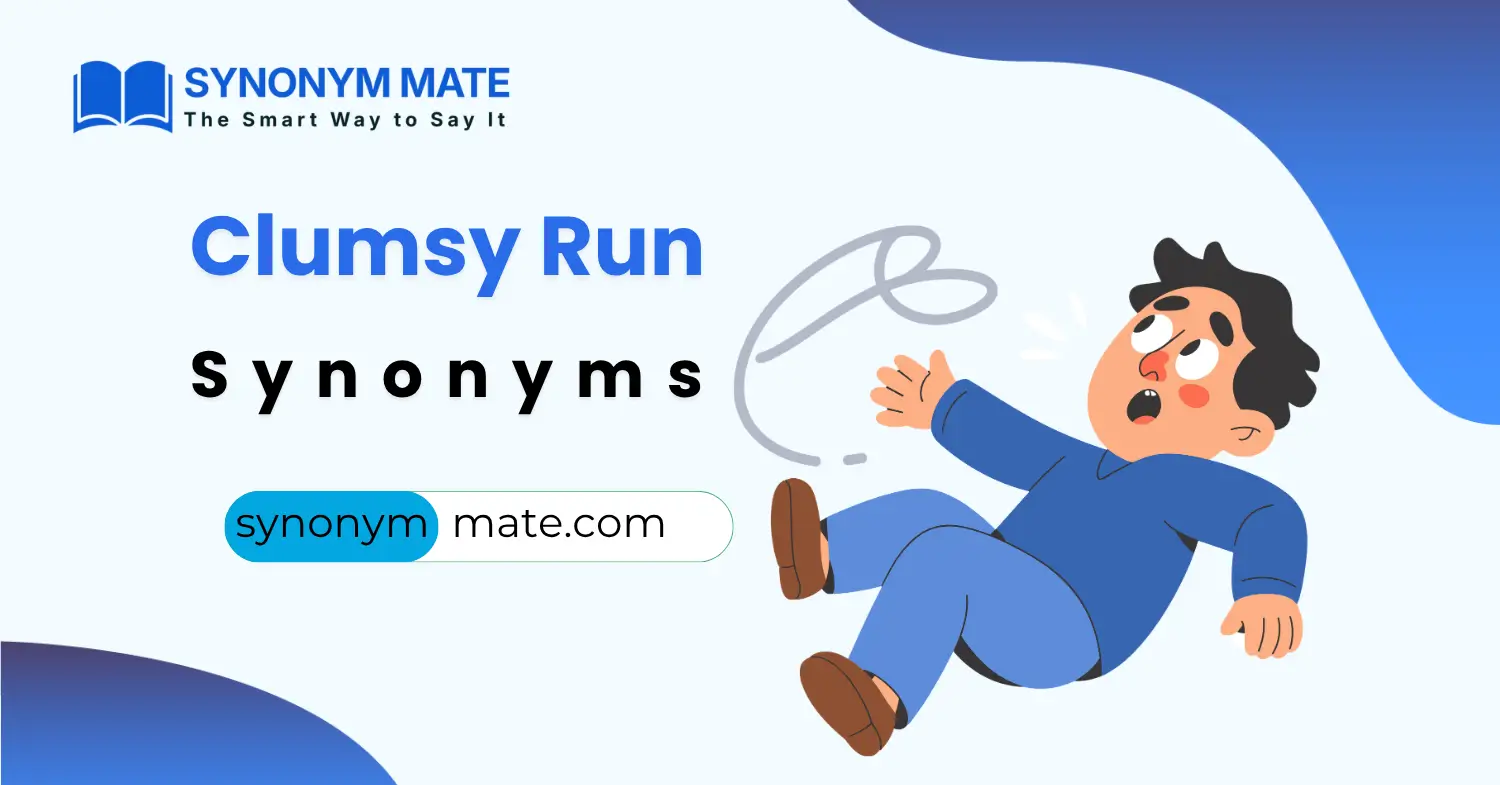

Clumsy run synonyms often come to mind when you watch someone trip slightly while jogging, trying to regain balance but still moving forward awkwardly. It’s a scene we all recognize.
In daily life, you might describe a child rushing across a room or a tired person jogging unevenly. Using better clumsy run synonyms helps paint a clearer picture.
Writers, students, and bloggers use clumsy run synonyms to add variety and avoid repetition. These words make descriptions more vivid and expressive.
Learning clumsy run synonyms improves your vocabulary and communication. It helps you sound more natural in essays, stories, and everyday conversations.
📚 What Does “Clumsy Run Synonyms” Really Mean?
“Clumsy run synonyms” refers to words that describe running in an awkward, uncoordinated, or uneven way.
Native speakers often use such terms when someone lacks balance, speed, or grace while running.
These expressions are common in storytelling, casual speech, and descriptive writing.
Part of Speech: Phrase (noun concept referring to a group of verbs)
Simple Definition: Words that describe running awkwardly or without smooth control.
🧠 Connotative Meaning
Connotation (the emotional feeling or association a word carries beyond its literal meaning)
- Positive tone: playful, humorous, lighthearted
- Negative tone: awkward, unskilled, ungraceful
- Neutral tone: descriptive, observational
📖 Etymology
- Clumsy comes from Middle English clumsen, meaning numb or stiff.
- Run comes from Old English rinnan, meaning to flow or move quickly.
History:
- Old English (450–1100): “run” meant flowing movement.
- Middle English (1100–1500): “clumsy” emerged to describe stiffness.
- Modern English (1500–Present): Combined to describe awkward motion.
🔊 Pronunciation
- US: /ˈklʌm.zi rʌn/
- UK: /ˈklʌm.zi rʌn/
🔡 Syllables
clum-sy run
🧩 Word Structure
- Root: run
- Prefix: none
- Suffix: -sy (in clumsy)
SYNONYMS LIST
Stumble (verb) — US: /ˈstʌm.bəl/ | UK: /ˈstʌm.bəl/
Meaning: To run or walk unsteadily, almost falling.
Examples:
- He stumbled while running on the wet road.
- She stumbled across the field in a rush.
Stagger (verb) — US: /ˈstæɡ.ɚ/ | UK: /ˈstæɡ.ə/
Meaning: To move with unbalanced, shaky steps.
Examples:
- He staggered after sprinting too fast.
- She staggered toward the finish line.
Lurch (verb) — US: /lɝːtʃ/ | UK: /lɜːtʃ/
Meaning: To move suddenly in an uncontrolled way.
Examples:
- He lurched forward while running downhill.
- She lurched sideways to avoid falling.
Totter (verb) — US: /ˈtɑː.t̬ɚ/ | UK: /ˈtɒt.ə/
Meaning: To move in a shaky, weak manner.
Examples:
- The toddler tottered while trying to run.
- He tottered across the uneven ground.
Trip (verb) — US: /trɪp/ | UK: /trɪp/
Meaning: To catch your foot and lose balance.
Examples:
- She tripped while running fast.
- He tripped over a stone mid-race.
Fumble (verb) — US: /ˈfʌm.bəl/ | UK: /ˈfʌm.bəl/
Meaning: To move awkwardly without coordination.
Examples:
- He fumbled while trying to run quickly.
- She fumbled through the crowd.
Wobble (verb) — US: /ˈwɑː.bəl/ | UK: /ˈwɒb.əl/
Meaning: To move unsteadily from side to side.
Examples:
- He wobbled while running downhill.
- She wobbled on the slippery path.
Shuffle (verb) — US: /ˈʃʌf.əl/ | UK: /ˈʃʌf.əl/
Meaning: To move dragging your feet awkwardly.
Examples:
- He shuffled instead of running properly.
- She shuffled quickly across the floor.
Scurry (verb) — US: /ˈskɝː.i/ | UK: /ˈskʌr.i/
Meaning: To run quickly with small, hurried steps.
Examples:
- The boy scurried clumsily away.
- She scurried across the street.
Scramble (verb) — US: /ˈskræm.bəl/ | UK: /ˈskræm.bəl/
Meaning: To move quickly in a confused way.
Examples:
- He scrambled up the hill awkwardly.
- They scrambled to escape the rain.
Hobble (verb) — US: /ˈhɑː.bəl/ | UK: /ˈhɒb.əl/
Meaning: To move with difficulty due to pain or stiffness.
Examples:
- He hobbled after twisting his ankle.
- She hobbled across the ground.
Trudge (verb) — US: /trʌdʒ/ | UK: /trʌdʒ/
Meaning: To walk heavily and slowly.
Examples:
- He trudged awkwardly after running.
- She trudged through the mud.
Flounder (verb) — US: /ˈflaʊn.dɚ/ | UK: /ˈflaʊn.də/
Meaning: To struggle and move without control.
Examples:
- He floundered while running uphill.
- She floundered in the deep sand.
Blunder (verb) — US: /ˈblʌn.dɚ/ | UK: /ˈblʌn.də/
Meaning: To move clumsily and carelessly.
Examples:
- He blundered into the room running.
- She blundered across the street.
Bungle (verb) — US: /ˈbʌŋ.ɡəl/ | UK: /ˈbʌŋ.ɡəl/
Meaning: To perform something in a clumsy way.
Examples:
- He bungled his run badly.
- She bungled her quick escape.
Careen (verb) — US: /kəˈriːn/ | UK: /kəˈriːn/
Meaning: To move fast but out of control.
Examples:
- He careened down the hill wildly.
- She careened through the hallway.
Scamper (verb) — US: /ˈskæm.pɚ/ | UK: /ˈskæm.pə/
Meaning: To run lightly and quickly.
Examples:
- The puppy scampered awkwardly.
- He scampered away laughing.
Lumber (verb) — US: /ˈlʌm.bɚ/ | UK: /ˈlʌm.bə/
Meaning: To move in a heavy, slow, awkward way.
Examples:
- He lumbered while trying to run.
- She lumbered across the field.
Bumble (verb) — US: /ˈbʌm.bəl/ | UK: /ˈbʌm.bəl/
Meaning: To act or move in a confused, clumsy way.
Examples:
- He bumbled while running late.
- She bumbled through the crowd.
Falter (verb) — US: /ˈfɔːl.tɚ/ | UK: /ˈfɒl.tə/
Meaning: To lose strength or balance briefly.
Examples:
- He faltered while running uphill.
- She faltered near the finish line.
Reel (verb) — US: /riːl/ | UK: /riːl/
Meaning: To move in a dizzy or unsteady way.
Examples:
- He reeled after running too fast.
- She reeled across the track.
Sway (verb) — US: /sweɪ/ | UK: /sweɪ/
Meaning: To move from side to side while running.
Examples:
- He swayed while trying to run straight.
- She swayed on the narrow path.
Teeter (verb) — US: /ˈtiː.t̬ɚ/ | UK: /ˈtiː.tə/
Meaning: To balance unsteadily.
Examples:
- He teetered while running downhill.
- She teetered on the edge of falling.
Stotter (verb) — US: /ˈstɑː.t̬ɚ/ | UK: /ˈstɒt.ə/
Meaning: To run with stiff, bouncing steps.
Examples:
- The deer stottered awkwardly.
- He stottered across the field.
Skitter (verb) — US: /ˈskɪt̬.ɚ/ | UK: /ˈskɪt.ə/
Meaning: To move lightly but with lack of control.
Examples:
- He skittered across the icy road.
- She skittered away quickly.
Bolt awkwardly (phrase) — US: /boʊlt/ | UK: /bəʊlt/
Meaning: To run suddenly without control.
Examples:
- He bolted awkwardly from the room.
- She bolted across the street.
Rush clumsily (phrase) — US: /rʌʃ/ | UK: /rʌʃ/
Meaning: To move quickly in an uncoordinated way.
Examples:
- He rushed clumsily to the exit.
- She rushed clumsily to help.
Dash awkwardly (phrase) — US: /dæʃ/ | UK: /dæʃ/
Meaning: To run fast without control.
Examples:
- He dashed awkwardly for the bus.
- She dashed awkwardly across the road.
Scramble-run (phrase) — US: /ˈskræm.bəl/ | UK: /ˈskræm.bəl/
Meaning: To run in a disorganized, messy way.
Examples:
- He scramble-ran up the hill.
- She scramble-ran to safety.
Waddle-run (phrase) — US: /ˈwɑː.dəl/ | UK: /ˈwɒd.əl/
Meaning: To run with short, side-to-side steps.
Examples:
- The child waddled while running.
- He waddled across the yard.
Plod (verb) — US: /plɑːd/ | UK: /plɒd/
Meaning: To move slowly with heavy steps.
Examples:
- He plodded awkwardly forward.
- She plodded across the field.
Drag-run (phrase) — US: /dræɡ/ | UK: /dræɡ/
Meaning: To run while dragging feet.
Examples:
- He drag-ran after getting tired.
- She drag-ran to the finish line.
Skid (verb) — US: /skɪd/ | UK: /skɪd/
Meaning: To slide uncontrollably while running.
Examples:
- He skidded on the wet road.
- She skidded to a stop.
Slip-run (phrase) — US: /slɪp/ | UK: /slɪp/
Meaning: To run while slipping repeatedly.
Examples:
- He slip-ran on the icy path.
- She slip-ran across the floor.
Barge (verb) — US: /bɑːrdʒ/ | UK: /bɑːdʒ/
Meaning: To move roughly and without care.
Examples:
- He barged through people while running.
- She barged into the room.
Crash-run (phrase) — US: /kræʃ/ | UK: /kræʃ/
Meaning: To run into things clumsily.
Examples:
- He crash-ran into the wall.
- She crash-ran through obstacles.
Jolt-run (phrase) — US: /dʒoʊlt/ | UK: /dʒəʊlt/
Meaning: To run with sudden, jerky movements.
Examples:
- He jolt-ran down the stairs.
- She jolt-ran across the road.
Flap-run (phrase) — US: /flæp/ | UK: /flæp/
Meaning: To run with uncontrolled arm movement.
Examples:
- He flap-ran in panic.
- She flap-ran toward the door.
🔍 Synonyms for “clumsy run synonyms” by Tone
Positive: scamper, scurry (playful energy)
Neutral: stumble, wobble, shuffle
Negative: stagger, blunder, bungle
Playful/Informal: bumble, flounder
Tone matters because it changes how the action feels. “Scamper” sounds cute, while “stagger” suggests struggle or weakness.
⚖️ “clumsy run synonyms” vs Close Alternatives
| Word | Meaning | Tone | Use Case |
|---|---|---|---|
| Stumble | Almost falling | Neutral | Everyday speech |
| Stagger | Very unsteady | Negative | Injury, exhaustion |
| Scamper | Quick and light | Positive | Kids, animals |
🧠 How “clumsy run synonyms” Changes by Context
Daily conversation:
Used casually to describe funny or awkward movement.
Writing or blogging:
Adds vivid detail to storytelling and scenes.
Professional tone:
Use neutral terms like “unsteady movement.”
Creative use:
Great for humor and character description.
⚠️ Common Mistakes Learners Make
- Using formal words in casual speech
- Mixing tone (funny vs serious)
- Overusing one synonym repeatedly
Register Notes:
Informal: stumble, bumble
Formal: unsteady movement
🧩 Real-Life Examples Using “clumsy run synonyms”
Workplace:
He stumbled into the meeting after rushing.
Social:
She scampered awkwardly to greet friends.
Media:
Comedy scenes often show characters staggering or tripping.
Writing:
Authors use these words to show emotion and movement.
✅ Conclusion
Learning clumsy run synonyms helps you describe movement in a richer way. It turns simple sentences into vivid and engaging expressions.
These words improve how you speak and write. They help you sound more natural and confident in English.
For bloggers and students, using varied vocabulary keeps content fresh and interesting. It also improves clarity and reader engagement.
Start practicing these synonyms in daily conversations, emails, and writing tasks. Try using one new word each day to build strong language skills.
📝 Practice Exercise
Choose the best word:
- He ___ across the icy road.
a) scampered
b) stumbled
c) flew - The child ___ happily toward the park.
a) staggered
b) scampered
c) blundered - She ___ after twisting her ankle.
a) ran
b) staggered
c) dashed - He ___ through the crowd nervously.
a) scurried
b) walked
c) stood - The drunk man ___ down the street.
a) scampered
b) staggered
c) skipped - She ___ over a rock while running.
a) tripped
b) flew
c) glided - He ___ awkwardly to catch the bus.
a) dashed
b) slept
c) sat - The puppy ___ across the yard.
a) lumbered
b) scampered
c) trudged - She ___ in panic during the fire drill.
a) scurried
b) rested
c) paused - He ___ heavily after the long run.
a) stumbled
b) danced
c) smiled
Answer Key:
1-b, 2-b, 3-b, 4-a, 5-b, 6-a, 7-a, 8-b, 9-a, 10-a
Reflection Task:
Write one sentence using any synonym of “clumsy run” in your daily life context.