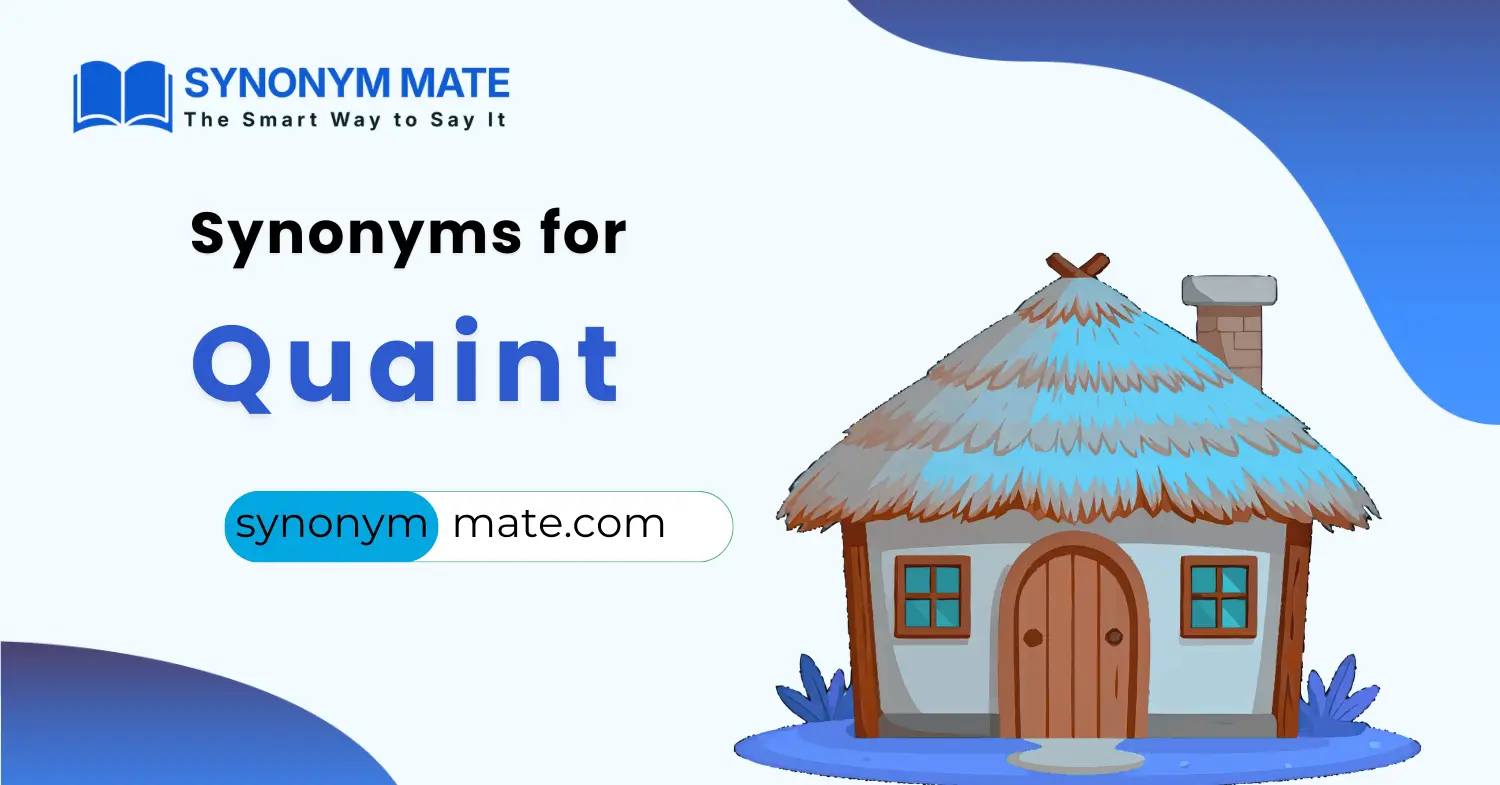

Synonyms for quaint often come to mind when you visit a small village café with wooden chairs and flower pots on the windows. The place feels warm and old-fashioned, yet lovely.
You might describe a tiny bookstore, a quiet street, or even someone’s style as quaint. That is why learning synonyms for quaint helps you sound more expressive.
The word appears often in travel blogs, lifestyle writing, and casual speech. Writers use synonyms for quaint to avoid repetition and add personality.
If you are a student, blogger, or content creator, knowing better word choices improves clarity. Synonyms for quaint help you describe charm in richer ways.
📚 What Does “Quaint” Really Mean?
Quaint is an adjective.
It describes something attractively unusual, old-fashioned, or charming in a simple way.
Native speakers use it for small towns, traditions, clothing, houses, or habits. It often suggests gentle charm with a touch of the past.
Sometimes it carries mild surprise. Something quaint feels different from modern life.
🧠 Connotative Meaning
Positive tone:
Charming, sweet, nostalgic.
Negative tone:
Old-fashioned in a slightly odd way.
Neutral tone:
Simply traditional or uncommon.
(Connotation means the emotional feeling or idea connected to a word.)
📖 Etymology
The word comes from Old French cointe, meaning clever or elegant.
In Middle English, it meant skillful or proud.
Over time, in Modern English, the meaning shifted toward charmingly old-fashioned.
🔊 Pronunciation
- US: /kweɪnt/
- UK: /kweɪnt/
🔡 Syllables
- quaint
🧩 Affixation Pattern
Root word only. No prefix or suffix.
📖 SYNONYMS LIST
Below are 40+ carefully chosen synonyms that match the core meaning of quaint. Each fits the idea of charmingly unusual or attractively old-fashioned.
Charming (adjective) — US /ˈtʃɑːr.mɪŋ/ | UK /ˈtʃɑː.mɪŋ/
Meaning: Pleasant and delightful in a simple way.
Examples:
- The cottage looks charming.
- She has a charming smile.
Picturesque (adjective) — US /ˌpɪk.tʃəˈresk/ | UK /ˌpɪk.tʃəˈresk/
Meaning: Visually attractive like a painting.
Examples:
- The village is picturesque.
- We stopped at a picturesque lake.
Old-fashioned (adjective) — US /ˌoʊldˈfæʃ.ənd/ | UK /ˌəʊldˈfæʃ.ənd/
Meaning: Belonging to an earlier time.
Examples:
- He wears old-fashioned hats.
- The shop has old-fashioned decor.
Rustic (adjective) — US /ˈrʌs.tɪk/ | UK /ˈrʌs.tɪk/
Meaning: Simple and countryside-like.
Examples:
- They live in a rustic cabin.
- The wedding had rustic charm.
Vintage (adjective) — US /ˈvɪn.tɪdʒ/ | UK /ˈvɪn.tɪdʒ/
Meaning: From an earlier era, valued for age.
Examples:
- She collects vintage dresses.
- The café uses vintage signs.
Nostalgic (adjective) — US /nɑːˈstæl.dʒɪk/ | UK /nɒˈstæl.dʒɪk/
Meaning: Bringing warm memories of the past.
Examples:
- The music feels nostalgic.
- I love that nostalgic vibe.
Whimsical (adjective) — US /ˈwɪm.zɪ.kəl/ | UK /ˈwɪm.zɪ.kəl/
Meaning: Playfully unusual or imaginative.
Examples:
- The garden looks whimsical.
- She painted whimsical patterns.
Idyllic (adjective) — US /aɪˈdɪl.ɪk/ | UK /ɪˈdɪl.ɪk/
Meaning: Peaceful and perfect in a simple way.
Examples:
- They found an idyllic town.
- It was an idyllic afternoon.
Antique (adjective) — US /ænˈtiːk/ | UK /ænˈtiːk/
Meaning: Old and often valuable.
Examples:
- The house has antique doors.
- She bought antique furniture.
Cozy (adjective) — US /ˈkoʊ.zi/ | UK /ˈkəʊ.zi/
Meaning: Warm and comfortable.
Examples:
- The room feels cozy.
- We sat in a cozy café.
Sweet (adjective) — US /swiːt/ | UK /swiːt/
Meaning: Pleasant in a gentle way.
Examples:
- What a sweet little house.
- That was a sweet idea.
Delightful (adjective) — US /dɪˈlaɪt.fəl/ | UK /dɪˈlaɪt.fəl/
Meaning: Giving great pleasure.
Examples:
- The town is delightful.
- She has a delightful laugh.
Charming-looking (adjective) — US /ˈtʃɑːr.mɪŋ ˌlʊk.ɪŋ/ | UK /ˈtʃɑː.mɪŋ ˌlʊk.ɪŋ/
Meaning: Appearing attractively unusual.
Examples:
- It’s a charming-looking street.
- They stayed in a charming-looking inn.
Storybook (adjective) — US /ˈstɔːr.i.bʊk/ | UK /ˈstɔː.ri.bʊk/
Meaning: Like something from a fairy tale.
Examples:
- The house looks storybook.
- It was a storybook wedding.
Provincial (adjective) — US /prəˈvɪn.ʃəl/ | UK /prəˈvɪn.ʃəl/
Meaning: Simple and rural in character.
Examples:
- It has a provincial feel.
- The town seems provincial.
Dainty (adjective) — US /ˈdeɪn.ti/ | UK /ˈdeɪn.ti/
Meaning: Small and delicately pretty.
Examples:
- She wore a dainty dress.
- The shop sells dainty cups.
Timeless (adjective) — US /ˈtaɪm.ləs/ | UK /ˈtaɪm.ləs/
Meaning: Not affected by time.
Examples:
- The design feels timeless.
- That village looks timeless.
Classic (adjective) — US /ˈklæs.ɪk/ | UK /ˈklæs.ɪk/
Meaning: Traditional and admired over time.
Examples:
- It has classic charm.
- She loves classic styles.
Endearing (adjective) — US /ɪnˈdɪr.ɪŋ/ | UK /ɪnˈdɪə.rɪŋ/
Meaning: Inspiring affection.
Examples:
- His habits are endearing.
- The town feels endearing.
Traditional (adjective) — US /trəˈdɪʃ.ən.əl/ | UK /trəˈdɪʃ.ən.əl/
Meaning: Based on long-established customs.
Examples:
- It’s a traditional house.
- They follow traditional ways.
Countryside-like (adjective) — US /ˈkʌn.tri.saɪd laɪk/ | UK /ˈkʌn.tri.saɪd laɪk/
Meaning: Resembling rural areas.
Examples:
- The area feels countryside-like.
- I love its countryside-like charm.
Colonial (adjective) — US /kəˈloʊ.ni.əl/ | UK /kəˈləʊ.ni.əl/
Meaning:
Colonial refers to a style linked to early settlement history.
Examples:
- They restored a colonial house.
- The town square feels colonial.
Arcadian (adjective) — US /ɑːrˈkeɪ.di.ən/ | UK /ɑːˈkeɪ.di.ən/
Meaning:
Arcadian describes an ideal and simple rural setting.
Examples:
- The valley felt Arcadian.
- They dreamed of an Arcadian escape.
Old-world (adjective) — US /ˈoʊld wɝːld/ | UK /ˈəʊld wɜːld/
Meaning:
Old-world suggests traditional European charm.
Examples:
- The bakery has an old-world feel.
- She loves old-world traditions.
Artisanal (adjective) — US /ɑːrˈtɪz.ə.nəl/ | UK /ɑːˈtɪz.ə.nəl/
Meaning:
Artisanal means handmade in a traditional way.
Examples:
- They sell artisanal bread.
- The market offers artisanal goods.
Handcrafted (adjective) — US /ˈhænd.kræf.tɪd/ | UK /ˈhænd.krɑːf.tɪd/
Meaning:
Handcrafted means made by hand with care.
Examples:
- The chair is handcrafted.
- She bought handcrafted jewelry.
Romantic (adjective) — US /roʊˈmæn.tɪk/ | UK /rəʊˈmæn.tɪk/
Meaning:
Romantic suggests a dreamy and emotional charm.
Examples:
- They had a romantic dinner there.
- The street looked romantic at night.
Sentimental (adjective) — US /ˌsen.t̬əˈmen.təl/ | UK /ˌsen.tɪˈmen.təl/
Meaning:
Sentimental means filled with emotional value.
Examples:
- That house feels sentimental.
- He keeps sentimental items.
Decorative (adjective) — US /ˈdek.ə.reɪ.t̬ɪv/ | UK /ˈdek.ər.ə.tɪv/
Meaning:
Decorative describes something used for visual beauty.
Examples:
- The windows are decorative.
- She added decorative lights.
Heritage (adjective) — US /ˈher.ɪ.t̬ɪdʒ/ | UK /ˈher.ɪ.tɪdʒ/
Meaning:
Heritage relates to cultural history and tradition.
Examples:
- The building has heritage status.
- It reflects local heritage style.
Vintage-style (adjective) — US /ˈvɪn.t̬ɪdʒ staɪl/ | UK /ˈvɪn.tɪdʒ staɪl/
Meaning:
Vintage-style means designed to look old-fashioned.
Examples:
- She wore a vintage-style dress.
- The café uses vintage-style décor.
Miniature (adjective) — US /ˈmɪn.i.ə.tʃɚ/ | UK /ˈmɪn.ɪ.ə.tʃə/
Meaning:
Miniature describes something very small and detailed.
Examples:
- They admired the miniature houses.
- The model town looks miniature.
Petite (adjective) — US /pəˈtiːt/ | UK /pəˈtiːt/
Meaning:
Petite means attractively small in size.
Examples:
- She lives in a petite apartment.
- The café is petite but cozy.
Snug (adjective) — US /snʌɡ/ | UK /snʌɡ/
Meaning:
Snug describes a small but comfortable space.
Examples:
- The house is snug.
- They sat in a snug corner.
Quiet (adjective) — US /ˈkwaɪ.ət/ | UK /ˈkwaɪ.ət/
Meaning:
Quiet means calm and not noisy.
Examples:
- It is a quiet neighborhood.
- They enjoyed the quiet village.
Sleepy (adjective) — US /ˈsliː.pi/ | UK /ˈsliː.pi/
Meaning:
Sleepy describes a calm and slow-paced place.
Examples:
- It is a sleepy seaside town.
- The streets looked sleepy.
Peaceful (adjective) — US /ˈpiːs.fəl/ | UK /ˈpiːs.fəl/
Meaning:
Peaceful means calm and free from stress.
Examples:
- They moved to a peaceful village.
- The garden feels peaceful.
Idiosyncratic (adjective) — US /ˌɪd.i.oʊ.sɪŋˈkræt̬.ɪk/ | UK /ˌɪd.i.ə.sɪŋˈkræt.ɪk/
Meaning:
Idiosyncratic describes something uniquely personal.
Examples:
- The shop has idiosyncratic décor.
- His style is idiosyncratic.
Eccentric (adjective) — US /ɪkˈsen.trɪk/ | UK /ɪkˈsen.trɪk/
Meaning:
Eccentric means slightly strange in an interesting way.
Examples:
- The house looks eccentric.
- She has an eccentric taste.
Curious (adjective) — US /ˈkjʊr.i.əs/ | UK /ˈkjʊə.ri.əs/
Meaning:
Curious describes something unusual or interesting.
Examples:
- It is a curious little shop.
- The building has curious details.
Distinctive (adjective) — US /dɪˈstɪŋk.tɪv/ | UK /dɪˈstɪŋk.tɪv/
Meaning:
Distinctive means clearly different and recognizable.
Examples:
- The cottage has distinctive windows.
- Her home feels distinctive.
Mini Comparison: Quaint vs Charming vs Rustic
Quaint suggests charmingly unusual or old-fashioned.
Charming focuses more on pleasant appeal.
Rustic highlights countryside simplicity.
Use quaint when there is gentle oddness. For warmth, use charming . Use rustic for rural character.
🔍 Synonyms by Tone
Positive: charming, delightful, idyllic, endearing, cozy
Neutral: traditional, classic, provincial
Negative (slightly): old-fashioned, provincial
Playful: whimsical, storybook
Tone matters because one word may sound sweet while another may feel outdated.
🧠 Context-Based Usage
Daily conversation:
“That café is quaint.”
Writing or blogging:
Travel writers often describe villages as quaint.
Professional tone:
Use traditional or classic instead of quaint in formal reports.
Creative writing:
Quaint works well in storytelling.
⚠️ Common Mistakes & Native Usage
Learners sometimes use quaint for modern things. It rarely fits futuristic designs.
Avoid overusing it. Variety improves writing.
In spoken English, quaint sounds warm. In business writing, it may feel informal.
🧩 Real-Life Mini Scenarios
Workplace:
A manager describes a small branch office as quaint but welcoming.
Social:
Friends call a tiny bakery quaint.
Media:
Films show quaint towns for romantic scenes.
Storytelling:
Authors use quaint to create nostalgic mood.
✅ Conclusion
Learning synonyms for quaint helps you describe charm with precision. Words shape feeling.
Instead of repeating one adjective, you gain variety. Your writing becomes richer.
Students and bloggers benefit from stronger vocabulary choices. Communication improves.
Try using one new synonym in your next email or story. Practice makes expression natural. ✨
📝 Practice Section
- The small mountain village looked old-fashioned and ___.
a) charming
b) industrial
c) aggressive - We stayed in a ___ little cottage by the sea.
a) picturesque
b) corporate
c) chaotic - Her handmade shop had a simple but ___ feel.
a) delightful
b) modernized
c) massive - The narrow streets gave the town a ___ character.
a) storybook
b) digital
c) mechanical - His accent sounded unusual yet ___.
a) endearing
b) harsh
c) artificial - The old railway station looked small and ___.
a) quaint
b) futuristic
c) commercial - They decorated the café in a ___, country style.
a) rustic
b) urban
c) metallic - The garden felt peaceful and almost ___.
a) idyllic
b) noisy
c) corporate - Her fashion sense is a bit old-fashioned but ___.
a) charming
b) flashy
c) dramatic - The antique shop had a ___ atmosphere that visitors loved.
a) nostalgic
b) digital
c) sterile
✍️ Reflection Task
Write one original sentence using any synonym of quaint.
Try to describe a place, person, or object in real life.
Answer Key:
1-a | 2-a | 3-a | 4-a | 5-a | 6-a | 7-a | 8-a | 9-a | 10-a