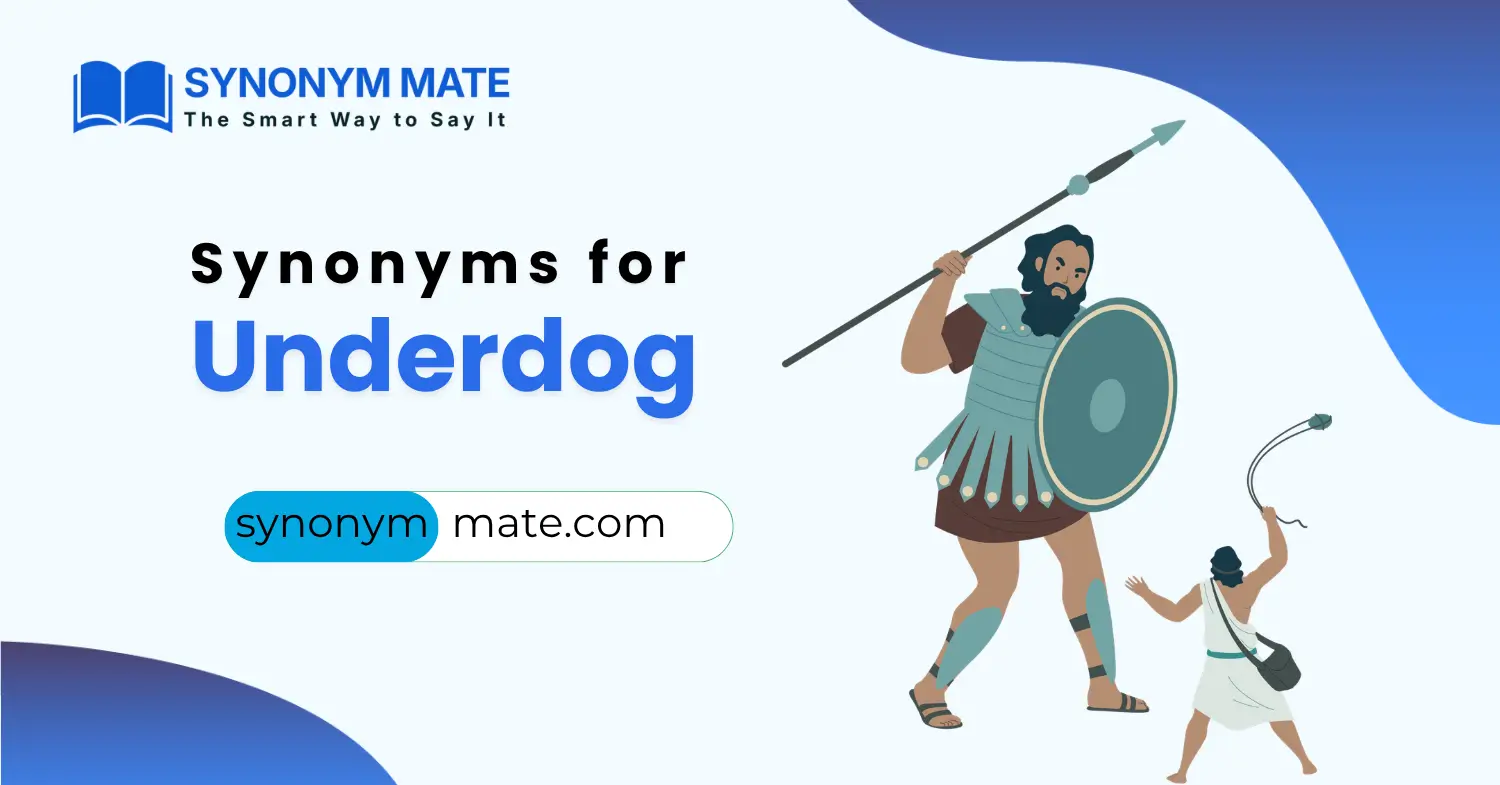

Synonyms for underdog often come to life in real situations. Think of a small team facing a strong rival but still fighting with hope and determination.
We all love stories where the underdog wins against the odds. From sports matches to personal struggles, this word connects deeply with real-life emotions.
Learning synonyms for underdog helps you express these moments better. It improves vocabulary for students, bloggers, writers, and everyday English users.
If you keep using the same word, your writing feels repetitive. Using synonyms for underdog adds variety, clarity, and a more natural flow in communication.
📚 What Does “Underdog” Really Mean?
Definition: An underdog is a person or team expected to lose or fail but still tries hard.
In simple English, it describes someone with fewer chances of success.
Native speakers often use it in sports, business, or life struggles. It carries a strong emotional meaning of hope and effort.
Part of Speech: Noun
🧠 Connotative Meaning
Connotation (definition): The emotional feeling a word carries beyond its basic meaning.
- Positive tone: bravery, determination, hope
- Negative tone: weakness, disadvantage
- Neutral tone: simply less likely to win
📖 Etymology
“Underdog” comes from dog fighting terms, where the losing dog was “under.”
- Old English (450–1100): No direct usage
- Middle English (1100–1500): “Dog” used metaphorically
- Modern English (1500–Present): “Underdog” became popular in the 19th century
🔊 Pronunciation (US & UK – IPA)
- US: /ˈʌndərˌdɔːɡ/
- UK: /ˈʌndədɒɡ/
🔤 Syllables
un-der-dog
🧩 Affixation Pattern
- Root: dog
- Prefix: under- (meaning below or less)
- Suffix: none
📖 SYNONYMS LIST
Outsider (noun) — US /aʊtˈsaɪdər/ | UK /aʊtˈsaɪdə/
Meaning: Someone not expected to succeed.
Examples:
- He entered as an outsider.
- The outsider surprised everyone.
Long shot (noun) — US /lɔːŋ ʃɑːt/ | UK /lɒŋ ʃɒt/
Meaning: A person with very low chances of winning.
Examples:
- The team was a long shot.
- It looked like a long shot.
Dark horse (noun) — US /dɑːrk hɔːrs/ | UK /dɑːk hɔːs/
Meaning: Someone unexpected who may succeed.
Examples:
- She is a dark horse.
- The dark horse won the race.
Weak contender (noun) — US /wiːk kənˈtɛndər/ | UK /wiːk kənˈtɛndə/
Meaning: A competitor with low chances.
Examples:
- He was a weak contender.
- They saw her as weak.
Challenger (noun) — US /ˈtʃælɪndʒər/ | UK /ˈtʃælɪndʒə/
Meaning: Someone competing against a stronger opponent.
Examples:
- The challenger fought hard.
- He became a serious challenger.
Lesser-known competitor (noun) — US /ˈlɛsər noʊn/ | UK /ˈlɛsə nəʊn/
Meaning: A competitor not widely recognized.
Examples:
- A lesser-known competitor won.
- Nobody expected them.
Undervalued player (noun) — US /ʌndərˈvæljuːd/ | UK /ʌndəˈvæljuːd/
Meaning: Someone underestimated in ability.
Examples:
- He is undervalued.
- The player proved critics wrong.
Outmatched opponent (noun) — US /aʊtˈmætʃt/ | UK /aʊtˈmætʃt/
Meaning: Someone weaker than the opponent.
Examples:
- They looked outmatched.
- The opponent dominated early.
Rookie (noun) — US /ˈrʊki/ | UK /ˈrʊki/
Meaning: A beginner with little experience.
Examples:
- The rookie surprised fans.
- He is just a rookie.
Beginner (noun) — US /bɪˈɡɪnər/ | UK /bɪˈɡɪnə/
Meaning: Someone new and inexperienced.
Examples:
- She is a beginner.
- Beginners can still win.
Newcomer (noun) — US /ˈnuːˌkʌmər/ | UK /ˈnjuːˌkʌmə/
Meaning: Someone new in a field.
Examples:
- The newcomer shocked everyone.
- He is new here.
Small player (noun) — US /smɔːl pleɪər/ | UK /smɔːl pleɪə/
Meaning: A person with little influence.
Examples:
- They are a small player.
- Small players can grow.
Low-ranked competitor (noun) — US /loʊ ræŋkt/ | UK /ləʊ ræŋkt/
Meaning: A competitor with a low position.
Examples:
- A low-ranked player won.
- Rankings can change fast.
Underdog contender (noun) — US /ˈʌndərdɔːɡ/ | UK /ˈʌndədɒɡ/
Meaning: A competitor with low chances.
Examples:
- The underdog contender fought well.
- Fans supported him.
Minor competitor (noun) — US /ˈmaɪnər/ | UK /ˈmaɪnə/
Meaning: A less important rival.
Examples:
- A minor competitor entered.
- They ignored him at first.
Least favorite (noun) — US /liːst ˈfeɪvərɪt/ | UK /liːst ˈfeɪvərɪt/
Meaning: The one least expected to win.
Examples:
- He was the least favorite.
- Nobody bet on her.
Struggler (noun) — US /ˈstrʌɡlər/ | UK /ˈstrʌɡlə/
Meaning: Someone facing difficulty.
Examples:
- He is a struggler.
- Strugglers often grow strong.
Fighter (noun) — US /ˈfaɪtər/ | UK /ˈfaɪtə/
Meaning: Someone who keeps trying despite difficulty.
Examples:
- She is a fighter.
- Fighters never quit.
Survivor (noun) — US /sərˈvaɪvər/ | UK /səˈvaɪvə/
Meaning: Someone who continues despite challenges.
Examples:
- He is a survivor.
- Survivors inspire others.
Underdog hero (noun) — US /ˈʌndərdɔːɡ/ | UK /ˈʌndədɒɡ/
Meaning: A weak competitor who succeeds.
Examples:
- The underdog hero won.
- Everyone cheered.
Outsized rival (noun) — US /ˈaʊtsaɪzd/ | UK /ˈaʊtsaɪzd/
Meaning: A smaller competitor facing a big rival.
Examples:
- They faced an outsized rival.
- The match was tough.
Disadvantaged competitor (noun) — US /ˌdɪsədˈvæntɪdʒd/ | UK /ˌdɪsədˈvɑːntɪdʒd/
Meaning: Someone with fewer advantages.
Examples:
- The disadvantaged competitor fought on.
- They lacked resources.
Low-profile player (noun) — US /loʊ ˈproʊfaɪl/ | UK /ləʊ ˈprəʊfaɪl/
Meaning: Someone not widely noticed.
Examples:
- A low-profile player won.
- Nobody expected it.
Outsider candidate (noun) — US /ˈaʊtsaɪdər/ | UK /ˈaʊtsaɪdə/
Meaning: A candidate not expected to win.
Examples:
- The outsider candidate shocked voters.
- He gained support.
Minor league player (noun) — US /ˈmaɪnər liːɡ/ | UK /ˈmaɪnə liːɡ/
Meaning: A less experienced competitor.
Examples:
- A minor league player rose.
- He proved his talent.
Lesser force (noun) — US /ˈlɛsər fɔːrs/ | UK /ˈlɛsə fɔːs/
Meaning: A weaker competitor.
Examples:
- They were a lesser force.
- Still, they won.
Rank outsider (noun) — US /ræŋk aʊtˈsaɪdər/ | UK /ræŋk aʊtˈsaɪdə/
Meaning: Someone with almost no chance.
Examples:
- A rank outsider won.
- It shocked fans.
Small contender (noun) — US /smɔːl kənˈtɛndər/ | UK /smɔːl kənˈtɛndə/
Meaning: A weak competitor.
Examples:
- The small contender fought hard.
- Nobody noticed them.
Hidden talent (noun) — US /ˈhɪdən/ | UK /ˈhɪdn/
Meaning: Someone with ability not yet known.
Examples:
- She is hidden talent.
- Hidden talent can shine.
Silent competitor (noun) — US /ˈsaɪlənt/ | UK /ˈsaɪlənt/
Meaning: Someone unnoticed but competing.
Examples:
- A silent competitor emerged.
- He surprised everyone.
Rising challenger (noun) — US /ˈraɪzɪŋ/ | UK /ˈraɪzɪŋ/
Meaning: A growing but underestimated competitor.
Examples:
- The rising challenger won.
- People noticed late.
Little guy (noun) — US /ˈlɪtl ɡaɪ/ | UK /ˈlɪtl ɡaɪ/
Meaning: Informal term for a weaker person.
Examples:
- Support the little guy.
- The little guy won.
Underdog team (noun) — US /ˈʌndərdɔːɡ/ | UK /ˈʌndədɒɡ/
Meaning: A team expected to lose.
Examples:
- The underdog team won.
- Fans loved them.
Weak side (noun) — US /wiːk saɪd/ | UK /wiːk saɪd/
Meaning: The less powerful group.
Examples:
- They were the weak side.
- Still, they tried hard.
Least expected winner (noun) — US /liːst ɪkˈspɛktɪd/ | UK /liːst ɪkˈspɛktɪd/
Meaning: Someone unlikely to succeed.
Examples:
- The least expected winner shocked all.
- Nobody saw it coming.
🔍 SYNONYMS BY TONE
Positive: fighter, survivor, rising challenger, hidden talent
Neutral: outsider, newcomer, challenger, competitor
Negative: weak contender, outmatched opponent, disadvantaged competitor
Informal: little guy, long shot
Tone matters because it changes emotion. “Fighter” inspires, while “weak contender” sounds critical.
⚖️ MINI COMPARISON
Underdog vs Outsider vs Dark Horse
- Underdog: Expected to lose
- Outsider: Not part of the main group
- Dark horse: Unexpected winner
Use “dark horse” when surprise success is likely.
🧠 CONTEXT-BASED USAGE
Daily conversation:
People say “root for the underdog” in casual talk.
Writing/blogging:
Adds emotional depth and storytelling power.
Professional tone:
Used in business or politics for weaker competitors.
Creative use:
Common in movies, books, and motivational stories.
⚠️ COMMON MISTAKES & NATIVE USAGE
Mistakes:
- Confusing “underdog” with “loser”
- Using it without context
- Overusing it in writing
Register Notes:
- Formal: disadvantaged competitor
- Informal: little guy
- Spoken: underdog is common
- Written: use variation
🧩 REAL-LIFE MINI SCENARIOS
Workplace:
A small startup competes with big companies as an underdog.
Social:
A shy student wins a debate competition.
Media:
Movies often show underdog stories.
Writing:
Bloggers use underdog stories to inspire readers.
📝 EXERCISE SECTION
Multiple Choice Questions
- Which word fits someone with low chances?
a) outsider b) authority c) control - Which shows surprise success?
a) dark horse b) weak side c) load - Which is informal?
a) little guy b) leverage c) tension - Which is positive tone?
a) fighter b) weak contender c) strain - Which means beginner?
a) newcomer b) thrust c) wave - Which shows disadvantage?
a) disadvantaged competitor b) boost c) charge - Which is neutral?
a) challenger b) coercion c) strain - Which means unexpected winner?
a) dark horse b) load c) pressure - Which fits emotional struggle?
a) struggler b) wave c) flow - Which is least expected?
a) long shot b) energy c) power
Answer Key
1-a 2-a 3-a 4-a 5-a 6-a 7-a 8-a 9-a 10-a
✍️ Practice Task
Write one sentence using any synonym of “underdog” from your daily life.
✅ Conclusion
Synonyms for underdog help you describe effort, struggle, and success more clearly. They add depth to your language and make your message stronger.
When you use different words, your writing becomes more interesting. It also helps you connect better with readers and listeners.
Learning synonyms for underdog improves your speaking and writing skills. It allows you to express emotions and situations with more precision.
Keep practicing these words in daily conversations and writing. Try using one new synonym each day to build a richer and more confident vocabulary.