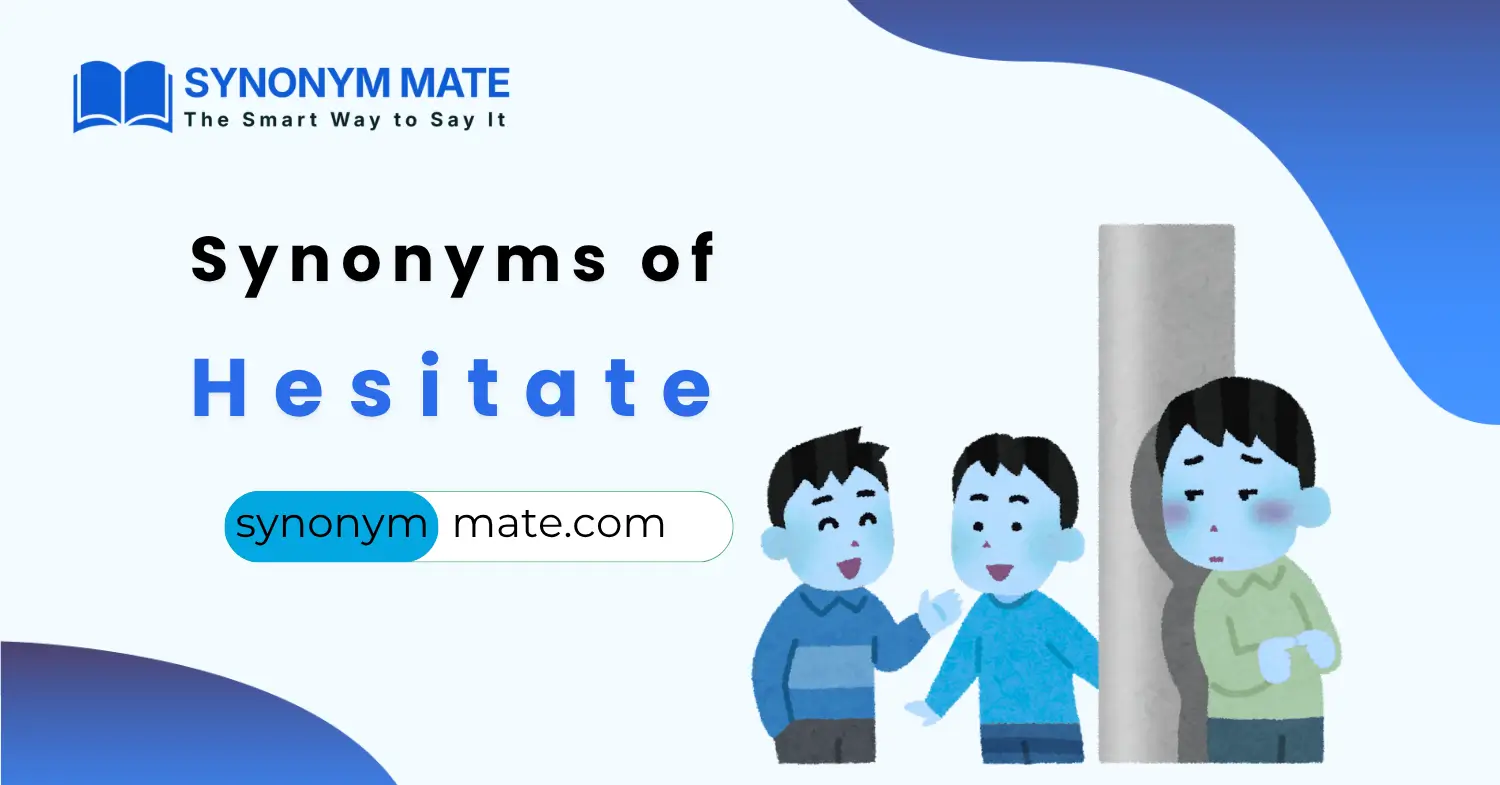

Synonyms of hesitate often appear in moments when you pause before speaking or acting. Imagine being asked a question in class and you hesitate before answering.
In daily life, we all hesitate at times. A student may hesitate before giving a presentation, or a buyer may hesitate before making a big decision.
Learning synonyms of hesitate helps you express these moments more clearly. It improves your vocabulary and makes your communication more natural.
For students, bloggers, and writers, synonyms of hesitate are useful in essays, conversations, and content writing. They help avoid repetition and add depth to your language.
📚 What Does “Hesitate” Really Mean?
Hesitate (verb) means to pause or delay before doing something, often because of doubt, uncertainty, or fear.
Native speakers use it when they are unsure or need time to think. For example, “She hesitated before answering.”
It reflects a moment of mental pause. It can show nervousness, caution, or careful thinking.
🧠 Connotative Meaning
(Connotation: the emotional meaning attached to a word beyond its basic definition.)
- Positive tone: thoughtful, careful
- Negative tone: unsure, fearful
- Neutral tone: pausing, delaying
📖 Etymology
The word hesitate comes from Latin haesitare, meaning “to stick” or “be uncertain.”
- Old English (450–1100): No direct use, but hesitation was expressed differently
- Middle English (1100–1500): Influenced by French and Latin
- Modern English (1500–Present): Adopted as “hesitate,” meaning to pause due to doubt
🔊 Pronunciation (IPA)
- US: /ˈhɛzɪteɪt/
- UK: /ˈhɛzɪteɪt/
🔡 Syllables
hes-i-tate
🔧 Affixation Pattern
- Root: hesit (to stick or pause)
- Prefix: none
- Suffix: -ate
📖 Synonyms List
Pause (verb) — US: /pɔːz/ | UK: /pɔːz/
Meaning: To stop briefly before continuing.
Examples:
- She paused before speaking.
- He paused to think.
Delay (verb) — US: /dɪˈleɪ/ | UK: /dɪˈleɪ/
Meaning: To put off doing something.
Examples:
- He delayed his decision.
- She delayed answering the call.
Falter (verb) — US: /ˈfɔːltər/ | UK: /ˈfɔːltə/
Meaning: To hesitate or lose confidence.
Examples:
- His voice faltered.
- She faltered during the speech.
Waver (verb) — US: /ˈweɪvər/ | UK: /ˈweɪvə/
Meaning: To be unsure between choices.
Examples:
- He wavered before deciding.
- She wavered in her opinion.
Dither (verb) — US: /ˈdɪðər/ | UK: /ˈdɪðə/
Meaning: To be unable to decide.
Examples:
- Stop dithering and act.
- She dithered over choices.
Stammer (verb) — US: /ˈstæmər/ | UK: /ˈstæmə/
Meaning: To speak with pauses or hesitation.
Examples:
- He stammered nervously.
- She stammered during the answer.
Stumble (verb) — US: /ˈstʌmbəl/ | UK: /ˈstʌmbəl/
Meaning: To hesitate while speaking or acting.
Examples:
- He stumbled over his words.
- She stumbled during the speech.
Vacillate (verb) — US: /ˈvæsɪleɪt/ | UK: /ˈvæsɪleɪt/
Meaning: To change decisions repeatedly.
Examples:
- He vacillated between options.
- She vacillated before choosing.
Hover (verb) — US: /ˈhʌvər/ | UK: /ˈhʌvə/
Meaning: To remain uncertain.
Examples:
- He hovered before answering.
- She hovered near the decision.
Linger (verb) — US: /ˈlɪŋɡər/ | UK: /ˈlɪŋɡə/
Meaning: To delay or stay longer than needed.
Examples:
- He lingered before leaving.
- She lingered at the door.
Hang back (verb) — US: /hæŋ bæk/ | UK: /hæŋ bæk/
Meaning: To hold back due to hesitation.
Examples:
- He hung back in fear.
- She hung back from speaking.
Hold back (verb) — US: /hoʊld bæk/ | UK: /həʊld bæk/
Meaning: To stop yourself from acting.
Examples:
- She held back her opinion.
- He held back from replying.
Think twice (verb) — US: /θɪŋk twaɪs/ | UK: /θɪŋk twaɪs/
Meaning: To hesitate before acting.
Examples:
- Think twice before speaking.
- He thought twice before investing.
Delay action (verb) — US: /dɪˈleɪ/ | UK: /dɪˈleɪ/
Meaning: To postpone action due to doubt.
Examples:
- She delayed action.
- He delayed action out of fear.
Shrink (verb) — US: /ʃrɪŋk/ | UK: /ʃrɪŋk/
Meaning: To avoid action due to fear.
Examples:
- He shrank from the challenge.
- She shrank from speaking up.
Balk (verb) — US: /bɔːk/ | UK: /bɔːk/
Meaning: To stop suddenly and refuse.
Examples:
- He balked at the idea.
- She balked at the cost.
Demur (verb) — US: /dɪˈmɜːr/ | UK: /dɪˈmɜː/
Meaning: To show hesitation politely.
Examples:
- She demurred politely.
- He demurred at first.
Stall (verb) — US: /stɔːl/ | UK: /stɔːl/
Meaning: To delay intentionally.
Examples:
- He stalled for time.
- She stalled before answering.
Drag one’s feet (verb) — US: /dræɡ/ | UK: /dræɡ/
Meaning: To delay action unwillingly.
Examples:
- He dragged his feet.
- She dragged her feet on the task.
Procrastinate (verb) — US: /proʊˈkræstɪneɪt/ | UK: /prəˈkræstɪneɪt/
Meaning: To delay doing something.
Examples:
- He procrastinated on homework.
- She procrastinated often.
Defer (verb) — US: /dɪˈfɜːr/ | UK: /dɪˈfɜː/
Meaning: To delay action or decision.
Examples:
- He deferred his response.
- She deferred the meeting.
Delay response (verb) — US: /dɪˈleɪ/ | UK: /dɪˈleɪ/
Meaning: To take time before replying.
Examples:
- She delayed her response.
- He delayed response intentionally.
Second-guess (verb) — US: /ˈsɛkənd ɡɛs/ | UK: /ˈsɛkənd ɡɛs/
Meaning: To doubt your own decision.
Examples:
- He second-guessed himself.
- She second-guessed her choice.
Reconsider (verb) — US: /ˌriːkənˈsɪdər/ | UK: /ˌriːkənˈsɪdə/
Meaning: To think again before acting.
Examples:
- He reconsidered the offer.
- She reconsidered her answer.
Ponder (verb) — US: /ˈpɑːndər/ | UK: /ˈpɒndə/
Meaning: To think carefully before deciding.
Examples:
- She pondered the question.
- He pondered his next step.
Mull over (verb) — US: /mʌl ˈoʊvər/ | UK: /mʌl ˈəʊvə/
Meaning: To think about something deeply.
Examples:
- He mulled over the idea.
- She mulled it over quietly.
Reflect (verb) — US: /rɪˈflɛkt/ | UK: /rɪˈflɛkt/
Meaning: To think carefully before acting.
Examples:
- He reflected before replying.
- She reflected on her choice.
Pause for thought (verb) — US: /pɔːz/ | UK: /pɔːz/
Meaning: To stop and think before acting.
Examples:
- He paused for thought.
- She paused for thought before answering.
Draw back (verb) — US: /drɔː bæk/ | UK: /drɔː bæk/
Meaning: To move away due to hesitation.
Examples:
- He drew back in fear.
- She drew back from speaking.
Flinch (verb) — US: /flɪntʃ/ | UK: /flɪntʃ/
Meaning: To react with hesitation or fear.
Examples:
- He flinched before responding.
- She flinched at the idea.
Hang fire (verb) — US: /hæŋ ˈfaɪər/ | UK: /hæŋ ˈfaɪə/
Meaning: To delay action temporarily.
Examples:
- He decided to hang fire.
- She hung fire on the decision.
Play for time (verb) — US: /pleɪ fər taɪm/ | UK: /pleɪ fə taɪm/
Meaning: To delay deliberately.
Examples:
- He played for time.
- She played for time during the meeting.
Hold off (verb) — US: /hoʊld ɔːf/ | UK: /həʊld ɒf/
Meaning: To wait before acting.
Examples:
- He held off making a choice.
- She held off responding.
Back off (verb) — US: /bæk ɔːf/ | UK: /bæk ɒf/
Meaning: To step away due to doubt.
Examples:
- He backed off suddenly.
- She backed off from the plan.
Shrink back (verb) — US: /ʃrɪŋk bæk/ | UK: /ʃrɪŋk bæk/
Meaning: To move back due to fear or hesitation.
Examples:
- He shrank back nervously.
- She shrank back from the crowd.
Lose nerve (verb) — US: /luːz nɜːrv/ | UK: /luːz nɜːv/
Meaning: To become afraid and hesitate.
Examples:
- He lost his nerve.
- She lost nerve at the last moment.
Be unsure (verb) — US: /ʌnˈʃʊr/ | UK: /ʌnˈʃɔː/
Meaning: To feel uncertain before acting.
Examples:
- He was unsure about the answer.
- She felt unsure before speaking.
Be reluctant (verb) — US: /rɪˈlʌktənt/ | UK: /rɪˈlʌktənt/
Meaning: To be unwilling or slow to act.
Examples:
- He was reluctant to agree.
- She felt reluctant to speak.
Be indecisive (verb) — US: /ˌɪndɪˈsaɪsɪv/ | UK: /ˌɪndɪˈsaɪsɪv/
Meaning: To struggle to make decisions.
Examples:
- He was indecisive.
- She seemed indecisive about it.
Think it over (verb) — US: /θɪŋk ɪt ˈoʊvər/ | UK: /θɪŋk ɪt ˈəʊvə/
Meaning: To take time before deciding.
Examples:
- He thought it over carefully.
- She thought it over overnight.
🔍 Synonyms by Tone
Positive: pause, think twice, consider
Neutral: delay, linger, hold back
Negative: procrastinate, dither, stall
Why tone matters:
Tone changes meaning. “Pause” sounds thoughtful, while “procrastinate” sounds negative.
⚖️ “Hesitate” vs Close Alternatives
| Word | Meaning | Tone | Use |
|---|---|---|---|
| Hesitate | Pause due to doubt | Neutral | General use |
| Pause | Brief stop | Positive | Thoughtful moments |
| Procrastinate | Delay tasks | Negative | Avoidance |
🧠 Context-Based Usage
Daily conversation:
“I hesitated before answering.”
Writing/blogging:
Use “waver” or “vacillate” for variety.
Professional tone:
“Delay” or “defer” sounds formal.
Creative writing:
“Falter” adds emotion.
⚠️ Common Mistakes & Native Usage
Mistakes:
- Confusing “hesitate” with “hesitation”
- Using it in wrong tense
Register Notes:
- Formal: vacillate, demur
- Informal: hold back, hang back
🧩 Real-Life Mini Scenarios
Workplace:
He hesitated before accepting the offer.
Social:
She hesitated to speak in public.
Media:
Characters hesitate before big decisions.
✅ Conclusion
Synonyms of hesitate help you express doubt and pause clearly. They make your language more flexible and natural.
Using different words improves writing quality. It also helps you sound more fluent in conversations.
For students and bloggers, these synonyms boost clarity and engagement. They reduce repetition and add style.
Start practicing today. Try using these words in your daily conversations and writing tasks to build confidence.
📝 Practice Exercise
- She ___ before answering the question.
a) rushed b) paused c) ignored - He ___ his decision for days.
a) delayed b) finished c) completed - She ___ between two options.
a) wavered b) jumped c) ran - He ___ during the speech.
a) faltered b) shouted c) laughed - Stop ___ and take action.
a) dithering b) working c) running - She ___ her response.
a) stalled b) gave c) shared - He ___ before speaking.
a) hesitated b) screamed c) ignored - She ___ from the challenge.
a) shrank b) accepted c) enjoyed - He ___ at the idea.
a) balked b) agreed c) supported - She ___ on her homework.
a) procrastinated b) finished c) submitted
✍️ Reflection Task
Write one sentence using any synonym of “hesitate.”
✅ Answer Key
1-b 2-a 3-a 4-a 5-a 6-a 7-a 8-a 9-a 10-a