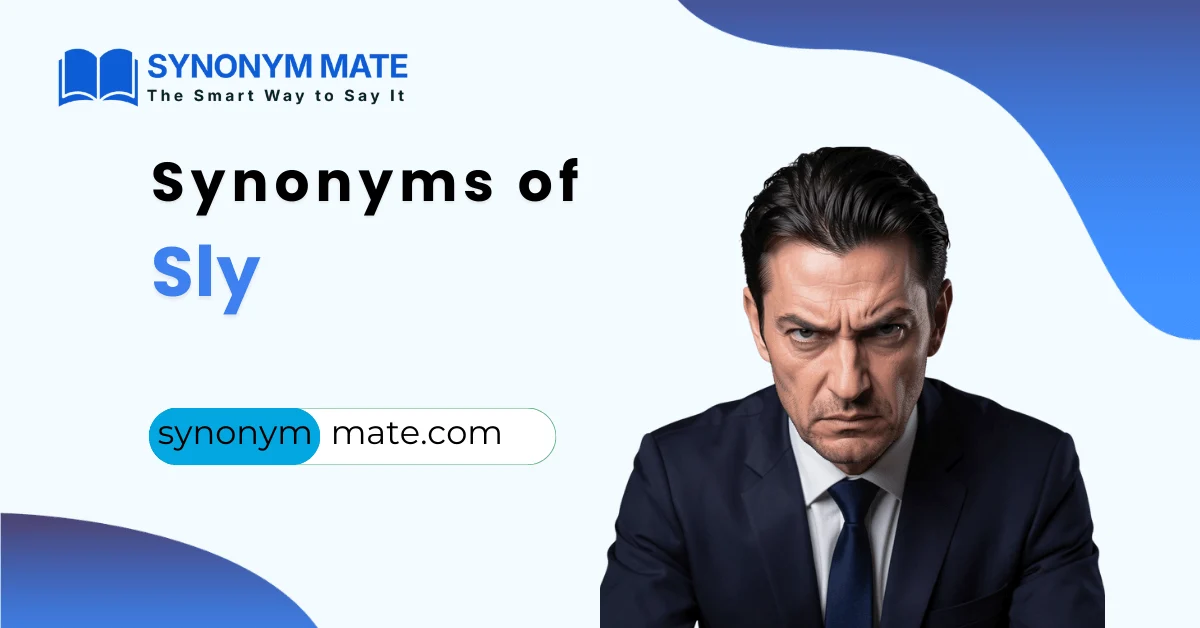

Synonyms of sly often come to mind when someone gives a secret smile after a clever joke. You notice the look. It feels playful. It also feels a little hidden.
Maybe your friend makes a sly comment during class. Everyone laughs. The teacher almost misses it. That moment shows why synonyms of sly matter.
The word appears in stories, daily talks, and even news articles. Knowing synonyms of sly helps you describe tone better. It sharpens your writing.
For students, bloggers, content writers, and daily English users, learning synonyms of sly builds expressive power. One small word can change the whole mood of a sentence.
What Does “Synonyms of Sly” Really Mean?
Sly is an adjective.
It describes someone who is clever in a secret or slightly dishonest way.
Native speakers often connect it with quiet intelligence, hidden plans, or playful trickery.
In simple English:
Sly means acting smart in a hidden or secretive way.
It appears in:
- Daily conversations
- Fiction and storytelling
- Humor and sarcasm
- Descriptions of personality
Connotative Meaning
(Connotation means the emotional feeling connected to a word beyond its basic meaning.)
Positive tone:
It can suggest cleverness or wit.
Negative tone:
It may imply dishonesty or manipulation.
Neutral tone:
In storytelling, it simply describes secret behavior.
Tone changes everything. A “sly grin” feels playful. A “sly scheme” feels suspicious.
Etymology of “Sly”
The word comes from Old Norse slœgr, meaning clever or crafty.
Old English (450–1100)
Similar words described skill and cunning.
Middle English (1100–1500)
“Sly” appeared in forms meaning skillful or tricky.
Modern English (1500–Present)
The meaning shifted toward secretive cleverness.
Pronunciation
- US: /slaɪ/
- UK: /slaɪ/
Syllables
sly
Affixation Pattern
Root: sly
Prefix: none
Suffix: none
Synonyms List
Below are 40 accurate and commonly used synonyms of sly. Each reflects hidden cleverness, subtle trickery, or quiet intelligence.
Cunning (Adjective) — US /ˈkʌnɪŋ/ | UK /ˈkʌnɪŋ/
Meaning: Clever in a secret or tricky way.
Examples:
- She gave a cunning smile.
- He made a cunning plan.
Crafty (Adjective) — US /ˈkræfti/ | UK /ˈkrɑːfti/
Meaning: Skilled at achieving goals through clever tricks.
Examples:
- The fox looked crafty.
- That was a crafty move.
Sneaky (Adjective) — US /ˈsniːki/ | UK /ˈsniːki/
Meaning: Acting secretly to avoid being noticed.
Examples:
- He made a sneaky comment.
- That was a sneaky trick.
Devious (Adjective) — US /ˈdiːviəs/ | UK /ˈdiːviəs/
Meaning: Dishonest in a clever and indirect way.
Examples:
- She had a devious plan.
- His path was devious.
Wily (Adjective) — US /ˈwaɪli/ | UK /ˈwaɪli/
Meaning: Skilled at using clever tricks.
Examples:
- The wily fox escaped.
- He is a wily negotiator.
Shrewd (Adjective) — US /ʃruːd/ | UK /ʃruːd/
Meaning: Showing sharp judgment and cleverness.
Examples:
- She made a shrewd choice.
- That was a shrewd deal.
Scheming (Adjective) — US /ˈskiːmɪŋ/ | UK /ˈskiːmɪŋ/
Meaning: Secretly planning something dishonest.
Examples:
- He looked scheming.
- They made scheming moves.
Foxy (Adjective) — US /ˈfɑksi/ | UK /ˈfɒksi/
Meaning: Clever in a tricky way.
Examples:
- She gave a foxy grin.
- That was a foxy answer.
Calculating (Adjective) — US /ˈkælkjəˌleɪtɪŋ/ | UK /ˈkælkjʊleɪtɪŋ/
Meaning: Acting in a careful and strategic way.
Examples:
- He had a calculating look.
- Her tone sounded calculating.
Manipulative (Adjective) — US /məˈnɪpjələtɪv/ | UK /məˈnɪpjʊlətɪv/
Meaning: Influencing others unfairly for personal gain.
Examples:
- That felt manipulative.
- He seemed manipulative.
Underhanded (Adjective) — US /ˌʌndərˈhændɪd/ | UK /ˌʌndəˈhændɪd/
Meaning: Acting secretly and dishonestly.
Examples:
- It was underhanded behavior.
- She used underhanded tactics.
Subtle (Adjective) — US /ˈsʌtəl/ | UK /ˈsʌtəl/
Meaning: Done in a quiet and not obvious way.
Examples:
- He gave a subtle hint.
- That was a subtle joke.
Astute (Adjective) — US /əˈstuːt/ | UK /əˈstjuːt/
Meaning: Very clever and quick to understand.
Examples:
- She is astute.
- That was astute thinking.
Artful (Adjective) — US /ˈɑrtfəl/ | UK /ˈɑːtfəl/
Meaning: Skillful in using clever methods.
Examples:
- He gave an artful reply.
- That was artful timing.
Guileful (Adjective) — US /ˈɡaɪlfəl/ | UK /ˈɡaɪlfəl/
Meaning: Full of clever tricks.
Examples:
- She had a guileful smile.
- His tone was guileful.
Tricky (Adjective) — US /ˈtrɪki/ | UK /ˈtrɪki/
Meaning: Likely to deceive or confuse.
Examples:
- That was a tricky question.
- He gave a tricky answer.
Furtive (Adjective) — US /ˈfɜrtɪv/ | UK /ˈfɜːtɪv/
Meaning: Secretive to avoid attention.
Examples:
- She made a furtive glance.
- He looked furtive.
Insidious (Adjective) — US /ɪnˈsɪdiəs/ | UK /ɪnˈsɪdiəs/
Meaning: Causing harm in a gradual hidden way.
Examples:
- It was an insidious plan.
- The change was insidious.
Crafty-minded (Adjective) — US /ˈkræfti ˈmaɪndɪd/ | UK /ˈkrɑːfti ˈmaɪndɪd/
Meaning: Having a mind that plans clever tricks.
Examples:
- He is crafty-minded.
- That sounded crafty-minded.
Sharp (Adjective) — US /ʃɑrp/ | UK /ʃɑːp/
Meaning: Quick and clever in thinking.
Examples:
- She is sharp.
- That was a sharp reply.
Canine (Figurative) (Adjective) — US /ˈkeɪnaɪn/ | UK /ˈkeɪnaɪn/
Meaning: Showing fox-like cleverness.
Examples:
- He gave a canine grin.
- Her look felt canine.
Mischievous (Adjective) — US /ˈmɪstʃɪvəs/ | UK /ˈmɪstʃɪvəs/
Meaning: Playfully causing small trouble.
Examples:
- She had a mischievous smile.
- That was mischievous humor.
Strategic (Adjective) — US /strəˈtiːdʒɪk/ | UK /strəˈtiːdʒɪk/
Meaning: Planned carefully to gain advantage.
Examples:
- He made a strategic move.
- Her answer was strategic.
Slick (Adjective) — US /slɪk/ | UK /slɪk/
Meaning: Smooth and clever, sometimes too smooth.
Examples:
- He gave a slick response.
- That felt slick.
Covert (Adjective) — US /ˈkoʊvɜrt/ | UK /ˈkəʊvɜːt/
Meaning: Hidden and secret.
Examples:
- It was a covert plan.
- They ran covert operations.
Surreptitious (Adjective) — US /ˌsɜrəpˈtɪʃəs/ | UK /ˌsʌrəpˈtɪʃəs/
Meaning: Done secretly to avoid notice.
Examples:
- He made surreptitious calls.
- She gave a surreptitious smile.
Cagey (Adjective) — US /ˈkeɪdʒi/ | UK /ˈkeɪdʒi/
Meaning: Avoiding clear answers to hide truth.
Examples:
- He was cagey.
- Her reply sounded cagey.
Slippery (Adjective) — US /ˈslɪpəri/ | UK /ˈslɪpəri/
Meaning: Hard to pin down or trust.
Examples:
- He is slippery.
- That was slippery behavior.
Artful-dodging (Adjective) — US /ˈɑrtfəl ˈdɑdʒɪŋ/ | UK /ˈɑːtfəl ˈdɒdʒɪŋ/
Meaning: Avoiding directly with clever tricks.
Examples:
- He used artful-dodging tactics.
- That reply was artful-dodging.
Conniving (Adjective) — US /kəˈnaɪvɪŋ/ | UK /kəˈnaɪvɪŋ/
Meaning: Secretly planning to gain advantage.
Examples:
- She looked conniving.
- That was conniving behavior.
Subversive (Adjective) — US /səbˈvɜrsɪv/ | UK /səbˈvɜːsɪv/
Meaning: Trying to undermine quietly.
Examples:
- It felt subversive.
- His humor was subversive.
Evasive (Adjective) — US /ɪˈveɪsɪv/ | UK /ɪˈveɪsɪv/
Meaning: Avoiding direct answers cleverly.
Examples:
- She was evasive.
- That answer sounded evasive.
Guileless (Opposite nuance) (Adjective) — US /ˈɡaɪlləs/ | UK /ˈɡaɪlləs/
Meaning: Innocent and without trickery.
Examples:
- He is guileless.
- Her smile was guileless.
Smart-aleck (Adjective) — US /ˈsmɑrt ˌælɪk/ | UK /ˈsmɑːt ˌalɪk/
Meaning: Showing cleverness in an annoying way.
Examples:
- He made a smart-aleck remark.
- That tone felt smart-aleck.
Subtle-minded (Adjective) — US /ˈsʌtəl ˈmaɪndɪd/ | UK /ˈsʌtəl ˈmaɪndɪd/
Meaning: Thinking in hidden and refined ways.
Examples:
- She is subtle-minded.
- That was subtle-minded humor.
Tactical (Adjective) — US /ˈtæktɪkəl/ | UK /ˈtæktɪkəl/
Meaning: Carefully planned for advantage.
Examples:
- It was a tactical response.
- His silence was tactical.
Cryptic (Adjective) — US /ˈkrɪptɪk/ | UK /ˈkrɪptɪk/
Meaning: Mysterious and hard to understand.
Examples:
- She gave a cryptic smile.
- That message was cryptic.
Plotting (Adjective) — US /ˈplɑtɪŋ/ | UK /ˈplɒtɪŋ/
Meaning: Secretly planning something.
Examples:
- He looked plotting.
- They were plotting quietly.
Undercover (Adjective) — US /ˌʌndərˈkʌvər/ | UK /ˌʌndəˈkʌvə/
Meaning: Acting secretly to hide identity.
Examples:
- It was undercover work.
- She gave an undercover hint.
Synonyms by Tone
Positive: shrewd, astute, strategic, subtle
Neutral: covert, tactical, calculating
Negative: manipulative, conniving, underhanded
Playful/Informal: sneaky, foxy, mischievous
Tone matters because it shapes judgment. “Shrewd” sounds smart. “Conniving” sounds dishonest.
Mini Comparison: Sly vs Cunning vs Sneaky
Sly suggests hidden cleverness.
Cunning highlights skill in trickery.
Sneaky focuses on secret behavior.
For subtle personality traits, choose “sly.”
When describing smart plans, use “cunning.”
In the case of small secret actions, go with “sneaky.”
Context-Based Usage
Daily conversation:
“She gave me a sly look.”
Writing or blogging:
A character may have a sly personality.
Professional tone:
Avoid “sly” in formal reports. Use “strategic” or “calculating.”
Creative writing:
“Sly grin” creates vivid imagery.
Common Mistakes
Learners confuse “sly” with “smart.”
Smart is neutral. Sly suggests secrecy.
Overusing “sneaky” can make writing childish.
Register Notes
Formal: calculating, strategic
Informal: sneaky, foxy
You may also explore related vocabulary like synonyms for clever for deeper nuance.
Conclusion
Synonyms of sly help you describe hidden intelligence with precision. One word changes tone quickly. That power matters.
Students write better essays with accurate vocabulary. Bloggers create sharper character descriptions. Speakers sound more natural.
Strong vocabulary builds confidence in every context. It helps you avoid repetition and express subtle feelings clearly.
Practice using these synonyms of sly in daily conversations, short stories, and emails. Try one today and notice how your language grows.
Practice Exercise
Choose the best synonym.
- He avoided answering directly.
a) evasive b) sharp c) subtle - She planned secretly for advantage.
a) tactical b) plotting c) guileless - The fox escaped cleverly.
a) wily b) cryptic c) slick - He made a playful secret joke.
a) mischievous b) subversive c) covert - Her business choice was smart and wise.
a) sneaky b) shrewd c) conniving - The reply felt dishonest and hidden.
a) underhanded b) subtle c) sharp - He spoke in a mysterious way.
a) cryptic b) strategic c) foxy - She used smooth clever charm.
a) slick b) furtive c) evasive - The comment was clever but annoying.
a) smart-aleck b) astute c) tactical - He gave a quiet secret glance.
a) furtive b) sharp c) shrewd
Reflection Task:
Write one sentence using any synonym of sly in a storytelling context.
Answer Key:
1-a | 2-b | 3-a | 4-a | 5-b | 6-a | 7-a | 8-a | 9-a | 10-a