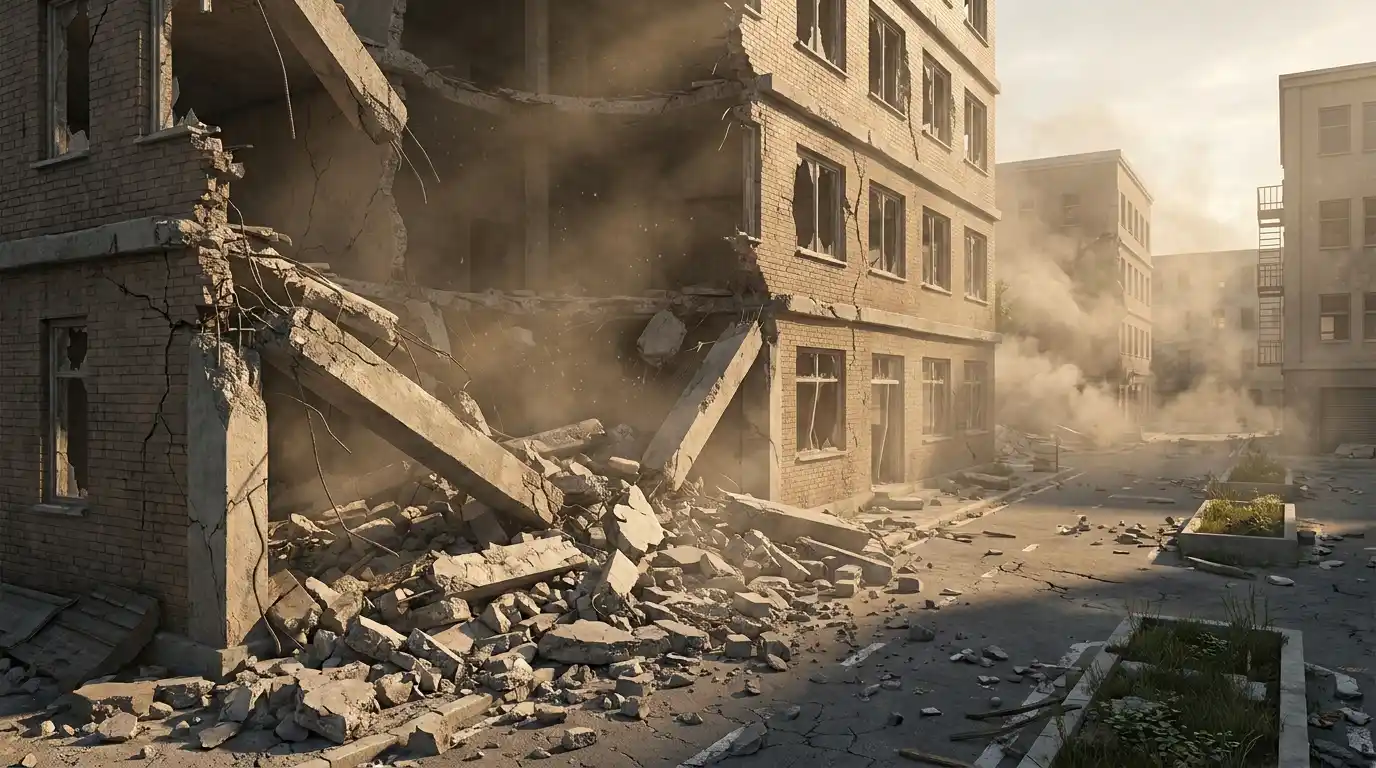

Synonyms for destruction can make your writing much sharper. Imagine describing a damaged building. “Destruction” works, but “demolition” or “devastation” may fit better.
In everyday English, we often use synonyms for destruction when we need to describe severe damage, ruin, or complete removal. The right word adds precision.
For students, bloggers, writers, and daily English users, synonyms for destruction help avoid repetition. They also make essays, stories, reports, and conversations more expressive.
Learning synonyms for destruction is useful because the words do not all carry the same strength. Some suggest damage, while others suggest total ruin or removal.
What Does “Destruction” Really Mean?
Destruction is the act or process of damaging, ruining, or completely destroying something.
It is a noun. The related verb is destroy, which means to damage something so badly that it can no longer exist, function, or remain in its original form.
Native speakers usually understand “destruction” as a strong word. It often suggests serious physical damage, but it can also describe the loss of systems, relationships, hopes, environments, or ideas.
Common contexts include:
- The destruction of buildings
- The destruction caused by a natural disaster
- The destruction of forests
- The destruction of evidence
- The destruction of an old system
- The destruction of someone’s confidence
The exact meaning depends on context. “Destruction” can describe gradual ruin, sudden devastation, or complete elimination.
Connotative Meaning
Connotation (the emotional feeling or association connected with a word) can change how a sentence feels.
Positive tone: Destruction itself is rarely positive. However, words such as demolition can sound practical when an unsafe structure is intentionally removed.
Negative tone: Words such as devastation, annihilation, and obliteration strongly suggest severe or tragic loss.
Neutral tone: Damage, demolition, and ruination can sound more factual when used in the right context.
The tone matters because two words can describe similar events while creating very different emotional reactions.
Etymology of “Destruction”
The word destruction comes from Latin destructio, meaning “a pulling down” or “demolishing.” It comes from the Latin verb destruere, meaning “to pull down” or “tear apart.”
During the Old English period (450–1100), English commonly used native Germanic words for ideas related to breaking, ruining, and destroying. The modern form “destruction” was not yet established in English.
During the Middle English period (1100–1500), French and Latin vocabulary strongly influenced English. Forms related to destruction entered English through Anglo-French and Old French, ultimately tracing back to Latin.
In Modern English (1500–Present), destruction became a standard noun used across everyday, literary, academic, scientific, historical, and professional writing.
Pronunciation
- US: /dɪˈstrʌkʃən/
- UK: /dɪˈstrʌkʃən/
Syllables
de-struc-tion
Affixation Pattern of “Destruction”
Root: struct / struc, connected with the idea of building or putting together
Prefix: de-
Suffix: -tion
The prefix de- can indicate reversal or removal, while -tion forms a noun describing an action, process, or result.
Synonyms List
The following words are useful alternatives to destruction. They are not always interchangeable. Their strength, context, and emotional tone can differ.
Damage (Noun) — US /ˈdæmɪdʒ/ | UK /ˈdæmɪdʒ/
Meaning: Damage means physical or other harm that reduces the condition, value, or usefulness of something.
Examples:
- The storm caused serious damage to several homes.
- We repaired the damage before reopening the store.
Ruin (Noun) — US /ˈruːɪn/ | UK /ˈruːɪn/
Meaning: Ruin means severe damage that leaves something in a badly damaged or unusable state.
Examples:
- Heavy rain brought the old bridge to ruin.
- The fire left the historic building in ruin.
Devastation (Noun) — US /ˌdevəˈsteɪʃən/ | UK /ˌdevəˈsteɪʃən/
Meaning: Devastation means extremely severe destruction that causes widespread damage or loss.
Examples:
- The earthquake caused widespread devastation.
- Residents returned to see the devastation after the storm.
Demolition (Noun) — US /ˌdeməˈlɪʃən/ | UK /ˌdeməˈlɪʃən/
Meaning: Demolition means the deliberate destruction or taking down of a building or structure.
Examples:
- The city approved the demolition of the unsafe building.
- Workers began the demolition early Monday morning.
Annihilation (Noun) — US /əˌnaɪəˈleɪʃən/ | UK /əˌnaɪəˈleɪʃən/
Meaning: Annihilation means complete destruction so that almost nothing remains.
Examples:
- The army feared the annihilation of the entire unit.
- The fictional weapon threatened the annihilation of the planet.
Obliteration (Noun) — US /əˌblɪtəˈreɪʃən/ | UK /əˌblɪtəˈreɪʃən/
Meaning: Obliteration means complete destruction or removal until something is no longer recognizable.
Examples:
- The explosion caused the obliteration of the small structure.
- The editor ordered the obliteration of sensitive details.
Eradication (Noun) — US /ɪˌrædəˈkeɪʃən/ | UK /ɪˌrædɪˈkeɪʃən/
Meaning: Eradication means complete removal or destruction of something unwanted.
Examples:
- The program focuses on the eradication of the invasive species.
- Scientists worked toward the eradication of the disease.
Ruination (Noun) — US /ˌruːəˈneɪʃən/ | UK /ˌruːɪˈneɪʃən/
Meaning: Ruination means the process of causing something to become ruined or seriously damaged.
Examples:
- Years of neglect led to the ruination of the estate.
- The scandal resulted in the ruination of his career.
Desolation (Noun) — US /ˌdesəˈleɪʃən/ | UK /ˌdesəˈleɪʃən/
Meaning: Desolation means a state of complete emptiness, ruin, or severe destruction.
Examples:
- The abandoned town showed signs of desolation.
- The battlefield was a scene of terrible desolation.
Wreckage (Noun) — US /ˈrekɪdʒ/ | UK /ˈrekɪdʒ/
Meaning: Wreckage means the broken remains left after something has been badly destroyed.
Examples:
- Rescue teams searched through the wreckage.
- The road was blocked by vehicle wreckage.
Decimation (Noun) — US /ˌdesəˈmeɪʃən/ | UK /ˌdesɪˈmeɪʃən/
Meaning: Decimation means severe destruction or a very large reduction in a population or group.
Examples:
- The disease caused the decimation of the local population.
- The fire led to the decimation of the forest.
Collapse (Noun) — US /kəˈlæps/ | UK /kəˈlæps/
Meaning: Collapse means the sudden falling down or failure of a structure, system, or organization.
Examples:
- The collapse of the roof injured two workers.
- The company faced financial collapse.
Breakdown (Noun) — US /ˈbreɪkˌdaʊn/ | UK /ˈbreɪkdaʊn/
Meaning: Breakdown means the failure or destruction of the normal operation of a system or relationship.
Examples:
- The breakdown of the machine stopped production.
- A breakdown in communication created confusion.
Destruction (Noun) — US /dɪˈstrʌkʃən/ | UK /dɪˈstrʌkʃən/
Meaning: Destruction means the act or process of destroying something.
Examples:
- The storm caused major destruction.
- The report documented the destruction of the building.
Dismantling (Noun) — US /dɪˈsmæntlɪŋ/ | UK /dɪˈsmæntlɪŋ/
Meaning: Dismantling means taking something apart, often deliberately and piece by piece.
Examples:
- Workers began dismantling the old structure.
- The team completed the dismantling of the machine.
Disintegration (Noun) — US /dɪsˌɪntəˈɡreɪʃən/ | UK /dɪsˌɪntɪˈɡreɪʃən/
Meaning: Disintegration means the process of breaking into smaller parts or losing structural unity.
Examples:
- Water caused the gradual disintegration of the material.
- The group suffered disintegration after months of conflict.
Decay (Noun) — US /dɪˈkeɪ/ | UK /dɪˈkeɪ/
Meaning: Decay means gradual deterioration or destruction over time.
Examples:
- Moisture accelerated the decay of the wooden walls.
- The building showed years of decay.
Deterioration (Noun) — US /dɪˌtɪriəˈreɪʃən/ | UK /dɪˌtɪəriəˈreɪʃən/
Meaning: Deterioration means the gradual process of becoming worse or less useful.
Examples:
- The road suffered serious deterioration.
- Regular maintenance can prevent further deterioration.
Destruction of Property (Noun Phrase) — US /dɪˈstrʌkʃən əv ˈprɑːpərti/ | UK /dɪˈstrʌkʃən əv ˈprɒpəti/
Meaning: Destruction of property means severe damage to or complete loss of buildings or possessions.
Examples:
- The law covers intentional destruction of property.
- The storm resulted in widespread destruction of property.
Ravaging (Noun) — US /ˈrævɪdʒɪŋ/ | UK /ˈrævɪdʒɪŋ/
Meaning: Ravaging refers to severe and widespread damage caused to a place, group, or environment.
Examples:
- The ravaging of the coastline took years to repair.
- The article described the ravaging effects of the conflict.
Devastation (Noun) — US /ˌdevəˈsteɪʃən/ | UK /ˌdevəˈsteɪʃən/
Meaning: Devastation describes widespread destruction that leaves serious physical or emotional consequences.
Examples:
- The hurricane left devastation across the region.
- The community faced months of recovery after the devastation.
Overthrow (Noun) — US /ˈoʊvərˌθroʊ/ | UK /ˈəʊvəˌθrəʊ/
Meaning: Overthrow means the removal or destruction of a ruling power or established authority.
Examples:
- The revolution led to the overthrow of the government.
- The story centers on the overthrow of a cruel ruler.
Extinction (Noun) — US /ɪkˈstɪŋkʃən/ | UK /ɪkˈstɪŋkʃən/
Meaning: Extinction means the complete disappearance of a species, group, or form of life.
Examples:
- Habitat loss can push animals toward extinction.
- Scientists study ways to prevent extinction.
Elimination (Noun) — US /ɪˌlɪməˈneɪʃən/ | UK /ɪˌlɪmɪˈneɪʃən/
Meaning: Elimination means completely removing or getting rid of something.
Examples:
- The project aims for the elimination of harmful waste.
- Better planning can support the elimination of unnecessary risks.
Removal (Noun) — US /rɪˈmuːvəl/ | UK /rɪˈmuːvəl/
Meaning: Removal means taking something away from a place, system, or position.
Examples:
- The removal of the damaged wall made the area safer.
- The team approved the removal of the broken equipment.
Despoiling (Noun) — US /dɪˈspɔɪlɪŋ/ | UK /dɪˈspɔɪlɪŋ/
Meaning: Despoiling means damaging or destroying something valuable through harmful use or exploitation.
Examples:
- The documentary focuses on the despoiling of natural habitats.
- Laws can help prevent the despoiling of protected land.
Vandalism (Noun) — US /ˈvændəlˌɪzəm/ | UK /ˈvændəlˌɪzəm/
Meaning: Vandalism means deliberate damage or destruction of property.
Examples:
- The school increased security after repeated vandalism.
- Police investigated the vandalism at the station.
Depredation (Noun) — US /ˌdep rəˈdeɪʃən/ | UK /ˌdeprɪˈdeɪʃən/
Meaning: Depredation means destructive damage caused by violent attack, theft, or exploitation.
Examples:
- The villagers suffered from repeated depredation.
- The report described the depredation of the natural landscape.
Destruction (Noun) — US /dɪˈstrʌkʃən/ | UK /dɪˈstrʌkʃən/
Meaning: Destruction refers to the complete damaging or ruining of something.
Examples:
- The destruction was visible from several miles away.
- They documented the destruction after the accident.
Pulverization (Noun) — US /ˌpʌlvərɪˈzeɪʃən/ | UK /ˌpʌlvəraɪˈzeɪʃən/
Meaning: Pulverization means crushing or destroying something until it becomes very small pieces or powder.
Examples:
- The machine handles the pulverization of concrete.
- The impact caused the pulverization of the brittle material.
Shattering (Noun) — US /ˈʃætərɪŋ/ | UK /ˈʃætərɪŋ/
Meaning: Shattering means breaking something suddenly into many pieces or severely damaging it.
Examples:
- The impact caused the shattering of the glass.
- The news brought a shattering loss to the community.
Crumbling (Noun) — US /ˈkrʌmblɪŋ/ | UK /ˈkrʌmblɪŋ/
Meaning: Crumbling means gradually breaking apart into small pieces.
Examples:
- The crumbling of the old wall raised safety concerns.
- Years of rain caused the crumbling of the stonework.
Breaking Apart (Phrase) — US /ˈbreɪkɪŋ əˈpɑːrt/ | UK /ˈbreɪkɪŋ əˈpɑːt/
Meaning: Breaking apart means separating into pieces or losing unity.
Examples:
- The wooden box was breaking apart.
- The old structure started breaking apart during the storm.
Destruction of Life (Noun Phrase) — US /dɪˈstrʌkʃən əv laɪf/ | UK /dɪˈstrʌkʃən əv laɪf/
Meaning: Destruction of life means the killing or loss of living beings on a serious scale.
Examples:
- The conflict caused widespread destruction of life.
- The novel explores the destruction of life during war.
Massacre (Noun) — US /ˈmæsəkər/ | UK /ˈmæsəkə/
Meaning: Massacre means the deliberate killing of many people, especially in a cruel or violent event.
Examples:
- The museum documents the tragic massacre.
- Historians continue to study the causes of the massacre.
Slaughter (Noun) — US /ˈslɔːtər/ | UK /ˈslɔːtə/
Meaning: Slaughter means the violent killing of many animals or people.
Examples:
- The documentary exposed illegal animal slaughter.
- The novel describes the horrors of battle and slaughter.
Extirpation (Noun) — US /ˌekstərˈpeɪʃən/ | UK /ˌekstəˈpeɪʃən/
Meaning: Extirpation means complete removal or destruction of something from its source or location.
Examples:
- The campaign sought the extirpation of the invasive plant.
- The policy focused on the extirpation of the harmful practice.
Abolition (Noun) — US /ˌæbəˈlɪʃən/ | UK /ˌæbəˈlɪʃən/
Meaning: Abolition means the official ending or removal of a system, practice, or institution.
Examples:
- Activists campaigned for the abolition of the unfair law.
- The abolition of the policy changed the workplace.
Suppression (Noun) — US /səˈpreʃən/ | UK /səˈpreʃən/
Meaning: Suppression means forcefully stopping, reducing, or preventing something from continuing.
Examples:
- The firefighters worked on the suppression of the blaze.
- The policy focused on the suppression of illegal activity.
Extinguishment (Noun) — US /ɪkˈstɪŋɡwɪʃmənt/ | UK /ɪkˈstɪŋɡwɪʃmənt/
Meaning: Extinguishment means the complete ending or elimination of something.
Examples:
- The extinguishment of the fire took several hours.
- The agreement resulted in the extinguishment of the old claim.
Demise (Noun) — US /dɪˈmaɪz/ | UK /dɪˈmaɪz/
Meaning: Demise means the end, failure, or death of something or someone.
Examples:
- Poor decisions contributed to the company’s demise.
- The story follows the empire’s eventual demise.
Rupture (Noun) — US /ˈrʌptʃər/ | UK /ˈrʌptʃə/
Meaning: Rupture means a sudden break or violent separation that damages something.
Examples:
- The rupture damaged the pipeline.
- The conflict caused a rupture in their relationship.
Destruction (Noun) — US /dɪˈstrʌkʃən/ | UK /dɪˈstrʌkʃən/
Meaning: Destruction can describe the complete ruin of physical objects, places, systems, or abstract things.
Examples:
- The article examines the destruction of cultural heritage.
- The fire caused extensive destruction.
Devouring (Noun) — US /dɪˈvaʊərɪŋ/ | UK /dɪˈvaʊərɪŋ/
Meaning: Devouring can describe consuming or destroying something completely, often in vivid or figurative language.
Examples:
- The flames were devouring the wooden structure.
- The story presents the forest as a force devouring everything around it.
Decimation (Noun) — US /ˌdesəˈmeɪʃən/ | UK /ˌdesɪˈmeɪʃən/
Meaning: Decimation describes extreme reduction or destruction affecting a large part of a group or population.
Examples:
- The epidemic caused the decimation of the community.
- The invasion led to the decimation of local wildlife.
Ruinous Damage (Noun Phrase) — US /ˈruːənəs ˈdæmɪdʒ/ | UK /ˈruːɪnəs ˈdæmɪdʒ/
Meaning: Ruinous damage means damage so severe that recovery or repair becomes extremely difficult.
Examples:
- The flood caused ruinous damage to farms.
- The business suffered ruinous damage after the disaster.
Synonyms for “Destruction” by Tone
Tone matters because destruction can sound factual, dramatic, technical, or emotional depending on the situation.
Positive or Practical
Some alternatives can sound practical rather than emotional when destruction serves a useful purpose.
- Demolition — useful for planned removal of structures.
- Dismantling — useful when something comes apart piece by piece.
- Removal — neutral and practical.
- Abolition — useful for ending an unwanted system.
- Elimination — often practical and goal-focused.
Neutral
These words work well when you want to describe damage without adding too much emotion.
- Damage
- Decay
- Deterioration
- Collapse
- Disintegration
- Rupture
- Wreckage
- Removal
Negative or Dramatic
These choices create a stronger emotional impact.
- Devastation
- Annihilation
- Obliteration
- Desolation
- Ruination
- Massacre
- Slaughter
- Extinction
Playful or Informal
English has fewer genuinely playful synonyms for destruction. Informal expressions such as breaking apart can soften the language, but they should not replace serious terms when the subject involves tragedy or major loss.
“Destruction” vs Close Alternatives
Destruction vs Damage
Damage usually means harm, but something may still be repaired or used. Destruction is stronger and often suggests that something has been ruined beyond practical use.
Use damage for moderate or repairable harm. Use destruction for severe or complete ruin.
Destruction vs Demolition
Demolition usually describes intentional destruction, especially of buildings. It can sound neutral or technical.
Destruction has a broader meaning and can describe accidental, natural, intentional, physical, or abstract loss.
Destruction vs Devastation
Devastation emphasizes the scale and emotional impact of destruction. It often describes disasters, wars, communities, landscapes, and serious personal loss.
If you want a factual general term, choose destruction. If you want to emphasize overwhelming damage, choose devastation.
How “Destruction” Changes by Context
Daily Conversation
In casual conversation, damage, ruin, and wreckage often sound more natural than highly dramatic words.
For example, someone might say, “The storm caused a lot of damage,” rather than “The storm caused widespread obliteration.”
Writing or Blogging
Bloggers can use stronger alternatives to avoid repeating “destruction.” However, the word should match the actual situation.
A travel article might discuss the destruction of historic sites, while an environmental article might describe devastation caused by deforestation.
Professional or Academic Tone
Academic writing often benefits from precise words such as deterioration, degradation, elimination, eradication, or demolition, depending on the subject.
Precision matters more than dramatic vocabulary in research and formal reports.
Creative or Informal Use
Creative writing can use powerful terms such as obliteration, ruination, desolation, and shattering to create a stronger image.
Choose vivid words carefully. Overly dramatic vocabulary can make a simple event sound unrealistic.
Common Mistakes & Native Usage
Mistake 1: Treating Every Synonym as Identical
Not every synonym works in every sentence.
You can say the demolition of a building, but the demolition of someone’s confidence sounds unusual. In that case, destruction or shattering may work better.
Mistake 2: Using “Annihilation” Too Casually
Annihilation is extremely strong. Native speakers usually reserve it for complete destruction, total defeat, or dramatic figurative language.
Mistake 3: Confusing Damage With Destruction
If something remains usable after harm, damage may be more accurate than destruction.
Mistake 4: Using “Decimation” to Mean Any Small Amount of Damage
Modern English commonly uses decimation for severe reduction, not minor damage. It suggests that a large portion of something has been lost.
Mistake 5: Ignoring Register
Words such as devastation and obliteration can sound dramatic. Words such as deterioration and dismantling sound more formal or technical.
Register Notes
Formal: eradication, deterioration, disintegration, demolition, elimination
Neutral: destruction, damage, ruin, collapse, removal
Dramatic: annihilation, obliteration, devastation, desolation
Informal: breaking apart, crumbling
In spoken English, simple words usually sound more natural. In academic and professional writing, precise terms can communicate the exact process more effectively.
Real-Life Examples Using “Destruction”
Workplace
A construction manager might discuss the demolition of an unsafe office block. The term sounds technical and intentional.
Social Situations
Someone might describe the destruction of a friendship after a serious betrayal. Here, the word has a figurative meaning.
Media and Pop Culture
News reports often use devastation when discussing major disasters. Fiction may use annihilation or obliteration for dramatic effect.
Writing and Storytelling
A novelist might describe a battlefield as a scene of desolation. This word creates a stronger emotional image than the simple word “damage.”
How to Choose the Right Synonym
Ask yourself three simple questions before replacing destruction.
Was the damage complete?
If yes, consider annihilation, obliteration, or extinction.
Was the destruction intentional?
If yes, demolition, dismantling, or elimination may fit.
Do you want emotional impact?
If yes, devastation, desolation, or ruination may be stronger choices.
This simple approach helps you choose words based on meaning instead of simply choosing the most complicated synonym.
Practice: Choose the Best Synonym
Choose the word that best fits each situation.
1. Workers intentionally took down an unsafe apartment building.
A. Devastation
B. Demolition
C. Decay
D. Extinction
2. The hurricane left an entire coastal town severely damaged.
A. Devastation
B. Dismantling
C. Removal
D. Abolition
3. A species disappears completely from Earth.
A. Collapse
B. Damage
C. Extinction
D. Rupture
4. An old wooden house slowly becomes weaker over many years.
A. Annihilation
B. Decay
C. Massacre
D. Demolition
5. Police investigate deliberate damage to public property.
A. Vandalism
B. Deterioration
C. Dismantling
D. Demise
6. A machine breaks a material into tiny particles or powder.
A. Pulverization
B. Desolation
C. Collapse
D. Ruin
7. A company gradually loses its strength and eventually fails.
A. Wreckage
B. Demolition
C. Demise
D. Shattering
8. A researcher wants to completely remove an invasive species.
A. Eradication
B. Collapse
C. Rupture
D. Wreckage
9. Rescue workers search through broken remains after a crash.
A. Abolition
B. Wreckage
C. Elimination
D. Extinction
10. A government officially ends an outdated legal system.
A. Abolition
B. Devastation
C. Pulverization
D. Decay
11. A relationship suddenly breaks because of a serious disagreement.
A. Demolition
B. Rupture
C. Eradication
D. Wreckage
12. A building is gradually breaking into small pieces.
A. Crumbling
B. Massacre
C. Overthrow
D. Extinction
13. A report needs a neutral word for harm caused to a building.
A. Annihilation
B. Damage
C. Obliteration
D. Devouring
14. A writer wants to describe a completely empty and ruined landscape.
A. Desolation
B. Removal
C. Dismantling
D. Breakdown
15. A dramatic science-fiction story describes the complete destruction of a planet.
A. Deterioration
B. Annihilation
C. Damage
D. Decay
Reflection Task
Think of one sentence you have recently written using destruction. Rewrite it three times using different synonyms. Then ask yourself: Did the meaning stay the same, or did the tone change?
Answer Key: 1-B | 2-A | 3-C | 4-B | 5-A | 6-A | 7-C | 8-A | 9-B | 10-A | 11-B | 12-A | 13-B | 14-A | 15-B
Conclusion
Learning synonyms for destruction gives you more control over your language. You can choose a simple, formal, technical, or dramatic word with greater confidence.
Strong vocabulary also improves writing. Instead of repeating one word, you can explain damage, ruin, removal, or complete loss with greater precision.
For students, bloggers, writers, and everyday speakers, these alternatives make communication clearer and more natural. The best synonym always depends on context.
Start practicing today by replacing destruction in your emails, essays, stories, and conversations. Choose one new word at a time and notice how it changes your message.