
Synonyms for annoying become useful when “annoying” starts appearing in every conversation. Imagine describing a noisy neighbor without using the same word twice.
Synonyms for annoying can make everyday English more precise. A small interruption may be bothersome, while repeated rude behavior can feel downright obnoxious.
The word annoying is common because people often describe things that disturb, irritate, or frustrate them. Students, bloggers, and writers need these alternatives.
Learning synonyms for annoying also improves daily communication. You can choose a softer word for a friend or a stronger one for serious frustration.
What Does “Annoying” Really Mean?
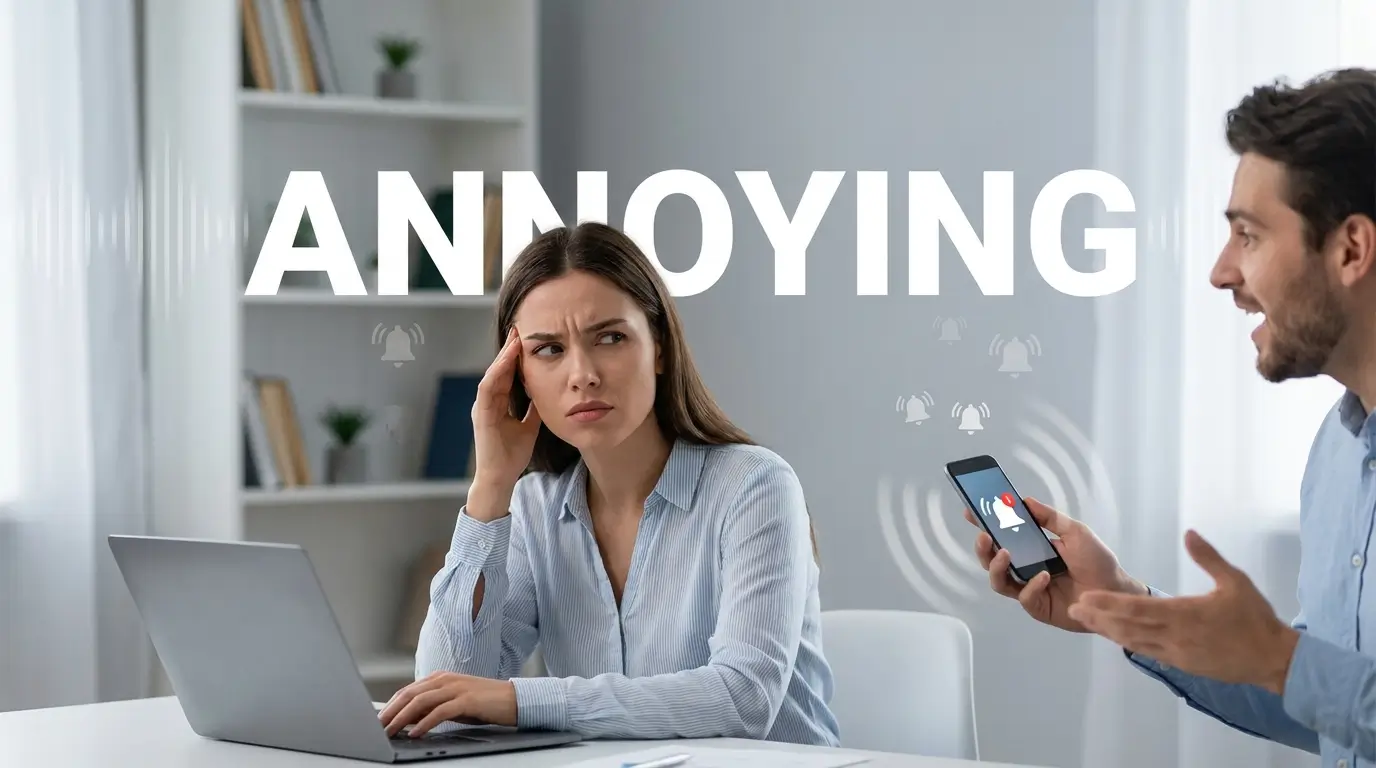
Annoying means causing someone to feel irritated, bothered, impatient, or slightly angry.
It is usually an adjective. It describes a person, behavior, sound, situation, habit, or thing that creates irritation.
For example:
- “That buzzing sound is annoying.”
- “His constant interruptions are annoying.”
- “It was annoying to wait for so long.”
Native speakers commonly use annoying in casual conversation. It works well when something bothers you but does not necessarily make you extremely angry.
The intensity can change depending on the situation. A dripping faucet can be annoying. A person who repeatedly insults others may be described with a much stronger word.
Connotative Meaning
Connotation (the feeling or association a word creates beyond its basic meaning) plays an important role when choosing an alternative to annoying.
Positive tone: There is rarely a genuinely positive meaning for annoying, although playful complaints can sound affectionate. For example, a friend may jokingly call another friend “annoying.”
Negative tone: Most alternatives carry a negative feeling. Words such as irritating, obnoxious, and exasperating clearly communicate displeasure.
Neutral tone: Words such as bothersome, troublesome, and inconvenient can describe a problem without sounding extremely emotional.
The best choice depends on how strongly you want to express irritation.
Etymology of “Annoying”
The word annoying comes from the verb annoy, which entered English through Anglo-French and Old French.
The Old French form anoier meant to trouble, distress, or cause discomfort. It ultimately connects with a Latin expression associated with causing disgust or trouble.
Old English: 450–1100
The modern word annoy was not part of Old English vocabulary in its present form. Anglo-Saxon English used different native words for ideas such as troubling, disturbing, or vexing someone.
Middle English: 1100–1500
After the Norman Conquest, French vocabulary strongly influenced English. Forms related to annoy entered Middle English and gradually developed the sense of causing trouble or distress.
Modern English: 1500–Present
Over time, annoy became strongly associated with irritating or bothering someone. The present participle annoying now commonly describes something that causes irritation.
Pronunciation
US: /əˈnɔɪ.ɪŋ/
UK: /əˈnɔɪ.ɪŋ/
Syllables
an-noy-ing
Affixation Pattern of “Annoying”
Root: annoy
Prefix: none
Suffix: -ing
The -ing ending forms the present participle and allows annoying to function as an adjective.
Synonyms List
The following alternatives do not all have exactly the same intensity. Some describe mild irritation, while others suggest strong frustration, rude behavior, or persistent disturbance.
Irritating (Adjective) — US /ˈɪr.əˌteɪ.tɪŋ/ | UK /ˈɪr.ɪˌteɪ.tɪŋ/
Meaning: Irritating describes something that repeatedly causes mild anger or discomfort.
Examples:
- The constant buzzing was irritating.
- Her repeated questions became irritating after a while.
Bothersome (Adjective) — US /ˈbɑː.ðɚ.səm/ | UK /ˈbɒð.ə.səm/
Meaning: Bothersome describes something that causes inconvenience or mild irritation.
Examples:
- The loose button is bothersome.
- That little noise is bothersome at night.
Irrksome (Adjective) — US /ˈɝːk.səm/ | UK /ˈɜːk.səm/
Meaning: Irksome describes something that causes repeated irritation or frustration.
Examples:
- Filling out the same form was irksome.
- His habit of interrupting people was irksome.
Troublesome (Adjective) — US /ˈtrʌb.əl.səm/ | UK /ˈtrʌb.əl.səm/
Meaning: Troublesome describes something that creates difficulty, inconvenience, or irritation.
Examples:
- The faulty printer became troublesome.
- We had a troublesome delay at the station.
Vexing (Adjective) — US /ˈvek.sɪŋ/ | UK /ˈvek.sɪŋ/
Meaning: Vexing describes something that causes annoyance, confusion, or frustration.
Examples:
- The missing file was particularly vexing.
- This technical problem is vexing everyone.
Exasperating (Adjective) — US /ɪɡˈzæs.pəˌreɪ.tɪŋ/ | UK /ɪɡˈzɑː.spəˌreɪ.tɪŋ/
Meaning: Exasperating describes something that makes someone extremely frustrated.
Examples:
- The repeated delays were exasperating.
- His refusal to listen was exasperating.
Frustrating (Adjective) — US /ˈfrʌs.treɪ.tɪŋ/ | UK /frʌˈstreɪ.tɪŋ/
Meaning: Frustrating describes something that prevents you from getting the result you want.
Examples:
- The slow internet connection is frustrating.
- It was frustrating to miss the train by one minute.
Aggravating (Adjective) — US /ˈæɡ.rəˌveɪ.tɪŋ/ | UK /ˈæɡ.rəˌveɪ.tɪŋ/
Meaning: Aggravating describes something that makes irritation or frustration worse.
Examples:
- The extra paperwork was aggravating.
- His careless comment was aggravating.
Exasperating (Adjective) — US /ɪɡˈzæs.pəˌreɪ.tɪŋ/ | UK /ɪɡˈzɑː.spəˌreɪ.tɪŋ/
Meaning: Exasperating describes something that pushes your patience to its limit.
Examples:
- The endless phone calls were exasperating.
- Her constant lateness became exasperating.
Maddening (Adjective) — US /ˈmæd.ən.ɪŋ/ | UK /ˈmæd.ən.ɪŋ/
Meaning: Maddening describes something that makes you extremely angry or frustrated.
Examples:
- The unexplained error was maddening.
- Waiting without any information was maddening.
Infuriating (Adjective) — US /ɪnˈfjʊr.i.eɪ.tɪŋ/ | UK /ɪnˈfjʊə.ri.eɪ.tɪŋ/
Meaning: Infuriating describes something that causes intense anger.
Examples:
- The unfair decision was infuriating.
- His dishonest response was infuriating.
Agitating (Adjective) — US /ˈædʒ.əˌteɪ.tɪŋ/ | UK /ˈædʒ.ɪˌteɪ.tɪŋ/
Meaning: Agitating describes something that disturbs or unsettles someone.
Examples:
- The constant argument was agitating.
- Loud music can become agitating after midnight.
Disturbing (Adjective) — US /dɪˈstɝː.bɪŋ/ | UK /dɪˈstɜː.bɪŋ/
Meaning: Disturbing describes something that interrupts peace or causes emotional discomfort.
Examples:
- The construction noise was disturbing.
- Someone kept making disturbing noises outside.
Disruptive (Adjective) — US /dɪsˈrʌp.tɪv/ | UK /dɪsˈrʌp.tɪv/
Meaning: Disruptive describes behavior that interrupts normal activity or progress.
Examples:
- The student became disruptive during the lesson.
- The construction work was disruptive to the neighborhood.
Intrusive (Adjective) — US /ɪnˈtruː.sɪv/ | UK /ɪnˈtruː.sɪv/
Meaning: Intrusive describes something that interferes with someone’s privacy, space, or attention.
Examples:
- The questions felt intrusive.
- Pop-up messages can be intrusive.
Obnoxious (Adjective) — US /əbˈnɑːk.ʃəs/ | UK /əbˈnɒk.ʃəs/
Meaning: Obnoxious describes behavior that is extremely unpleasant, rude, or offensive.
Examples:
- His obnoxious comments upset everyone.
- The obnoxious customer kept shouting.
Offensive (Adjective) — US /əˈfen.sɪv/ | UK /əˈfen.sɪv/
Meaning: Offensive describes something that causes anger, insult, or strong displeasure.
Examples:
- His offensive joke ended the conversation.
- The advertisement contained offensive language.
Insufferable (Adjective) — US /ɪnˈsʌf.ər.ə.bəl/ | UK /ɪnˈsʌf.ər.ə.bəl/
Meaning: Insufferable describes someone or something that is extremely difficult to tolerate.
Examples:
- His arrogant attitude became insufferable.
- The constant complaints were insufferable.
Intolerable (Adjective) — US /ɪnˈtɑː.lɚ.ə.bəl/ | UK /ɪnˈtɒl.ər.ə.bəl/
Meaning: Intolerable describes something that cannot reasonably be accepted or endured.
Examples:
- The heat became intolerable.
- The constant noise was intolerable.
Unbearable (Adjective) — US /ʌnˈber.ə.bəl/ | UK /ʌnˈbeə.rə.bəl/
Meaning: Unbearable describes something that feels impossible to tolerate.
Examples:
- The smell was unbearable.
- The waiting became unbearable.
Irksome (Adjective) — US /ˈɝːk.səm/ | UK /ˈɜːk.səm/
Meaning: Irksome describes something that causes persistent irritation.
Examples:
- The repeated notifications were irksome.
- His habit was particularly irksome.
Pesky (Adjective) — US /ˈpes.ki/ | UK /ˈpes.ki/
Meaning: Pesky describes something small but repeatedly annoying.
Examples:
- A pesky fly kept landing on my food.
- I need to remove these pesky notifications.
Nuisance (Noun) — US /ˈnuː.səns/ | UK /ˈnjuː.səns/
Meaning: A nuisance is a person or thing that causes repeated inconvenience or irritation.
Examples:
- The broken elevator is a nuisance.
- Those construction delays are a real nuisance.
Niggling (Adjective) — US /ˈnɪɡ.lɪŋ/ | UK /ˈnɪɡ.lɪŋ/
Meaning: Niggling describes a small but persistent problem that keeps bothering you.
Examples:
- I have a niggling concern about the plan.
- A niggling pain distracted him during work.
Nagging (Adjective) — US /ˈnæɡ.ɪŋ/ | UK /ˈnæɡ.ɪŋ/
Meaning: Nagging describes something that repeatedly bothers or reminds someone.
Examples:
- She had a nagging feeling that she forgot something.
- His nagging complaints became tiring.
Pestering (Adjective) — US /ˈpes.tər.ɪŋ/ | UK /ˈpes.tər.ɪŋ/
Meaning: Pestering describes repeated attempts to get attention or a response.
Examples:
- The child kept pestering his father for candy.
- I received pestering messages all morning.
Harassing (Adjective) — US /həˈræs.ɪŋ/ | UK /həˈræs.ɪŋ/
Meaning: Harassing describes repeated unwanted behavior that causes distress or pressure.
Examples:
- The employee reported harassing messages.
- Repeated unwanted calls became harassing.
Tiresome (Adjective) — US /ˈtaɪər.səm/ | UK /ˈtaɪə.səm/
Meaning: Tiresome describes something that becomes boring, tiring, or annoying.
Examples:
- The repeated explanation was tiresome.
- His long complaints were tiresome.
Tedious (Adjective) — US /ˈtiː.di.əs/ | UK /ˈtiː.di.əs/
Meaning: Tedious describes something that is boring because it takes too long or lacks variety.
Examples:
- Entering all the data was tedious.
- The repetitive task became tedious.
Wearisome (Adjective) — US /ˈwɪr.i.səm/ | UK /ˈwɪə.i.səm/
Meaning: Wearisome describes something that causes mental or physical tiredness.
Examples:
- The long meeting was wearisome.
- Repeating the same instructions was wearisome.
Boring (Adjective) — US /ˈbɔːr.ɪŋ/ | UK /ˈbɔː.rɪŋ/
Meaning: Boring describes something that fails to hold your interest.
Examples:
- The lecture became boring after an hour.
- He found the movie boring.
Monotonous (Adjective) — US /məˈtɑː.nəs/ | UK /məˈtɒn.əs/
Meaning: Monotonous describes something that repeats in the same dull way.
Examples:
- The monotonous sound made it hard to concentrate.
- His speech became monotonous.
Repetitive (Adjective) — US /rɪˈpet̬.ə.tɪv/ | UK /rɪˈpet.ɪ.tɪv/
Meaning: Repetitive describes something that happens again and again without enough variation.
Examples:
- The repetitive questions annoyed the teacher.
- The job became repetitive over time.
Tiresome (Adjective) — US /ˈtaɪər.səm/ | UK /ˈtaɪə.səm/
Meaning: Tiresome describes behavior or activity that makes you feel tired or impatient.
Examples:
- His tiresome arguments continued all evening.
- The paperwork was tiresome.
Wearisome (Adjective) — US /ˈwɪr.i.səm/ | UK /ˈwɪə.i.səm/
Meaning: Wearisome describes something that becomes tiring because it continues for too long.
Examples:
- The journey became wearisome.
- Their repeated arguments were wearisome.
Disagreeable (Adjective) — US /ˌdɪs.əˈɡriː.ə.bəl/ | UK /ˌdɪs.əˈɡriː.ə.bəl/
Meaning: Disagreeable describes something unpleasant or difficult to tolerate.
Examples:
- The weather was cold and disagreeable.
- He had a disagreeable attitude.
Unpleasant (Adjective) — US /ʌnˈplez.ənt/ | UK /ʌnˈplez.ənt/
Meaning: Unpleasant describes something that causes discomfort or dislike.
Examples:
- We had an unpleasant experience at the restaurant.
- The smell was unpleasant.
Distasteful (Adjective) — US /dɪsˈteɪst.fəl/ | UK /dɪsˈteɪst.fəl/
Meaning: Distasteful describes something offensive, unpleasant, or lacking good taste.
Examples:
- His comment was distasteful.
- Many readers found the joke distasteful.
Repellent (Adjective) — US /rɪˈpel.ənt/ | UK /rɪˈpel.ənt/
Meaning: Repellent describes something that strongly pushes people away because it is unpleasant.
Examples:
- The smell was completely repellent.
- His cruel behavior was repellent.
Revolting (Adjective) — US /rɪˈvoʊl.tɪŋ/ | UK /rɪˈvəʊl.tɪŋ/
Meaning: Revolting describes something extremely unpleasant or disgusting.
Examples:
- The spoiled food had a revolting smell.
- The dirty kitchen looked revolting.
Disgusting (Adjective) — US /dɪsˈɡʌs.tɪŋ/ | UK /dɪsˈɡʌs.tɪŋ/
Meaning: Disgusting describes something that causes a strong feeling of dislike or revulsion.
Examples:
- The trash had a disgusting smell.
- That dirty sink looks disgusting.
Offensive (Adjective) — US /əˈfen.sɪv/ | UK /əˈfen.sɪv/
Meaning: Offensive describes words or actions that insult or upset people.
Examples:
- The comment was deeply offensive.
- The post contained offensive language.
Provoking (Adjective) — US /prəˈvoʊ.kɪŋ/ | UK /prəˈvəʊ.kɪŋ/
Meaning: Provoking describes behavior that deliberately causes an emotional reaction.
Examples:
- His provoking remarks started an argument.
- She ignored the provoking comments.
Aggravating (Adjective) — US /ˈæɡ.rəˌveɪ.tɪŋ/ | UK /ˈæɡ.rəˌveɪ.tɪŋ/
Meaning: Aggravating describes something that increases irritation or makes a problem worse.
Examples:
- The extra delay was aggravating.
- His careless behavior was aggravating.
Annoyed (Adjective) — US /əˈnɔɪd/ | UK /əˈnɔɪd/
Meaning: Annoyed describes the feeling of irritation caused by something unpleasant.
Examples:
- I felt annoyed by the constant noise.
- She looked annoyed during the meeting.
Synonyms for “Annoying” by Tone
Tone matters because saying something is bothersome sounds much softer than calling it infuriating.
Positive or Playfully Negative
These words can work when you want to complain without sounding extremely harsh:
- Pesky
- Niggling
- Nagging
- Pestering
- Tiresome
For example, “That pesky little fly is back” sounds lighter than “That disgusting insect is unbearable.”
Neutral
These choices work well when you want to describe irritation without dramatic emotion:
- Annoying
- Bothersome
- Troublesome
- Irritating
- Disagreeable
- Unpleasant
- Disruptive
- Tedious
- Repetitive
Strongly Negative
These words communicate much stronger displeasure:
- Infuriating
- Maddening
- Exasperating
- Obnoxious
- Insufferable
- Intolerable
- Unbearable
- Revolting
- Repellent
- Offensive
Informal
These are especially natural in casual conversations:
- Pesky
- Bothersome
- Annoying
- Maddening
- Nagging
- Pestering
“Annoying” vs Close Alternatives
Annoying vs Irritating
The term Annoying is the broader everyday choice. It describes anything that bothers you.
Irritating often suggests repeated or ongoing discomfort.
- “The noise is annoying.” → General complaint.
- “The constant buzzing is irritating.” → Repeated irritation.
Annoying vs Bothersome
Bothersome usually sounds softer than annoying.
Use it when something creates a small inconvenience rather than serious frustration.
- “The paperwork is bothersome.”
- “The constant interruptions are annoying.”
Annoying vs Obnoxious
Obnoxious is much stronger and usually describes a person’s behavior.
It can suggest arrogance, rudeness, loudness, or offensive behavior.
- “My neighbor is annoying.” → The neighbor bothers me.
- “My neighbor is obnoxious.” → The neighbor behaves in a very unpleasant way.
Annoying vs Infuriating
Infuriating indicates intense anger.
Use it when something has gone far beyond ordinary irritation.
- “The delay was annoying.”
- “The unfair decision was infuriating.”
How “Annoying” Changes by Context
Daily Conversation
In casual speech, annoying is the most natural option.
You can say:
- “That noise is annoying.”
- “This app is annoying me.”
- “He’s being annoying today.”
Words such as pesky, bothersome, and irritating also fit casual situations.
Writing or Blogging
Writers should choose a synonym that explains exactly what makes something unpleasant.
Instead of saying “an annoying habit,” you might write “a repetitive habit” if repetition causes the problem.
This creates more precise and informative writing.
Professional or Academic Tone
Professional writing often benefits from more specific language.
For example, disruptive, intrusive, troublesome, and problematic can sound more objective than annoying.
Instead of writing “The software is annoying,” a professional report might say, “The repeated notifications are disruptive.”
Creative or Informal Use
Creative writing allows stronger emotional vocabulary.
A character might find a sound irritating, a situation maddening, or another character obnoxious.
The chosen word can reveal the character’s emotional state.
Common Mistakes & Native Usage
Mistake 1: Using Every Synonym as an Exact Replacement
The words may share a general idea, but their meanings differ.
Tedious usually means boring because of repetition or length. Infuriating means extremely anger-provoking.
Mistake 2: Using “Obnoxious” for Every Annoyance
Native speakers usually reserve obnoxious for behavior that is especially unpleasant, rude, loud, or offensive.
A squeaky door can be annoying. It is not usually obnoxious.
Mistake 3: Confusing “Annoyed” and “Annoying”
Annoying describes the cause.
Annoyed describes the person’s feeling.
- “The noise is annoying.”
- “I am annoyed by the noise.”
This distinction is essential for English learners.
Mistake 4: Using “Infuriating” for Minor Problems
Calling a slightly slow webpage infuriating may sound exaggerated.
Choose words according to intensity.
Mistake 5: Confusing “Boring” With “Annoying”
Something can be boring without being annoying.
A long documentary may be boring because it fails to hold your attention. A loud interruption may be annoying because it disturbs you.
Native Usage
Native speakers often use annoying as a flexible everyday adjective.
They choose stronger alternatives when they want to communicate the exact reason or intensity of their irritation.
Register Notes
Formal: disagreeable, disruptive, intrusive, intolerable, exasperating
Neutral: annoying, irritating, bothersome, troublesome, unpleasant
Informal: pesky, nagging, pestering, tiresome, maddening
Strong: infuriating, obnoxious, insufferable, unbearable, revolting
Real-Life Mini Scenarios
Workplace
A colleague keeps interrupting a meeting.
You might say:
“The constant interruptions are disruptive.”
This sounds more professional than simply saying they are annoying.
Social Situation
A friend keeps sending the same joke repeatedly.
You could say:
“That is getting annoying.”
If you want a playful tone, you could call the behavior pesky or tiresome.
Media and Pop Culture
A character who constantly insults people may be described as obnoxious.
A repetitive sound effect, however, may simply be irritating.
Writing and Storytelling
A novelist can use stronger vocabulary to show emotion.
For example, a character may hear a niggling noise at first. If it continues for hours, that noise may become maddening.
This gradual change makes the description more vivid.
Practice: Choose the Best Synonym
Choose the option that best fits each sentence.
1. Your little brother keeps asking for the same toy every five minutes. Which word fits best?
A. Pestering
B. Pristine
C. Elegant
D. Peaceful
2. A customer repeatedly shouts rude comments at employees. Which word is strongest?
A. Pesky
B. Obnoxious
C. Tedious
D. Colorful
3. A task takes three hours and involves entering the same information repeatedly. Which word fits best?
A. Tedious
B. Infuriating
C. Offensive
D. Intrusive
4. A strange buzzing sound keeps distracting you while you work. Which word is most natural?
A. Annoying
B. Virtuous
C. Generous
D. Fascinating
5. A company sends unwanted messages that interrupt your work. Which professional word fits best?
A. Intrusive
B. Playful
C. Delicious
D. Brilliant
6. A government decision makes people extremely angry. Which word expresses strong emotion?
A. Bothersome
B. Infuriating
C. Pesky
D. Tedious
7. Someone behaves in a rude, arrogant, and unpleasant way at a party. Which word fits best?
A. Obnoxious
B. Monotonous
C. Colorless
D. Niggling
8. A problem is small but keeps bothering you for several days. Which word fits best?
A. Niggling
B. Revolting
C. Magnificent
D. Cheerful
9. A teacher describes classroom behavior that interrupts the lesson. Which word sounds most professional?
A. Disruptive
B. Pesky
C. Funny
D. Charming
10. Someone makes a joke that insults a particular group of people. Which word is appropriate?
A. Offensive
B. Tiresome
C. Tedious
D. Niggling
11. A very long meeting leaves everyone mentally tired. Which word fits best?
A. Wearisome
B. Obnoxious
C. Intrusive
D. Offensive
12. A slow internet connection prevents you from completing an important task. Which word expresses frustration?
A. Frustrating
B. Pearly
C. Gentle
D. Peaceful
13. A small fly keeps landing on your food. Which informal word sounds natural?
A. Pesky
B. Academic
C. Intolerable
D. Virtuous
14. A smell is so unpleasant that you can hardly tolerate it. Which word is strongest?
A. Unbearable
B. Bothersome
C. Niggling
D. Tedious
15. Your friend says, “The movie was boring because nothing changed.” Which synonym best explains the problem?
A. Monotonous
B. Offensive
C. Harassing
D. Intrusive
Reflection Task
Think About Intensity
Write five sentences about things that bother you. Start with bothersome, then move toward stronger words such as irritating, frustrating, exasperating, and infuriating.
Notice how the emotional intensity changes. This exercise will help you select vocabulary that matches the situation instead of simply using the strongest word.
Answer Key: 1-A | 2-B | 3-A | 4-A | 5-A | 6-B | 7-A | 8-A | 9-A | 10-A | 11-A | 12-A | 13-A | 14-A | 15-A
Conclusion
Learning synonyms for annoying helps you express irritation with greater accuracy. You can describe a minor inconvenience, a repeated problem, or intense frustration.
Words such as bothersome, irritating, tedious, and disruptive add useful shades of meaning. Stronger choices like infuriating need more emotional situations.
For students and content writers, these alternatives make essays and articles less repetitive. For bloggers and speakers, they create clearer and more natural communication.
Start practicing these words in emails, essays, stories, and daily conversations. Choose one new synonym each day and use it in a sentence.