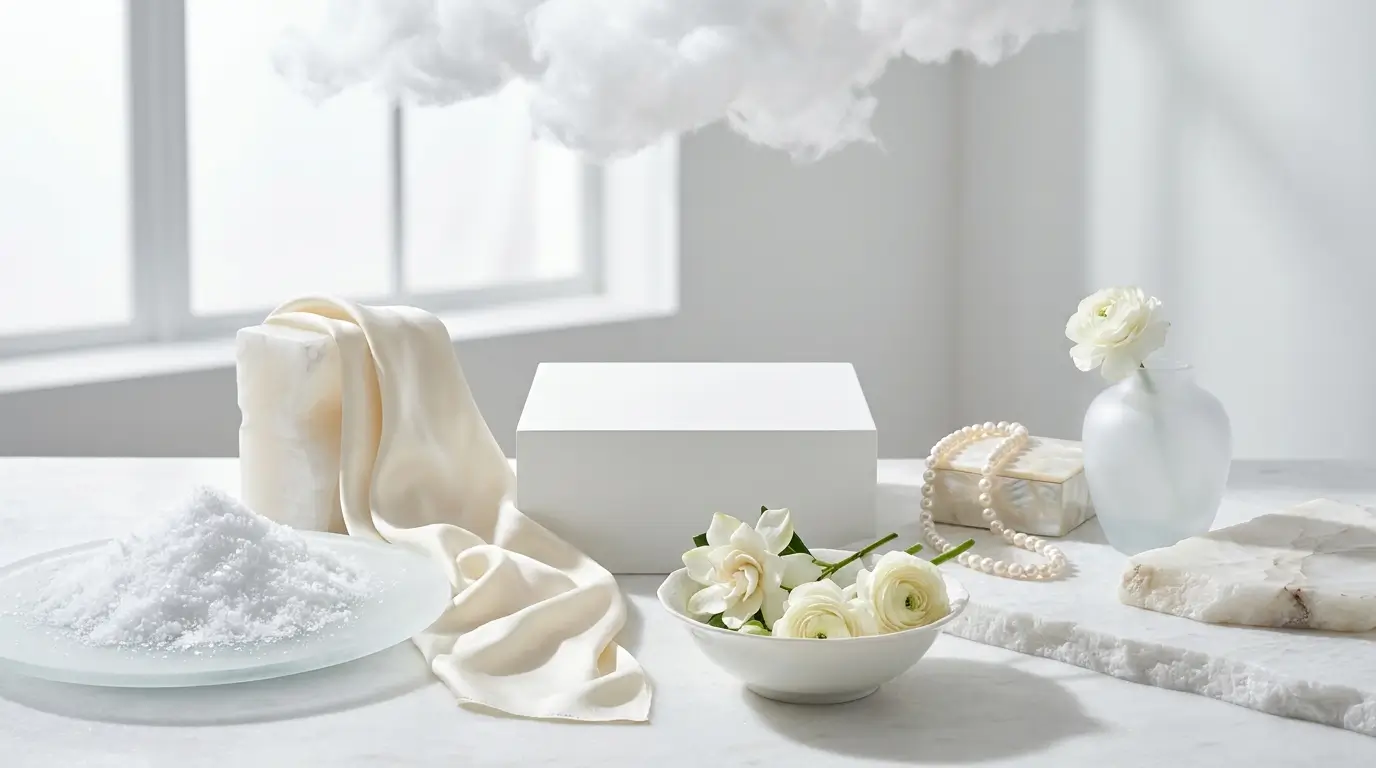

Synonyms for white can make simple descriptions more vivid. Imagine describing a fresh shirt as snowy instead of simply calling it white.
The word white appears everywhere in English. We use it for colors, clothing, snow, paint, skin, objects, and even ideas such as purity.
Learning synonyms for white helps students, bloggers, writers, and daily English users choose words with greater precision and style.
When you know synonyms for white, your writing becomes more descriptive. You can say ivory, snowy, pale, or pristine when the context calls for a more specific feeling.
What Does “White” Really Mean?
White is an adjective and noun. As an adjective, it describes a color that looks very light and lacks noticeable color. As a noun, it refers to that color itself.
In simple English, white means a very light color that resembles snow, milk, or clean paper.
Native speakers use white in many everyday situations. They might talk about a white shirt, white walls, white clouds, or white flowers.
The word can also describe ideas rather than physical color. For example, white can suggest cleanliness, innocence, peace, or purity.
Its exact meaning depends heavily on context.
In everyday speech, white is usually neutral. In creative writing, however, alternatives such as snowy, pearly, or ghostly can create a stronger image.
Connotative Meaning
Connotation (the emotional or cultural feeling connected with a word) can change how white sounds in different contexts.
Positive tone: White can suggest cleanliness, freshness, purity, simplicity, elegance, or peace.
Negative tone: In some descriptions, white can suggest sickness, fear, emptiness, or lifelessness. Words such as ashen and ghostly often create these darker impressions.
Neutral tone: White can simply describe a color without adding emotion, as in “a white notebook.”
The right synonym depends on the message you want the reader or listener to receive.
Etymology of “White”
The English word white has very old Germanic roots.
Old English: 450–1100
The word appeared in Old English as hwīt. It described the color we now call white and was related to similar Germanic words.
Middle English: 1100–1500
During Middle English, the spelling gradually changed. Forms such as whit and white appeared as English pronunciation and spelling developed.
Modern English: 1500–Present
The modern spelling white became established over time. Today, the word describes a color and also appears in many figurative expressions.
Pronunciation
US: /waɪt/
UK: /waɪt/
Syllables
white
It is a one-syllable word.
Affixation Pattern of “White”
Root: white
Prefix: none
Suffix: none
The word is a basic color adjective rather than a word formed through a common modern prefix or suffix.
Synonyms List
The following words cover close color descriptions, shades, complexion-related descriptions, and figurative meanings connected with white. Some are exact substitutes only in certain contexts.
Snowy (Adjective) — US /ˈsnoʊ.i/ | UK /ˈsnəʊ.i/
Meaning: Snowy describes something that is very white or resembles fresh snow.
Examples:
- She wore a snowy white dress to the ceremony.
- The mountain peaks looked snowy in the morning light.
Ivory (Adjective/Noun) — US /ˈaɪ.vər.i/ | UK /ˈaɪ.vər.i/
Meaning: Ivory describes a soft, warm white rather than a bright pure white.
Examples:
- The designer chose an ivory background.
- Her curtains have a warm ivory shade.
Milky (Adjective) — US /ˈmɪl.ki/ | UK /ˈmɪl.ki/
Meaning: Milky describes something that looks white and slightly creamy or cloudy.
Examples:
- The glass had a milky appearance.
- A milky mist covered the valley.
Chalky (Adjective) — US /ˈtʃɔː.ki/ | UK /ˈtʃɔː.ki/
Meaning: Chalky describes a pale, powdery white appearance.
Examples:
- The old wall had a chalky finish.
- His face looked chalky under the harsh light.
Pearly (Adjective) — US /ˈpɝː.li/ | UK /ˈpɜː.li/
Meaning: Pearly describes a soft white color with a slight shine.
Examples:
- The necklace had a pearly glow.
- Pearly clouds filled the evening sky.
Alabaster (Adjective/Noun) — US /ˈæl.əˌbæs.tɚ/ | UK /ˈæl.əˌbɑː.stə/
Meaning: Alabaster describes a smooth, pale white appearance.
Examples:
- The statue had an alabaster finish.
- Soft light touched the alabaster surface.
Porcelain (Adjective/Noun) — US /ˈpɔːr.sə.lɪn/ | UK /ˈpɔː.sə.lɪn/
Meaning: Porcelain describes a smooth, delicate white similar to fine ceramic.
Examples:
- She chose porcelain tiles for the bathroom.
- The vase has a beautiful porcelain surface.
Bleached (Adjective) — US /bliːtʃt/ | UK /bliːtʃt/
Meaning: Bleached describes something made lighter or white through chemical or natural treatment.
Examples:
- The sun left the fabric bleached and faded.
- He used bleached cotton for the project.
Colorless (Adjective) — US /ˈkʌl.ɚ.ləs/ | UK /ˈkʌl.ə.ləs/
Meaning: Colorless describes something without visible color.
Examples:
- The liquid looked completely colorless.
- The clear solution became colorless after mixing.
Uncolored (Adjective) — US /ʌnˈkʌl.ɚd/ | UK /ʌnˈkʌl.əd/
Meaning: Uncolored means having no added or noticeable color.
Examples:
- The artist started with uncolored paper.
- Choose an uncolored background for the diagram.
Achromatic (Adjective) — US /ˌeɪ.kroʊˈmæt̬.ɪk/ | UK /ˌeɪ.krəˈmæt.ɪk/
Meaning: Achromatic describes something without hue, especially black, white, or gray.
Examples:
- The photographer created an achromatic image.
- The room has an achromatic design.
Blank (Adjective) — US /blæŋk/ | UK /blæŋk/
Meaning: Blank can describe a surface that is plain and without writing or visible marks.
Examples:
- She handed me a blank sheet of paper.
- The artist began with a blank canvas.
Clean (Adjective) — US /kliːn/ | UK /kliːn/
Meaning: Clean can describe a white or light appearance that looks fresh and free from dirt.
Examples:
- He wore a clean white shirt.
- The room has a clean, bright appearance.
Pure (Adjective) — US /pjʊr/ | UK /pjʊə/
Meaning: Pure can describe an intense, bright white without another noticeable shade.
Examples:
- The fabric has a pure white finish.
- Pure white snow covered the field.
Innocent (Adjective) — US /ˈɪn.ə.sənt/ | UK /ˈɪn.ə.sənt/
Meaning: Innocent can figuratively connect with white when white represents freedom from wrongdoing.
Examples:
- The poem presents the child as innocent and hopeful.
- Her innocent smile changed the mood.
Spotless (Adjective) — US /ˈspɑːt.ləs/ | UK /ˈspɒt.ləs/
Meaning: Spotless means completely clean and without marks or stains.
Examples:
- His white shoes remained spotless.
- The kitchen looked spotless after lunch.
Immaculate (Adjective) — US /ɪˈmæk.jə.lət/ | UK /ɪˈmæk.jə.lət/
Meaning: Immaculate means perfectly clean, neat, or free from flaws.
Examples:
- She arrived in an immaculate white suit.
- The hotel kept its white rooms immaculate.
Untarnished (Adjective) — US /ʌnˈtɑːr.nɪʃt/ | UK /ʌnˈtɑː.nɪʃt/
Meaning: Untarnished describes something that remains clean, pure, or undamaged.
Examples:
- The silver still looked untarnished.
- The story presents an untarnished image of childhood.
Guiltless (Adjective) — US /ˈɡɪlt.ləs/ | UK /ˈɡɪlt.ləs/
Meaning: Guiltless means free from blame or wrongdoing.
Examples:
- The evidence showed that he was guiltless.
- The character appears guiltless throughout the story.
Virtuous (Adjective) — US /ˈvɝː.tʃu.əs/ | UK /ˈvɜː.tʃu.əs/
Meaning: Virtuous means morally good and honorable.
Examples:
- The novel portrays her as virtuous and generous.
- He admired the character’s virtuous behavior.
Unsullied (Adjective) — US /ʌnˈsʌl.id/ | UK /ʌnˈsʌl.id/
Meaning: Unsullied means completely clean, pure, or free from damage.
Examples:
- The village stood beside an unsullied lake.
- Her reputation remained unsullied.
Pristine (Adjective) — US /ˈprɪs.tiːn/ | UK /ˈprɪs.tiːn/
Meaning: Pristine describes something that remains extremely clean, fresh, or untouched.
Examples:
- We found a pristine beach early in the morning.
- The white walls looked pristine.
Fair (Adjective) — US /fer/ | UK /feə/
Meaning: Fair can describe a light complexion, hair, or color.
Examples:
- She has fair hair and blue eyes.
- The character has a fair complexion.
Pale (Adjective) — US /peɪl/ | UK /peɪl/
Meaning: Pale describes a color that is lighter or less intense than usual.
Examples:
- She chose a pale white dress.
- The walls were painted a pale shade.
Pallid (Adjective) — US /ˈpæl.ɪd/ | UK /ˈpæl.ɪd/
Meaning: Pallid describes an unusually pale appearance, often because of illness, fear, or shock.
Examples:
- His face became pallid after the bad news.
- She looked pallid under the fluorescent lights.
Wan (Adjective) — US /wɑːn/ | UK /wɒn/
Meaning: Wan describes a weak or unhealthy pale appearance.
Examples:
- He gave a wan smile.
- Her face looked wan after the long journey.
Ashen (Adjective) — US /ˈæʃ.ən/ | UK /ˈæʃ.ən/
Meaning: Ashen describes a very pale grayish-white appearance.
Examples:
- His face turned ashen with fear.
- The old photograph gave the room an ashen mood.
Ghostly (Adjective) — US /ˈɡoʊst.li/ | UK /ˈɡəʊst.li/
Meaning: Ghostly describes something pale, white, or eerie like a ghost.
Examples:
- A ghostly fog covered the road.
- The moon gave the trees a ghostly appearance.
Lily-White (Adjective) — US /ˌlɪl.i ˈwaɪt/ | UK /ˌlɪl.i ˈwaɪt/
Meaning: Lily-white describes something extremely white and pure-looking.
Examples:
- The garden had lily-white flowers.
- She admired the lily-white petals.
Snow-White (Adjective) — US /ˌsnoʊ ˈwaɪt/ | UK /ˌsnəʊ ˈwaɪt/
Meaning: Snow-white means brilliantly white like fresh snow.
Examples:
- The bride wore a snow-white gown.
- Snow-white clouds floated overhead.
Cream (Adjective/Noun) — US /kriːm/ | UK /kriːm/
Meaning: Cream describes a soft yellowish white.
Examples:
- The walls are painted cream.
- She chose a cream sweater for winter.
Off-White (Adjective/Noun) — US /ˌɔːf ˈwaɪt/ | UK /ˌɒf ˈwaɪt/
Meaning: Off-white describes a color that is close to white but slightly warmer or darker.
Examples:
- The office walls are off-white.
- He bought an off-white jacket.
Ecru (Adjective/Noun) — US /ˈeɪ.kruː/ | UK /ˈeɪ.kruː/
Meaning: Ecru describes a pale beige or grayish cream color.
Examples:
- The curtains have an ecru tone.
- She selected ecru fabric for the cushions.
Eggshell (Adjective/Noun) — US /ˈeɡ.ʃel/ | UK /ˈeɡ.ʃel/
Meaning: Eggshell describes a soft, slightly warm white similar to an eggshell.
Examples:
- We painted the bedroom eggshell.
- The eggshell finish looks elegant.
Bone (Adjective/Noun) — US /boʊn/ | UK /bəʊn/
Meaning: Bone can describe a muted, slightly yellowish white.
Examples:
- The designer selected a bone-colored fabric.
- The tiles have a subtle bone shade.
Opaline (Adjective) — US /ˈoʊ.pə.laɪn/ | UK /ˈəʊ.pə.laɪn/
Meaning: Opaline describes a milky, pearly, or slightly translucent appearance.
Examples:
- The lamp has an opaline glass shade.
- An opaline glow appeared around the moon.
Silvery (Adjective) — US /ˈsɪl.vɚ.i/ | UK /ˈsɪl.vər.i/
Meaning: Silvery describes a pale color with a metallic white or gray shine.
Examples:
- Silvery clouds gathered before the storm.
- Her hair had a silvery shine.
Frosty (Adjective) — US /ˈfrɔː.sti/ | UK /ˈfrɒs.ti/
Meaning: Frosty describes something white or pale like frost.
Examples:
- Frosty grass sparkled in the sunlight.
- The window had a frosty pattern.
Hoary (Adjective) — US /ˈhɔːr.i/ | UK /ˈhɔː.ri/
Meaning: Hoary can describe something covered with white frost or something gray-white with age.
Examples:
- Hoary frost covered the trees.
- The hoary mountain looked ancient.
Banded (Adjective) — US /ˈbæn.dɪd/ | UK /ˈbæn.dɪd/
Meaning: Banded can describe something marked with a distinct white strip or area.
Examples:
- The bird had banded white feathers.
- The fish showed banded white markings.
Bleached-White (Adjective) — US /bliːtʃt waɪt/ | UK /bliːtʃt waɪt/
Meaning: Bleached-white describes an extremely light appearance caused by bleaching or strong exposure.
Examples:
- The old fabric looked bleached-white.
- Sunlight made the wooden boards bleached-white.
Ivory-Toned (Adjective) — US /ˈaɪ.vər.i toʊnd/ | UK /ˈaɪ.vər.i təʊnd/
Meaning: Ivory-toned describes a warm, gentle white with a creamy appearance.
Examples:
- The invitation uses an ivory-toned background.
- She chose an ivory-toned dress.
Pearlescent (Adjective) — US /ˌpɝːlˈes.ənt/ | UK /ˌpɜːlˈes.ənt/
Meaning: Pearlescent describes a surface with a soft, shiny appearance like a pearl.
Examples:
- The car has a pearlescent finish.
- Pearlescent paint gave the wall a gentle glow.
Milky-White (Adjective) — US /ˌmɪl.ki ˈwaɪt/ | UK /ˌmɪl.ki ˈwaɪt/
Meaning: Milky-white describes a soft, cloudy white similar to milk.
Examples:
- The glass had a milky-white appearance.
- A milky-white mist covered the lake.
Pure-White (Adjective) — US /ˌpjʊr ˈwaɪt/ | UK /ˌpjʊə ˈwaɪt/
Meaning: Pure-white describes a strong, clean white without noticeable color.
Examples:
- The paper has a pure-white surface.
- Pure-white flowers lined the path.
Snowy-White (Adjective) — US /ˌsnoʊ.i ˈwaɪt/ | UK /ˌsnəʊ.i ˈwaɪt/
Meaning: Snowy-white describes something brilliantly white like fresh snow.
Examples:
- The hotel towels were snowy-white.
- Snowy-white clouds filled the sky.
Whitish (Adjective) — US /ˈwaɪ.tɪʃ/ | UK /ˈwaɪ.tɪʃ/
Meaning: Whitish means somewhat white but not completely white.
Examples:
- The stone has a whitish surface.
- A whitish layer formed on the glass.
Whitewashed (Adjective) — US /ˈwaɪt.wɑːʃt/ | UK /ˈwaɪt.wɒʃt/
Meaning: Whitewashed describes a surface covered with white paint or a similar coating.
Examples:
- They restored the old whitewashed walls.
- A whitewashed cottage stood near the sea.
Colorless-White (Adjective) — US /ˈkʌl.ɚ.ləs waɪt/ | UK /ˈkʌl.ə.ləs waɪt/
Meaning: Colorless-white describes a white appearance with little or no noticeable tint.
Examples:
- The designer wanted a colorless-white background.
- The material looked almost colorless-white in daylight.
Synonyms for “White” by Tone
Tone matters because two words can describe a similar appearance while creating very different impressions.
Positive
- Pure
- Pristine
- Immaculate
- Spotless
- Unsullied
- Untarnished
- Snowy
- Pearly
- Ivory
- Alabaster
These words often suggest beauty, cleanliness, elegance, freshness, or purity.
Neutral
- White
- Colorless
- Uncolored
- Achromatic
- Whitish
- Off-white
- Cream
- Eggshell
- Ecru
- Bone
These choices mainly describe appearance without creating a strong emotional reaction.
Negative or Dramatic
- Pallid
- Wan
- Ashen
- Ghostly
- Chalky
These words can suggest sickness, fear, coldness, age, or something eerie.
Playful or Informal
- Snow-white
- Snowy-white
- Lily-white
- Milky-white
These expressions work well in casual descriptions and creative writing.
“White” vs Close Alternatives
| Word | Meaning Difference | Tone | Best Use |
| White | Basic light color | Neutral | Everyday English |
| Ivory | Warm, creamy white | Elegant | Fashion, design, objects |
| Snowy | Very bright white | Vivid | Nature and creative writing |
| Pale | Light or weak color | Neutral | Complexion, colors, descriptions |
| Pure | White without noticeable tint | Positive | Formal and descriptive writing |
| Ashen | Grayish, unhealthy pale | Negative | Emotion and storytelling |
The most important distinction is simple: white gives the basic color, while alternatives add detail.
For example, “a white dress” is neutral. “An ivory dress” sounds warmer and softer. “A snow-white dress” sounds brighter and more dramatic.
How “White” Changes by Context
Daily Conversation
In everyday English, white remains the safest and most natural choice.
People commonly say “white shirt,” “white car,” “white wall,” and “white paper.”
Use a more specific synonym when the exact shade matters.
Writing or Blogging
Bloggers can replace repeated uses of white with descriptive alternatives.
For example, a fashion article might use ivory, cream, eggshell, and pearly to describe different shades.
This approach adds detail without making the writing difficult to understand.
Professional or Academic Tone
Professional writing usually favors precise terms.
Words such as achromatic, colorless, ivory, and off-white can work well when the exact visual quality matters.
Avoid overly poetic choices when writing technical instructions.
Creative or Informal Use
Creative writing gives you more freedom.
Words such as ghostly, snowy, pearly, ashen, and frosty can create a visual mood.
For example, “a ghostly white fog” creates a very different image from “a white fog.”
Common Mistakes & Native Usage
Mistake 1: Treating Every Synonym as an Exact Replacement
Not every synonym works in every sentence.
You can say “an ivory dress,” but replacing “white” with “ivory” may be inaccurate if the object is bright, pure white.
Mistake 2: Using “Pallid” for Objects
Pallid usually describes people, faces, or things that look weak and unusually pale.
It is not a normal replacement for every white object.
Mistake 3: Confusing “Colorless” With “White”
Colorless means having no visible color. White is a specific visible color.
Clear water can be colorless, while milk is white.
Mistake 4: Overusing Poetic Synonyms
Words such as pearly, ghostly, and alabaster can make creative writing stronger.
However, using them in every sentence can make ordinary writing sound unnatural.
Native Usage
Native speakers normally choose white when they simply need to name the color.
They switch to alternatives when they want to communicate a particular shade, texture, mood, or figurative meaning.
Register Notes
Formal: achromatic, immaculate, pristine, untarnished, unsullied
Neutral: white, pale, ivory, cream, off-white, colorless
Informal or creative: snowy, ghostly, pearly, frosty, snow-white
Real-Life Examples Using “White”
Workplace
A designer might say, “Let’s use an off-white background instead of bright white.”
This sounds more precise than simply repeating “white.”
Social Situations
Someone might compliment a friend by saying, “That ivory dress looks beautiful.”
The word identifies the shade and adds a softer description.
Media and Pop Culture
A storyteller may describe a mysterious scene with “ghostly white lights.”
The phrase creates a dramatic atmosphere that the basic word white would not provide.
Writing and Storytelling
A novelist might write, “Snow-white clouds gathered above the silent town.”
The synonym creates a stronger visual image and gives the sentence more personality.
Practice: Choose the Best Synonym
Choose the word that best fits each situation.
1. A designer wants to describe a warm, creamy shade of white. Which word fits best?
A. Ashen
B. Ivory
C. Wan
D. Ghostly
2. A person looks unusually pale after receiving shocking news. Which word is most suitable?
A. Pearly
B. Ecru
C. Pallid
D. Cream
3. Which word best describes a surface with no visible color?
A. Colorless
B. Snowy
C. Ivory
D. Frosty
4. A writer wants to describe an eerie white fog. Which word creates the strongest mood?
A. Ghostly
B. Cream
C. Ecru
D. Bone
5. Which word means somewhat white rather than completely white?
A. Pure
B. Whitish
C. Pristine
D. Snow-white
6. A luxury interior uses a soft, warm white. Which word is most appropriate?
A. Ivory
B. Ashen
C. Wan
D. Pallid
7. Which synonym suggests something extremely clean and free from marks?
A. Spotless
B. Whitish
C. Chalky
D. Colorless
8. Which word describes a pale grayish-white appearance caused by fear or shock?
A. Pearly
B. Ashen
C. Cream
D. Ivory
9. Which word best describes a bright white color like fresh snow?
A. Ecru
B. Bone
C. Snow-white
D. Off-white
10. Which term is most suitable for technical writing about colors without hue?
A. Achromatic
B. Ghostly
C. Snowy
D. Lily-white
11. Which word describes a soft white with a slight shine?
A. Pearly
B. Wan
C. Pallid
D. Chalky
12. Which word means extremely clean, fresh, or untouched?
A. Pristine
B. Whitish
C. Bone
D. Milky
13. Which word best describes a white surface with a powdery appearance?
A. Chalky
B. Pearlescent
C. Ivory
D. Silvery
14. A wall is almost white but has a warmer tint. Which phrase is most natural?
A. Off-white
B. Ghostly
C. Pallid
D. Ashen
15. Which synonym works best for a white appearance with a metallic shine?
A. Silvery
B. Guiltless
C. Cream
D. Blank
Reflection Task
Think About Your Word Choice
Write five short sentences using different alternatives to white. Then ask yourself what each word adds.
Does it describe a shade, cleanliness, emotion, texture, or mood? This simple exercise will help you develop more precise vocabulary.
Answer Key: 1-B | 2-C | 3-A | 4-A | 5-B | 6-A | 7-A | 8-B | 9-C | 10-A | 11-A | 12-A | 13-A | 14-A | 15-A
Conclusion
Learning synonyms for white gives you more than a longer vocabulary list. It helps you describe shades, moods, textures, and ideas with greater precision.
Words such as ivory, snowy, pearly, pale, and pristine can make everyday writing clearer. They also help writers avoid repeating the same basic word.
For students and bloggers, these alternatives can make essays and articles more expressive. For daily speakers, they make descriptions more accurate and natural.
Start practicing these words in emails, essays, stories, and everyday conversations. Try replacing white with one precise alternative whenever the context allows.