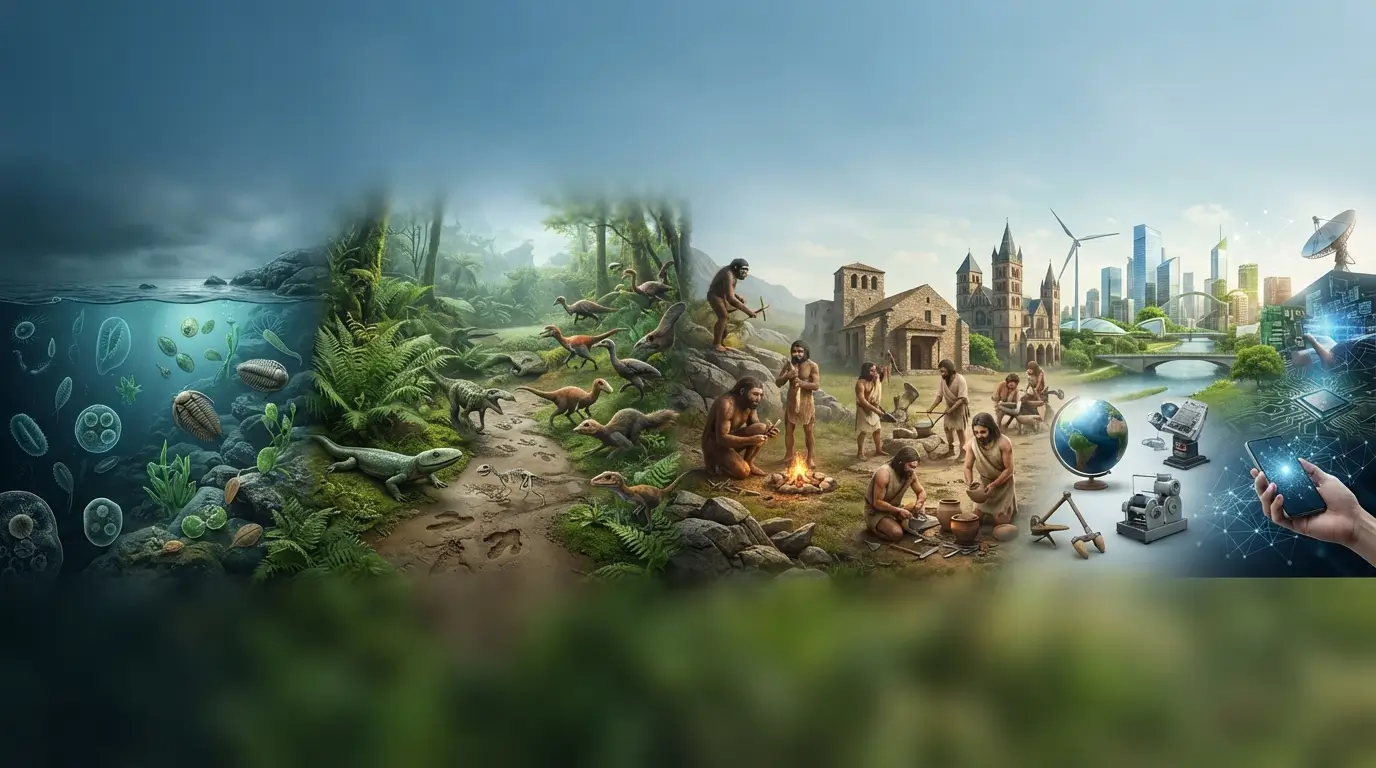

synonyms for evolution can make your writing stronger when you need to describe how something changes, grows, or develops over time.
Imagine a small business that starts with one idea, learns from experience, and slowly becomes something much bigger. That gradual change is an evolution.
The phrase synonyms for evolution helps students, bloggers, and writers avoid repeating the same word when discussing change, progress, or development.
English speakers use “evolution” often because it works across science, history, technology, culture, business, and everyday conversation.
Learning synonyms for evolution also helps daily English users express subtle differences between growth, progress, transformation, and gradual change.
What Does “Evolution” Really Mean?
Evolution means a gradual process in which something changes and develops over time.
The word is a noun. Native speakers commonly use it when they want to describe a process rather than one sudden event.
For example:
“The evolution of smartphones has changed the way we communicate.”
Here, “evolution” describes many changes that happened over a period of time.
In biology, evolution has a more specific meaning. It refers to changes in inherited characteristics within populations across generations.
In everyday English, however, the word can describe many types of development:
- The evolution of a company
- The evolution of technology
- The evolution of language
- The evolution of fashion
- The evolution of an idea
- The evolution of society
- The evolution of a person’s career
The emotional tone is usually neutral or positive. It often suggests natural, meaningful, or gradual development.
Connotative Meaning
Connotation (the feeling or idea that a word suggests beyond its basic dictionary meaning) can affect how “evolution” sounds in different situations.
Positive tone:
“Evolution” can suggest improvement, maturity, innovation, or progress.
Negative tone:
The word can sometimes describe unwanted changes, especially when the context suggests decline or loss of an earlier quality.
Neutral tone:
Most commonly, “evolution” simply describes gradual change or development without judging it as good or bad.
For example, “the evolution of language” is usually neutral, while “the evolution of a successful business” may suggest positive development.
Etymology
The English word evolution comes from Latin evolutio, meaning “an unrolling” or “a reading of a scroll.” It comes from the Latin verb evolvere, meaning “to unroll” or “to unfold.”
The original image was physical: something rolled up was gradually opened or unfolded. Over time, this idea developed into the broader meaning of something unfolding or developing.
Old English (450–1100)
The modern word “evolution” did not exist in Old English. English speakers used other vocabulary to describe ideas such as growth, becoming, change, and development.
Middle English (1100–1500)
The Latin-rooted concept continued through scholarly and religious writing. English vocabulary increasingly absorbed words from French and Latin during this period.
Modern English (1500–Present)
“Evolution” entered English as a learned term connected with unfolding or development. Later, its meaning expanded significantly.
By the nineteenth century, the word became strongly associated with biological development and eventually with Darwinian evolutionary theory. Today, it also has broad everyday meanings related to gradual change and development.
Pronunciation
US: /ˌɛvəˈluːʃən/
UK: /ˌiːvəˈluːʃən/
Syllables
ev-o-lu-tion
Affixation Pattern of Evolution
Root: vol / volv — related to the Latin idea of rolling or turning
Prefix: e- / ex- — suggesting outward movement or unfolding
Suffix: -tion — forms a noun describing an action, process, or result
The structure reflects the original idea of something being “unrolled” or gradually unfolded.
Synonyms List
Finding perfect synonyms for “evolution” can be difficult because the word has several related senses. The following choices focus mainly on gradual change, development, growth, transformation, and progression.
Development
Development (noun) — US: /dɪˈvɛləpmənt/ | UK: /dɪˈvɛləpmənt/
Meaning: Development is the process of growing, changing, or becoming more advanced over time.
Examples
- The development of online education has been rapid.
- Her skills showed steady development.
Progression
Progression (noun) — US: /prəˈɡrɛʃən/ | UK: /prəˈɡrɛʃən/
Meaning: Progression describes movement through a series of gradual stages.
Examples
- The progression of the project was easy to track.
- His progression from student to teacher took years.
Growth
Growth (noun) — US: /ɡroʊθ/ | UK: /ɡrəʊθ/
Meaning: Growth is an increase or development in size, ability, importance, or maturity.
Examples
- The plant showed strong growth after spring arrived.
- Personal growth takes patience and practice.
Advancement
Advancement (noun) — US: /ədˈvænsmənt/ | UK: /ədˈvɑːnsmənt/
Meaning: Advancement is development toward a more advanced or improved state.
Examples
- Scientific advancement has changed modern medicine.
- Technology continues to bring advancement in communication.
Transformation
Transformation (noun) — US: /ˌtrænsfərˈmeɪʃən/ | UK: /ˌtrænsfəˈmeɪʃən/
Meaning: Transformation is a significant change in the form, nature, or appearance of something.
Examples
- The renovation brought a complete transformation.
- Digital media caused a major transformation in publishing.
Change
Change (noun) — US: /tʃeɪndʒ/ | UK: /tʃeɪndʒ/
Meaning: Change is the process of becoming different from an earlier state.
Examples
- Change is a normal part of life.
- The company went through several changes.
Transition
Transition (noun) — US: /trænˈzɪʃən/ | UK: /trænˈzɪʃən/
Meaning: Transition is the process of moving gradually from one state or condition to another.
Examples
- The transition to remote work took several months.
- She handled the career transition well.
Adaptation
Adaptation (noun) — US: /ˌædəpˈteɪʃən/ | UK: /ˌædæpˈteɪʃən/
Meaning: Adaptation is a change that helps something adjust to new conditions.
Examples
- Adaptation helped the species survive.
- The book received a successful film adaptation.
Modification
Modification (noun) — US: /ˌmɑdəfəˈkeɪʃən/ | UK: /ˌmɒdɪfɪˈkeɪʃən/
Meaning: Modification is a change made to improve or adjust something.
Examples
- The engineer suggested a small modification.
- The design needs several modifications.
Alteration
Alteration (noun) — US: /ˌɔltəˈreɪʃən/ | UK: /ˌɔːltəˈreɪʃən/
Meaning: Alteration is a change made to the form, appearance, or function of something.
Examples
- The tailor made an alteration to the jacket.
- The building underwent several alterations.
Shift
Shift (noun) — US: /ʃɪft/ | UK: /ʃɪft/
Meaning: A shift is a change in position, direction, focus, or attitude.
Examples
- We noticed a shift in public opinion.
- The company made a shift toward digital services.
Metamorphosis
Metamorphosis (noun) — US: /ˌmɛtəˈmɔrfəsɪs/ | UK: /ˌmetəˈmɔːfəsɪs/
Meaning: Metamorphosis is a major transformation from one form or state into another.
Examples
- The caterpillar undergoes metamorphosis.
- The old building experienced an impressive metamorphosis.
Maturation
Maturation (noun) — US: /ˌmætʃəˈreɪʃən/ | UK: /ˌmætʃəˈreɪʃən/
Meaning: Maturation is the gradual process of becoming fully developed or mature.
Examples
- Emotional maturation often takes years.
- The wine improves during maturation.
Unfolding
Unfolding (noun) — US: /ʌnˈfoʊldɪŋ/ | UK: /ʌnˈfəʊldɪŋ/
Meaning: Unfolding describes something gradually becoming known, developed, or complete.
Examples
- We watched the unfolding of a new cultural trend.
- The story’s unfolding kept everyone interested.
Emergence
Emergence (noun) — US: /ɪˈmɝdʒəns/ | UK: /ɪˈmɜːdʒəns/
Meaning: Emergence is the process of something new appearing or becoming noticeable.
Examples
- The emergence of social media changed communication.
- Scientists studied the emergence of new behaviors.
Expansion
Expansion (noun) — US: /ɪkˈspænʃən/ | UK: /ɪkˈspænʃən/
Meaning: Expansion is growth that makes something larger, broader, or more extensive.
Examples
- The expansion of the city created new neighborhoods.
- The company planned an international expansion.
Diversification
Diversification (noun) — US: /daɪˌvɝsəfəˈkeɪʃən/ | UK: /daɪˌvɜːsɪfɪˈkeɪʃən/
Meaning: Diversification is the process of becoming more varied or developing into different forms.
Examples
- The diversification of the industry created new jobs.
- Cultural diversification can enrich a community.
Differentiation
Differentiation (noun) — US: /ˌdɪfərenʃiˈeɪʃən/ | UK: /ˌdɪfərenʃiˈeɪʃən/
Meaning: Differentiation is the process by which things become distinct from one another.
Examples
- Cell differentiation is important in biology.
- Product differentiation helped the brand stand out.
Refinement
Refinement (noun) — US: /rɪˈfaɪnmənt/ | UK: /rɪˈfaɪnmənt/
Meaning: Refinement is gradual improvement that makes something more precise or effective.
Examples
- The design improved through constant refinement.
- Her writing shows years of refinement.
Improvement
Improvement (noun) — US: /ɪmˈpruːvmənt/ | UK: /ɪmˈpruːvmənt/
Meaning: Improvement is a change that makes something better.
Examples
- The new system brought a clear improvement.
- His communication skills show steady improvement.
Innovation
Innovation (noun) — US: /ˌɪnəˈveɪʃən/ | UK: /ˌɪnəˈveɪʃən/
Meaning: Innovation is the introduction or development of a new idea, method, or product.
Examples
- Innovation changed the technology sector.
- The company encourages innovation among its employees.
Elaboration
Elaboration (noun) — US: /ɪˌlæbəˈreɪʃən/ | UK: /ɪˌlæbəˈreɪʃən/
Meaning: Elaboration is the process of developing something by adding detail or complexity.
Examples
- The theory received further elaboration.
- The architect added elaboration to the original design.
Expansionism
Expansionism (noun) — US: /ɪkˈspænʃənɪzəm/ | UK: /ɪkˈspænʃənɪzəm/
Meaning: Expansionism is a policy or tendency toward increasing territory, influence, or scope.
Examples
- The period was marked by political expansionism.
- Historians studied the nation’s expansionism.
Advancement
Advancement (noun) — US: /ədˈvænsmənt/ | UK: /ədˈvɑːnsmənt/
Meaning: Advancement refers to movement toward a more developed or successful condition.
Examples
- Medical advancement saved many lives.
- Her advancement came through years of study.
Ascension
Ascension (noun) — US: /əˈsɛnʃən/ | UK: /əˈsɛnʃən/
Meaning: Ascension describes movement upward to a higher position or level.
Examples
- His ascension to leadership took years.
- The team’s rapid ascension surprised fans.
Merging
Merging (noun) — US: /ˈmɝdʒɪŋ/ | UK: /ˈmɜːdʒɪŋ/
Meaning: Merging is the process of combining separate things into one.
Examples
- The merging of two ideas created a fresh approach.
- The communities are slowly merging.
Integration
Integration (noun) — US: /ˌɪntəˈɡreɪʃən/ | UK: /ˌɪntɪˈɡreɪʃən/
Meaning: Integration is the process of combining parts so they work together.
Examples
- The integration of technology improved the classroom.
- Cultural integration can take time.
Assimilation
Assimilation (noun) — US: /əˌsɪməˈleɪʃən/ | UK: /əˌsɪməˈleɪʃən/
Meaning: Assimilation is the process of becoming similar to or absorbed into another group or system.
Examples
- The study examined cultural assimilation.
- Language plays a role in social assimilation.
Renewal
Renewal (noun) — US: /rɪˈnuːəl/ | UK: /rɪˈnjuːəl/
Meaning: Renewal is the process of making something fresh, active, or effective again.
Examples
- The park received a complete renewal.
- The campaign brought renewal to the organization.
Revitalization
Revitalization (noun) — US: /riˌvaɪtələˈzeɪʃən/ | UK: /riˌvaɪtəlaɪˈzeɪʃən/
Meaning: Revitalization is the process of making something active, healthy, or successful again.
Examples
- The project supported downtown revitalization.
- The neighborhood experienced rapid revitalization.
Reformation
Reformation (noun) — US: /ˌrɛfərˈmeɪʃən/ | UK: /ˌrefəˈmeɪʃən/
Meaning: Reformation is a process of changing something to improve or correct it.
Examples
- The organization began a major reformation.
- Political reformation changed the system.
Reshaping
Reshaping (noun) — US: /ˌriːˈʃeɪpɪŋ/ | UK: /ˌriːˈʃeɪpɪŋ/
Meaning: Reshaping is the process of changing the form, structure, or character of something.
Examples
- Technology is reshaping modern education.
- The experience reshaped her career goals.
Reworking
Reworking (noun) — US: /ˌriːˈwɝkɪŋ/ | UK: /ˌriːˈwɜːkɪŋ/
Meaning: Reworking is the process of changing something to improve or adapt it.
Examples
- The author spent weeks reworking the ending.
- The team is reworking the original plan.
Reconfiguration
Reconfiguration (noun) — US: /ˌriːkənˌfɪɡjəˈreɪʃən/ | UK: /ˌriːkənˌfɪɡjəˈreɪʃən/
Meaning: Reconfiguration is the process of arranging something differently to create a new structure or function.
Examples
- The network required reconfiguration.
- The office underwent a major reconfiguration.
Conversion
Conversion (noun) — US: /kənˈvɝʒən/ | UK: /kənˈvɜːʃən/
Meaning: Conversion is the process of changing something from one form, use, or condition into another.
Examples
- The building underwent conversion into apartments.
- The conversion took several months.
Mutation
Mutation (noun) — US: /mjuːˈteɪʃən/ | UK: /mjuːˈteɪʃən/
Meaning: Mutation is a change in genetic material and can also describe a significant alteration more generally.
Examples
- Scientists studied the genetic mutation.
- The idea underwent an unexpected mutation.
Adaptability
Adaptability (noun) — US: /əˌdæptəˈbɪləti/ | UK: /əˌdæptəˈbɪləti/
Meaning: Adaptability is the ability to change successfully when conditions change.
Examples
- Adaptability is valuable in a changing workplace.
- Her adaptability helped the team manage uncertainty.
Maturity
Maturity (noun) — US: /məˈtʃʊrəti/ | UK: /məˈtjʊərəti/
Meaning: Maturity is the state or process of becoming fully developed.
Examples
- The project reached maturity after several years.
- His maturity became clear during the discussion.
Continuation
Continuation (noun) — US: /kənˌtɪnjuˈeɪʃən/ | UK: /kənˌtɪnjuˈeɪʃən/
Meaning: Continuation is the process of carrying something forward over time.
Examples
- The continuation of the tradition surprised visitors.
- The project needs funding for continuation.
Advancement
Advancement (noun) — US: /ədˈvænsmənt/ | UK: /ədˈvɑːnsmənt/
Meaning: Advancement describes gradual movement toward a higher or more developed state.
Examples
- Educational advancement benefits entire communities.
- The discovery represented an important advancement.
Flourishing
Flourishing (noun) — US: /ˈflɝɪʃɪŋ/ | UK: /ˈflʌrɪʃɪŋ/
Meaning: Flourishing describes healthy and successful development.
Examples
- The arts are flourishing in the city.
- The young business is flourishing.
Molding
Molding (noun) — US: /ˈmoʊldɪŋ/ | UK: /ˈməʊldɪŋ/
Meaning: Molding is the gradual process of shaping something into a particular form.
Examples
- Education plays a role in molding young minds.
- Experience is molding his leadership style.
Cultivation
Cultivation (noun) — US: /ˌkʌltəˈveɪʃən/ | UK: /ˌkʌltɪˈveɪʃən/
Meaning: Cultivation is the deliberate process of developing or improving something through care.
Examples
- Skill cultivation requires regular practice.
- The program focuses on talent cultivation.
Growth and Development
Growth and development (noun phrase) — US: /ɡroʊθ ænd dɪˈvɛləpmənt/ | UK: /ɡrəʊθ ənd dɪˈvɛləpmənt/
Meaning: This phrase describes gradual increases and changes that make something more developed.
Examples
- Children need support during growth and development.
- The course encourages professional growth and development.
Evolutionary Change
Evolutionary change (noun phrase) — US: /ˌɛvəˈluːʃəneri tʃeɪndʒ/ | UK: /ˌiːvəˈluːʃənəri tʃeɪndʒ/
Meaning: Evolutionary change describes gradual change that occurs across a period or series of stages.
Examples
- The industry experienced evolutionary change.
- The species adapted through evolutionary change.
Organic Development
Organic development (noun phrase) — US: /ɔrˈɡænɪk dɪˈvɛləpmənt/ | UK: /ɔːˈɡænɪk dɪˈvɛləpmənt/
Meaning: Organic development describes gradual change that happens naturally rather than through sudden force.
Examples
- The community experienced organic development.
- Her writing style showed organic development over time.
Gradual Transformation
Gradual transformation (noun phrase) — US: /ˈɡrædʒuəl ˌtrænsfərˈmeɪʃən/ | UK: /ˈɡrædʒuəl ˌtrænsfəˈmeɪʃən/
Meaning: Gradual transformation is a slow process of becoming substantially different.
Examples
- The city went through a gradual transformation.
- His career showed a gradual transformation.
Progressive Change
Progressive change (noun phrase) — US: /prəˈɡrɛsɪv tʃeɪndʒ/ | UK: /prəˈɡresɪv tʃeɪndʒ/
Meaning: Progressive change is development that moves forward over time.
Examples
- The industry needs progressive change.
- The policy created progressive change in education.
Natural Development
Natural development (noun phrase) — US: /ˈnætʃərəl dɪˈvɛləpmənt/ | UK: /ˈnætʃərəl dɪˈvɛləpmənt/
Meaning: Natural development is change that occurs gradually without unusual pressure or intervention.
Examples
- Children learn through natural development.
- The neighborhood followed a pattern of natural development.
Synonyms for Evolution by Tone
Tone matters because two words can describe similar changes while creating very different impressions.
Positive
These choices often suggest improvement, success, maturity, or healthy development:
- Advancement
- Growth
- Improvement
- Refinement
- Flourishing
- Revitalization
- Renewal
- Maturation
- Progression
- Innovation
For example, advancement usually sounds more positive than simply saying change.
Neutral
These words can describe development without clearly judging it:
- Evolution
- Development
- Change
- Transition
- Modification
- Alteration
- Shift
- Adaptation
- Emergence
- Unfolding
These work well in academic and informational writing.
Negative or Potentially Negative
Some terms can carry a negative meaning depending on context:
- Mutation
- Reshaping
- Reconfiguration
- Assimilation
- Alteration
- Conversion
For example, “assimilation” can sound negative when it involves the loss of cultural identity.
Playful or Informal
Everyday English often favors simpler words:
- Change
- Growth
- Shift
- Development
- Reworking
- Reshaping
These sound more conversational than technical terms such as “reconfiguration” or “differentiation.”
“Evolution” vs Close Alternatives
Evolution vs Development
The term Evolution emphasizes gradual change across time.
Development has a broader meaning and can describe the process of becoming more advanced, mature, or complete.
Use evolution when you want to highlight a continuing process of change. Use development when you simply want to describe growth or progress.
Evolution vs Transformation
Evolution usually suggests gradual change.
Transformation often suggests a much more noticeable or substantial change.
Compare:
- “The evolution of online learning” suggests many gradual changes.
- “The transformation of online learning” suggests a major shift in how learning works.
Evolution vs Progression
Evolution focuses on development and change.
Progression emphasizes movement through stages.
For example, “the evolution of a career” focuses on how the career changes, while “the progression of a career” emphasizes the stages or steps involved.
How “Evolution” Changes by Context
Daily Conversation
In casual conversation, “evolution” can sound slightly formal. People often use simpler words such as change, growth, or development.
You might say:
“My taste in music has changed.”
In a more reflective conversation, you could say:
“My taste in music has evolved.”
The second sentence highlights gradual development.
Writing or Blogging
Bloggers can use “evolution” when discussing trends, technology, personal experiences, brands, or culture.
For example:
“The evolution of social media has changed how people share information.”
However, repeating “evolution” throughout an article can make the writing feel predictable. Words such as development, transformation, shift, and progression can add variety.
Professional or Academic Tone
“Evolution” works well in professional and academic writing when the subject changes over time.
Examples include:
- The evolution of organizational culture
- The evolution of communication
- The evolution of scientific thought
- The evolution of consumer behavior
In scientific writing, choose alternatives carefully. A general synonym may not carry the precise biological meaning of evolution.
Creative or Informal Use
Creative writers can use “evolution” metaphorically.
For example:
“Her quiet confidence was the result of years of evolution.”
Here, the word creates a sense of gradual personal change.
Common Mistakes & Native Usage
Mistake 1: Treating Every Synonym as Identical
Not every alternative can replace “evolution” in every sentence.
For example, growth usually suggests increase or improvement, while evolution emphasizes gradual change.
Mistake 2: Using “Transformation” for Tiny Changes
“Transformation” often suggests a significant change.
If a website receives small design updates over five years, evolution or development may sound more natural than “transformation.”
Mistake 3: Using Technical Words in Casual Speech
Words such as reconfiguration, differentiation, and diversification have specific uses.
They may sound unnatural in a simple conversation.
Instead of:
“My wardrobe has undergone significant diversification.”
A native speaker might simply say:
“My style has changed a lot.”
Mistake 4: Confusing Evolution With Improvement
Evolution does not always mean improvement.
Something can evolve without becoming better.
For example:
“The language evolved over centuries.”
This sentence describes change, not necessarily improvement.
Register Notes
Formal: evolution, progression, maturation, differentiation, reconfiguration
Neutral: development, change, transition, adaptation, modification
Informal: change, growth, shift, reworking
Spoken English: change, growth, shift, development
Academic English: evolution, development, progression, transformation, adaptation
Real-Life Examples Using “Evolution”
Workplace
A manager might say:
“Our team’s evolution has been impressive.”
The statement describes how the team has gradually changed and matured.
Social Situations
Someone discussing personal interests might say:
“My taste in movies has evolved over the years.”
This sounds natural because it describes gradual personal change.
Media and Pop Culture
A journalist might write:
“The character’s evolution became one of the show’s strongest storylines.”
Here, “evolution” describes gradual changes in personality and behavior.
Writing and Storytelling
A novelist could write:
“The hero’s evolution begins with fear and ends with confidence.”
The word works well because the character changes across the story.
Why Synonyms for Evolution Matter
Learning different ways to express change gives you more control over your English.
Consider these sentences:
“The company changed.”
“The company developed.”
“The company evolved.”
“The company transformed.”
Each sentence communicates a slightly different idea.
Changed is broad.
Developed suggests growth or advancement.
Evolved suggests gradual development over time.
Transformed suggests a substantial change.
This distinction is especially useful for students writing essays, bloggers explaining trends, and professionals describing organizational development.
It also helps speakers sound more natural because they can choose a word that matches the exact situation.
Exercise: Practice the Best Synonym
Choose the word or phrase that best fits each situation.
- A butterfly changes from a caterpillar into an adult form. Which word best describes this major biological change?
- A company slowly improves its services over ten years. Would evolution, alteration, or conversion sound most natural?
- A person becomes more emotionally mature as they gain life experience. Which synonym fits best?
- A designer makes several small changes to a logo. Which word is better: modification or metamorphosis?
- A city becomes larger and develops new neighborhoods. Which synonym best describes this process?
- A student gradually becomes better at writing. Which word best describes this positive development?
- A company changes from office-based work to remote work. Which synonym best describes the movement between two conditions?
- A technology company introduces a completely new method. Which word best emphasizes the new idea?
- Scientists describe inherited changes occurring across generations. Which term should remain the preferred scientific choice?
- A writer changes an old story to make it more effective. Which synonym fits best?
- A neighborhood becomes lively again after years of decline. Which word best describes this process?
- A system is rearranged so that its parts work differently. Which technical synonym is most suitable?
- A person’s career changes slowly as they gain new skills. Which word emphasizes gradual development?
- A simple conversation needs an informal alternative to “evolution.” Which word would usually sound most natural?
Reflection Task
Think About Your Own English
Write three sentences about something in your life that has changed over time. Use evolution, development, and transformation once each. Then compare the feeling of each sentence.
Answer Key: 1. metamorphosis | 2. evolution | 3. maturation | 4. modification | 5. expansion | 6. improvement | 7. transition | 8. innovation | 9. evolution | 10. reworking | 11. revitalization | 12. reconfiguration | 13. development | 14. change
Conclusion
The best synonyms for evolution depend on the kind of change you want to describe. Development, progression, growth, and transformation each add a different shade of meaning.
Using varied vocabulary makes essays, blogs, conversations, and professional writing clearer. It also helps you express gradual change without repeating the same word.
The key is context. Use “evolution” for gradual development, “transformation” for major change, and simpler words such as “change” in casual situations.
Keep practicing these words in emails, essays, blog posts, and daily conversations. Small vocabulary choices can lead to stronger, more confident English.