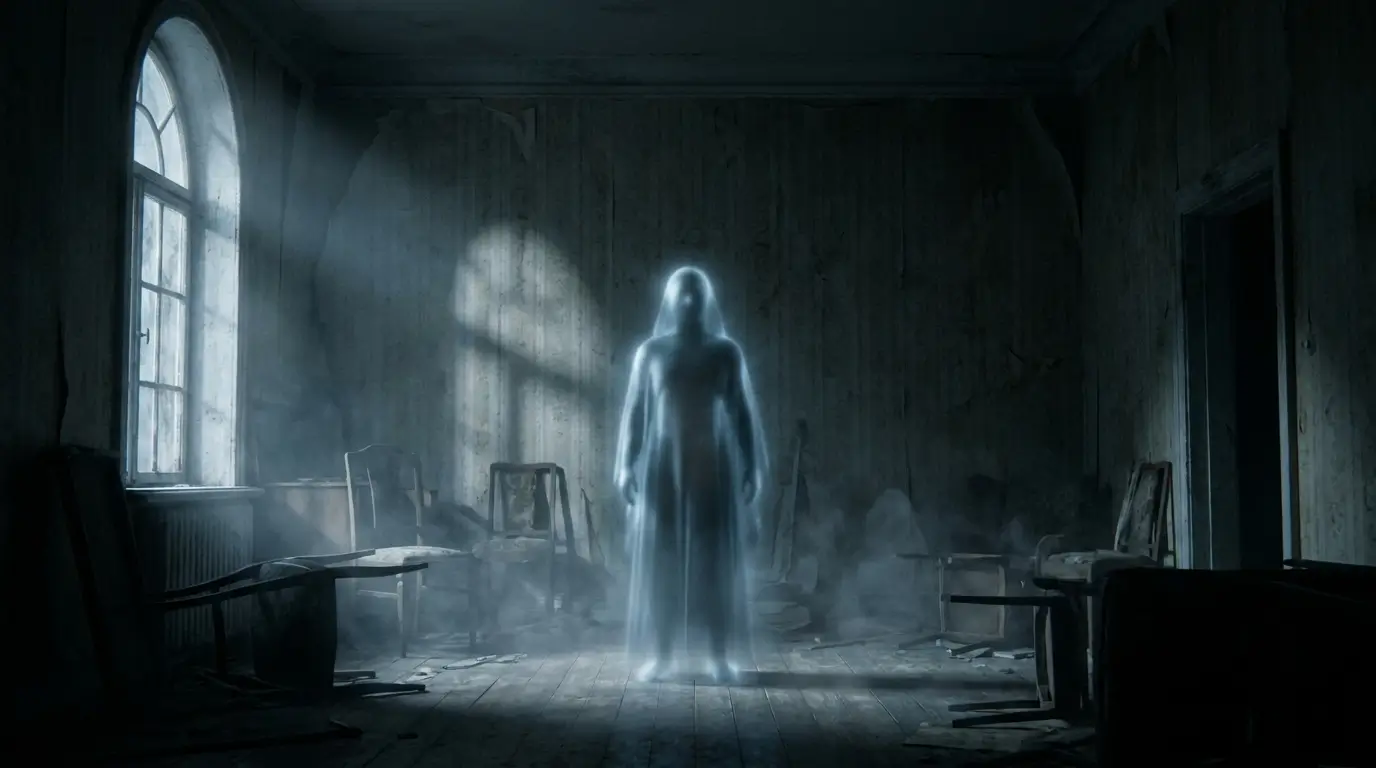

Synonyms for ghost can make your English more precise when you want to describe a spirit, apparition, or mysterious supernatural presence.
Imagine reading a scary story where the same word, “ghost,” appears in every sentence. Words like spirit, phantom, and specter can make the writing much more vivid.
The word ghost is common in everyday English, fiction, movies, folklore, and conversations about the supernatural. Its alternatives add different shades of meaning.
Learning synonyms for ghost helps students, bloggers, content writers, and daily English users choose words that fit the situation, mood, and level of formality.
What Does “Ghost” Really Mean?
The word ghost usually refers to the supposed spirit of a dead person that appears to living people. It can describe an invisible presence, a mysterious figure, or a supernatural being.
For example, someone might say, “I saw a ghost in the old house.” Here, ghost refers to a supernatural spirit.
Part of speech: Noun
Simple definition: A ghost is a supposed spirit of a dead person that appears or makes its presence known to the living.
The word can also work as a verb in modern informal English. To ghost someone means to suddenly stop communicating with them without explanation.
For example, “He ghosted me after our second meeting.”
This article mainly focuses on ghost as a supernatural noun. However, the modern verb sense is also discussed later because it has become common in everyday digital communication.
Connotative Meaning
Connotation (the emotional or cultural feeling connected with a word beyond its basic dictionary meaning) can change how readers understand ghost.
Positive Tone
In some contexts, a ghost can represent a comforting connection with someone who has died. Stories may portray a spirit as protective, peaceful, or wise.
Words such as spirit and presence can therefore sound softer than ghost.
Negative Tone
The word can create feelings of fear, danger, sadness, or mystery. Horror stories often use ghost, specter, wraith, and phantom to create an unsettling atmosphere.
Neutral Tone
In general discussion, ghost can simply describe a supernatural figure without expressing a strong emotional opinion.
For example, someone discussing folklore may use ghost in a neutral way.
Etymology of “Ghost”
The word ghost has a long history in English.
Old English: 450–1100
The word comes from Old English gāst, which referred to a spirit, soul, breath, or supernatural being.
The word was connected with the idea of an unseen spiritual force.
Middle English: 1100–1500
During Middle English, forms such as gost became common. The word continued to refer to the soul or spirit of a person.
Its spelling gradually changed as English developed.
Modern English: 1500–Present
The spelling ghost became established in Modern English.
Today, the word commonly refers to the spirit of a dead person, especially one believed to appear to the living. It also developed the informal verb sense meaning to suddenly end communication.
Pronunciation
US: /ɡoʊst/
UK: /ɡəʊst/
Syllables
ghost — ghost
Affixation Pattern of “Ghost”
Root: ghost
Prefix: none
Suffix: none
The word is a simple root word in its basic form.
Synonyms List
The exact synonym you choose depends on the meaning and context of ghost. Some alternatives describe a supernatural spirit directly, while others emphasize appearance, mystery, fear, or a particular type of supernatural being.
Spirit (Noun) — US /ˈspɪrɪt/ | UK /ˈspɪrɪt/
Meaning: A spirit is a supernatural or non-physical being, especially the soul of a dead person.
- The old house was said to contain the spirit of its former owner.
- She believed her grandmother’s spirit was still nearby.
Apparition (Noun) — US /ˌæpəˈrɪʃən/ | UK /ˌæpəˈrɪʃən/
Meaning: An apparition is a strange or ghostly figure that appears suddenly.
- A pale apparition appeared near the window.
- The villagers claimed they saw an apparition at midnight.
Specter (Noun) — US /ˈspɛktər/ | UK /ˈspɛktə/
Meaning: A specter is a frightening ghost or supernatural figure.
- A dark specter appeared in the hallway.
- The novel begins with the appearance of a mysterious specter.
Spectre (Noun) — US /ˈspɛktər/ | UK /ˈspɛktə/
Meaning: Spectre is the British spelling of specter and refers to a ghostly or frightening figure.
- A strange spectre was said to haunt the castle.
- The writer described the spectre as a shadowy figure.
Phantom (Noun) — US /ˈfæntəm/ | UK /ˈfæntəm/
Meaning: A phantom is a ghostly figure that may seem unreal or mysterious.
- A phantom appeared at the end of the corridor.
- The story follows a phantom that visits the village.
Wraith (Noun) — US /reɪθ/ | UK /reɪθ/
Meaning: A wraith is a ghostly figure, often imagined as the spirit of a dead person.
- A pale wraith moved through the forest.
- The legend describes a wraith dressed in black.
Shade (Noun) — US /ʃeɪd/ | UK /ʃeɪd/
Meaning: A shade is an old literary word for the spirit of a dead person.
- The poet wrote about the shade of a forgotten king.
- A lonely shade wandered through the ancient ruins.
Revenant (Noun) — US /ˈrɛvənənt/ | UK /ˈrɛvənənt/
Meaning: A revenant is a dead person believed to return from the grave.
- The legend tells of a revenant seeking revenge.
- The villagers feared that the dead man had become a revenant.
Spook (Noun) — US /spuːk/ | UK /spuːk/
Meaning: A spook is an informal word for a ghost or frightening supernatural presence.
- The children thought the abandoned house had a spook.
- The movie uses a playful spook instead of a terrifying monster.
Haunt (Noun) — US /hɔːnt/ | UK /hɔːnt/
Meaning: A haunt can refer to a ghost or a supernatural presence associated with a place, although this use is less common.
- The legend describes a haunt in the old theater.
- Local stories mention a mysterious haunt near the lake.
Presence (Noun) — US /ˈprɛzəns/ | UK /ˈprɛzəns/
Meaning: A presence is an unseen or felt supernatural force that seems to be nearby.
- She felt a strange presence behind her.
- The room seemed filled with an unseen presence.
Entity (Noun) — US /ˈɛntəti/ | UK /ˈɛntəti/
Meaning: An entity is a being or presence, especially one whose exact nature is unknown.
- The investigators believed an unknown entity was inside the building.
- The story never reveals what the mysterious entity really was.
Manifestation (Noun) — US /ˌmænəfəˈsteɪʃən/ | UK /ˌmænɪfəˈsteɪʃən/
Meaning: A manifestation is a visible or noticeable appearance of something supernatural.
- The figure was described as a manifestation of the dead woman.
- The strange light became a mysterious manifestation.
Ghostly Figure (Noun Phrase) — US /ˈɡoʊstli ˈfɪɡjər/ | UK /ˈɡəʊstli ˈfɪɡə/
Meaning: A ghostly figure is a person-like shape that appears supernatural or unreal.
- A ghostly figure stood outside the house.
- The camera captured a ghostly figure in the doorway.
Apparent Spirit (Noun Phrase) — US /əˈpærənt ˈspɪrɪt/ | UK /əˈpærənt ˈspɪrɪt/
Meaning: An apparent spirit is something that seems to be the supernatural spirit of a dead person.
- They reported seeing an apparent spirit in the room.
- The photograph showed what looked like an apparent spirit.
Supernatural Being (Noun Phrase) — US /ˌsuːpərˈnætʃərəl ˈbiːɪŋ/ | UK /ˌsuːpəˈnætʃərəl ˈbiːɪŋ/
Meaning: A supernatural being is a creature or presence believed to exist beyond normal physical explanation.
- The legend centers on a supernatural being.
- The villagers believed the creature was a supernatural being.
Unseen Presence (Noun Phrase) — US /ʌnˈsiːn ˈprɛzəns/ | UK /ʌnˈsiːn ˈprɛzəns/
Meaning: An unseen presence is something felt or sensed but not visibly seen.
- He felt an unseen presence in the empty room.
- The story builds tension around an unseen presence.
Restless Spirit (Noun Phrase) — US /ˈrɛstləs ˈspɪrɪt/ | UK /ˈrɛstləs ˈspɪrɪt/
Meaning: A restless spirit is a dead person’s spirit believed to be unable to rest.
- The villagers believed a restless spirit lived in the house.
- The film follows a restless spirit searching for peace.
Wandering Spirit (Noun Phrase) — US /ˈwɑːndərɪŋ ˈspɪrɪt/ | UK /ˈwɒndərɪŋ ˈspɪrɪt/
Meaning: A wandering spirit is a supernatural spirit believed to move from place to place.
- A wandering spirit appears in the final chapter.
- The legend describes a wandering spirit near the river.
Lost Soul (Noun Phrase) — US /lɔːst soʊl/ | UK /lɒst səʊl/
Meaning: A lost soul is a spirit believed to have no peaceful place or final destination.
- The story presents the ghost as a lost soul.
- The old tale describes a lost soul seeking forgiveness.
Dead Soul (Noun Phrase) — US /dɛd soʊl/ | UK /ded səʊl/
Meaning: A dead soul is a literary expression for the spirit of a deceased person.
- The poem speaks of a dead soul returning home.
- The character believes he can communicate with a dead soul.
Disembodied Spirit (Noun Phrase) — US /ˌdɪsɪmˈbɑːdid ˈspɪrɪt/ | UK /ˌdɪsɪmˈbɒdid ˈspɪrɪt/
Meaning: A disembodied spirit is a spirit believed to exist without a physical body.
- The narrator heard the voice of a disembodied spirit.
- The story features a disembodied spirit trapped in the house.
Spectral Figure (Noun Phrase) — US /ˈspɛktrəl ˈfɪɡjər/ | UK /ˈspɛktrəl ˈfɪɡə/
Meaning: A spectral figure is a ghost-like figure that appears pale, shadowy, or unreal.
- A spectral figure crossed the road.
- The painting shows a spectral figure near the door.
Shadow (Noun) — US /ˈʃædoʊ/ | UK /ˈʃædəʊ/
Meaning: A shadow can describe a dark or mysterious figure that resembles a ghost in storytelling.
- A shadow moved across the wall.
- He thought he saw a shadow behind the curtain.
Shadowy Figure (Noun Phrase) — US /ˈʃædoʊi ˈfɪɡjər/ | UK /ˈʃædəʊi ˈfɪɡə/
Meaning: A shadowy figure is a dark and unclear person-like shape.
- A shadowy figure appeared in the doorway.
- The detective noticed a shadowy figure outside.
Ectoplasm (Noun) — US /ˈɛktəˌplæzəm/ | UK /ˈɛktəˌplæzəm/
Meaning: Ectoplasm is a substance traditionally associated with supposed spirit manifestations.
- The old photograph supposedly showed ectoplasm around the figure.
- The horror film uses ectoplasm as a supernatural effect.
Poltergeist (Noun) — US /ˈpɔːltərɡaɪst/ | UK /ˈpɒltəɡaɪst/
Meaning: A poltergeist is a supposed supernatural force associated with unexplained noises and moving objects.
- The family believed a poltergeist lived in the house.
- The movie features a noisy poltergeist.
Banshee (Noun) — US /ˈbænʃiː/ | UK /ˈbænʃiː/
Meaning: A banshee is a supernatural female figure from Irish folklore whose cry is associated with death.
- The legend warns travelers about a banshee.
- The story includes a banshee crying near the river.
Apparitional Being (Noun Phrase) — US /ˌæpəˈrɪʃənəl ˈbiːɪŋ/ | UK /ˌæpəˈrɪʃənəl ˈbiːɪŋ/
Meaning: An apparitional being is a supernatural figure that appears unexpectedly.
- The witness described the creature as an apparitional being.
- The novel introduces an apparitional being in the first chapter.
Spectral Presence (Noun Phrase) — US /ˈspɛktrəl ˈprɛzəns/ | UK /ˈspɛktrəl ˈprɛzəns/
Meaning: A spectral presence is a ghost-like force that seems to occupy a place.
- A spectral presence filled the abandoned building.
- The characters sensed a spectral presence upstairs.
Ghost Figure (Noun Phrase) — US /ˈɡoʊst ˈfɪɡjər/ | UK /ˈɡəʊst ˈfɪɡə/
Meaning: A ghost figure is a visible shape that resembles a supernatural spirit.
- A ghost figure appeared in the photograph.
- The artist painted a ghost figure near the window.
Spirit Apparition (Noun Phrase) — US /ˈspɪrɪt ˌæpəˈrɪʃən/ | UK /ˈspɪrɪt ˌæpəˈrɪʃən/
Meaning: A spirit apparition is a visible appearance believed to be a supernatural spirit.
- The witness claimed to see a spirit apparition.
- The story centers on a spirit apparition.
Otherworldly Being (Noun Phrase) — US /ˌʌðərˈwɜːrldli ˈbiːɪŋ/ | UK /ˌʌðəˈwɜːldli ˈbiːɪŋ/
Meaning: An otherworldly being is a creature believed to come from a supernatural realm.
- The novel introduces an otherworldly being.
- The villagers feared the otherworldly being.
Supernatural Presence (Noun Phrase) — US /ˌsuːpərˈnætʃərəl ˈprɛzəns/ | UK /ˌsuːpəˈnætʃərəl ˈprɛzəns/
Meaning: A supernatural presence is an unexplained force believed to exist in a particular place.
- They sensed a supernatural presence in the basement.
- The house was famous for its supernatural presence.
Spirit Form (Noun Phrase) — US /ˈspɪrɪt fɔːrm/ | UK /ˈspɪrɪt fɔːm/
Meaning: Spirit form describes a supernatural appearance without a normal physical body.
- The character returned in spirit form.
- The legend says the woman appears in spirit form.
Ethereal Figure (Noun Phrase) — US /ɪˈθɪəriəl ˈfɪɡjər/ | UK /ɪˈθɪəriəl ˈfɪɡə/
Meaning: An ethereal figure is a delicate, almost unreal figure that can suggest a ghostly appearance.
- An ethereal figure appeared through the mist.
- The painting shows an ethereal figure in white.
Unnatural Presence (Noun Phrase) — US /ʌnˈnætʃərəl ˈprɛzəns/ | UK /ʌnˈnætʃərəl ˈprɛzəns/
Meaning: An unnatural presence is something that feels strange, disturbing, or beyond normal experience.
- The children sensed an unnatural presence.
- The room had an unnatural presence after dark.
Haunting Presence (Noun Phrase) — US /ˈhɔːntɪŋ ˈprɛzəns/ | UK /ˈhɔːntɪŋ ˈprɛzəns/
Meaning: A haunting presence is a disturbing supernatural feeling or force that seems to remain nearby.
- A haunting presence filled the empty house.
- The story creates a strong sense of a haunting presence.
Invisible Spirit (Noun Phrase) — US /ɪnˈvɪzəbəl ˈspɪrɪt/ | UK /ɪnˈvɪzəbəl ˈspɪrɪt/
Meaning: An invisible spirit is a supernatural being believed to exist without being seen.
- She believed an invisible spirit was nearby.
- The novel follows an invisible spirit.
Supernatural Apparition (Noun Phrase) — US /ˌsuːpərˈnætʃərəl ˌæpəˈrɪʃən/ | UK /ˌsuːpəˈnætʃərəl ˌæpəˈrɪʃən/
Meaning: A supernatural apparition is an unexplained ghost-like figure that appears to people.
- The witness reported a supernatural apparition.
- A supernatural apparition appeared beside the road.
Phantom Presence (Noun Phrase) — US /ˈfæntəm ˈprɛzəns/ | UK /ˈfæntəm ˈprɛzəns/
Meaning: A phantom presence is an unexplained feeling or appearance associated with a phantom.
- The characters sensed a phantom presence.
- The house seemed to contain a phantom presence.
Ghostly Apparition (Noun Phrase) — US /ˈɡoʊstli ˌæpəˈrɪʃən/ | UK /ˈɡəʊstli ˌæpəˈrɪʃən/
Meaning: A ghostly apparition is a visible figure that looks like a ghost.
- A ghostly apparition appeared at the window.
- The photograph captured a ghostly apparition.
Spirit of the Dead (Noun Phrase) — US /ˈspɪrɪt əv ðə dɛd/ | UK /ˈspɪrɪt əv ðə ded/
Meaning: The spirit of the dead refers to the supposed supernatural existence of a deceased person.
- The ritual was meant to contact the spirit of the dead.
- The story explores communication with the spirit of the dead.
Restless Soul (Noun Phrase) — US /ˈrɛstləs soʊl/ | UK /ˈrɛstləs səʊl/
Meaning: A restless soul is a dead person’s spirit believed to remain because it has not found peace.
- The legend describes a restless soul.
- The priest tried to help the restless soul.
Wandering Soul (Noun Phrase) — US /ˈwɑːndərɪŋ soʊl/ | UK /ˈwɒndərɪŋ səʊl/
Meaning: A wandering soul is a spirit believed to move without a permanent resting place.
- A wandering soul appeared in the story.
- The poem describes a wandering soul searching for home.
Dead Person’s Spirit (Noun Phrase) — US /dɛd ˈpɜːrsənz ˈspɪrɪt/ | UK /ded ˈpɜːsənz ˈspɪrɪt/
Meaning: A dead person’s spirit is the supposed non-physical part of someone who has died.
- They believed they had encountered the dead person’s spirit.
- The film centers on a dead person’s spirit.
Haunting Spirit (Noun Phrase) — US /ˈhɔːntɪŋ ˈspɪrɪt/ | UK /ˈhɔːntɪŋ ˈspɪrɪt/
Meaning: A haunting spirit is a ghostly being believed to remain in or repeatedly visit a place.
- A haunting spirit appears throughout the novel.
- The family believed a haunting spirit lived there.
Mysterious Apparition (Noun Phrase) — US /mɪˈstɪəriəs ˌæpəˈrɪʃən/ | UK /mɪˈstɪəriəs ˌæpəˈrɪʃən/
Meaning: A mysterious apparition is an unexplained figure that appears suddenly.
- A mysterious apparition appeared on the hill.
- The witness could not explain the mysterious apparition.
Ghostlike Figure (Noun Phrase) — US /ˈɡoʊstlaɪk ˈfɪɡjər/ | UK /ˈɡəʊstlaɪk ˈfɪɡə/
Meaning: A ghostlike figure is something that resembles a ghost in appearance or behavior.
- A ghostlike figure stood in the fog.
- The artist created a ghostlike figure for the story.
Spirit Being (Noun Phrase) — US /ˈspɪrɪt ˈbiːɪŋ/ | UK /ˈspɪrɪt ˈbiːɪŋ/
Meaning: A spirit being is a supernatural entity believed to exist without an ordinary physical form.
- The myth describes a powerful spirit being.
- The characters encounter a spirit being in the forest.
Shadow Spirit (Noun Phrase) — US /ˈʃædoʊ ˈspɪrɪt/ | UK /ˈʃædəʊ ˈspɪrɪt/
Meaning: A shadow spirit is a literary or fictional expression for a dark supernatural spirit.
- The fantasy novel features a shadow spirit.
- A shadow spirit followed the hero through the forest.
Synonyms for “Ghost” by Tone
Not every alternative carries the same emotional effect. Choosing the right word helps you control the mood of your sentence.
Positive or Gentle
- Spirit
- Presence
- Soul
- Wandering spirit
- Restless soul
These choices can sound gentle, spiritual, poetic, or sympathetic.
Neutral
- Ghost
- Apparition
- Entity
- Manifestation
- Supernatural being
- Spirit form
These words work well when you want to describe a supernatural idea without making the language extremely frightening.
Dark or Frightening
- Specter
- Spectre
- Wraith
- Phantom
- Revenant
- Poltergeist
- Haunting spirit
These words often create a darker or more dramatic atmosphere.
Literary or Poetic
- Shade
- Wraith
- Ethereal figure
- Spectral figure
- Wandering soul
- Spirit of the dead
These alternatives work particularly well in poetry, fiction, essays, and descriptive writing.
Informal
- Spook
Spook sounds casual and can even feel playful. It is common in informal speech and entertainment.
“Ghost” vs Close Alternatives
Ghost vs Spirit
The term Ghost usually creates a clearer image of a supernatural appearance, especially the spirit of a dead person.
Spirit is broader and softer. It can mean a dead person’s soul, a supernatural being, or even a person’s character or energy.
Use ghost when you want a familiar supernatural term. Use spirit when you want a broader or gentler word.
Ghost vs Phantom
A ghost is a common everyday term for a supernatural spirit.
A phantom often sounds more mysterious, literary, or dramatic. It can also describe something imagined or unreal.
For everyday English, ghost is usually more natural. For fiction, phantom can create a stronger sense of mystery.
Ghost vs Specter
A specter usually suggests a frightening or threatening ghostly figure.
A ghost can sound neutral, while specter often adds a darker mood.
For example, “I saw a ghost” sounds straightforward. “A specter appeared” sounds more dramatic and literary.
How “Ghost” Changes by Context
Daily Conversation
In everyday conversation, ghost is the most natural word for a supernatural spirit.
You might say, “Do you believe in ghosts?” or “That house is supposed to be haunted.”
Modern English also uses ghost as a verb. If someone suddenly stops replying to messages, you can say they “ghosted” you.
This newer meaning is informal and common in digital communication.
Writing and Blogging
Writers often choose alternatives to avoid repeating ghost.
For example, spirit can create a softer feeling, while specter can create fear. Phantom can make a scene feel mysterious.
This variety makes descriptive writing more engaging.
Professional or Academic Tone
Academic writing about folklore, literature, history, or cultural beliefs may prefer words such as spirit, apparition, supernatural entity, or spectral figure.
However, the best choice depends on the subject.
If you are discussing a cultural belief directly, use the term that accurately reflects the original belief rather than forcing a synonym.
Creative or Informal Use
Creative writing gives you more freedom.
A horror writer might choose wraith or specter. A fantasy writer might use spirit being. A casual speaker might simply say spook.
The goal is not to replace ghost every time. The goal is to choose the word that creates the right effect.
Common Mistakes & Native Usage
Mistake 1: Treating Every Synonym as Identical
Words such as spirit, phantom, and wraith overlap with ghost, but they do not always mean exactly the same thing.
Always consider the context before replacing one word with another.
Mistake 2: Using “Wraith” in Casual Conversation
Native speakers understand wraith, but it is much more literary than ghost.
Saying “I saw a wraith last night” may sound dramatic unless you are discussing fiction or folklore.
Mistake 3: Using “Specter” for Every Ghost
Specter often carries a frightening or threatening feeling.
If the ghost in your sentence is friendly or comforting, spirit may work better.
Mistake 4: Confusing “Ghost” as a Noun and Verb
As a noun, ghost means a supernatural spirit.
As a verb, ghost means to suddenly stop communicating with someone.
For example:
“I saw a ghost.” — supernatural noun.
“She ghosted me.” — informal verb meaning she stopped responding.
Native Usage Tip
Native speakers usually choose the simple word ghost in ordinary conversation.
More specialized words such as wraith, specter, and revenant appear more often in literature, horror, fantasy, folklore, and descriptive writing.
Register Notes
Ghost: Common and neutral.
Spirit: Common, broad, and sometimes spiritual.
Apparition: Formal or literary.
Phantom: Literary, mysterious, or dramatic.
Specter/Spectre: Literary and often frightening.
Wraith: Highly literary and dark.
Shade: Archaic, poetic, or literary.
Spook: Informal and sometimes playful.
Revenant: Specialized and strongly associated with folklore or fiction.
Choosing the right register makes your English sound more natural.
Real-Life Examples Using “Ghost”
Workplace
A writer preparing a report about folklore may use spirit instead of repeating ghost.
For example, the report might explain how a community believes the spirit of an ancestor protects a historic building.
Social Situations
If friends are discussing a horror movie, ghost, spook, and phantom can all appear naturally.
A friend might say, “That ghost scene scared me.”
Media and Pop Culture
Movies often use different words to create different moods.
A family-friendly movie might use spirit, while a horror film might use specter, wraith, or apparition.
Writing and Storytelling
A novelist can introduce a ghost and later use spectral figure or phantom to avoid repetition.
This technique also helps the writer change the atmosphere from simple description to mystery or fear.
Why Learning Synonyms for “Ghost” Matters
Vocabulary becomes stronger when you understand differences between related words.
Knowing ghost is useful, but knowing when to choose spirit, apparition, phantom, or specter gives you more control over your writing.
For students, synonyms improve essays and creative assignments.
For bloggers and content writers, they help prevent unnecessary repetition.
They make conversations and reading easier to understand.
Most importantly, synonyms teach you that similar words can carry different emotions, levels of formality, and cultural meanings.
Practice: Choose the Best Synonym
Test your understanding by choosing the word that best fits each situation.
Supernatural and Neutral Contexts
1. A student is writing a simple essay about the soul of a dead person. Which word is most suitable?
A. Spirit
B. Wraith
C. Spook
D. Revenant
2. A horror writer wants to describe a frightening ghostly figure. Which word creates the darkest tone?
A. Specter
B. Presence
C. Spirit
D. Soul
Literary and Creative Contexts
3. A poet wants an old-fashioned word for the spirit of a dead person. Which word fits best?
A. Shade
B. Spook
C. Entity
D. Being
4. A fantasy novelist describes a pale supernatural figure moving through a forest. Which word sounds most literary?
A. Wraith
B. Ghost
C. Spook
D. Person
Everyday English
5. Someone asks what people commonly call the spirit of a dead person. Which word is the most natural?
A. Ghost
B. Revenant
C. Wraith
D. Spectral figure
6. A friend uses an informal word for a ghost while joking about a scary movie. Which word fits?
A. Spook
B. Apparition
C. Revenant
D. Shade
Meaning and Tone
7. Which word usually sounds softer and broader than “ghost”?
A. Spirit
B. Wraith
C. Specter
D. Revenant
8. Which word suggests a dead person returning from the grave?
A. Revenant
B. Presence
C. Shade
D. Entity
9. Which phrase best describes something that feels supernatural but cannot be seen?
A. Unseen presence
B. Ghost figure
C. Shadowy figure
D. Specter
Context and Usage
10. A writer wants to make a horror scene sound dramatic and frightening. Which word is most suitable?
A. Specter
B. Spirit
C. Presence
D. Soul
11. A blogger wants to avoid repeating “ghost” while discussing supernatural stories. Which alternative is a good general choice?
A. Spirit
B. Banshee
C. Ectoplasm
D. Poltergeist
12. Which word refers to a supposed supernatural force associated with unexplained movement and noises?
A. Poltergeist
B. Shade
C. Wraith
D. Phantom
13. Which phrase best describes a ghost-like figure that looks pale and unreal?
A. Spectral figure
B. Daily figure
C. Living figure
D. Ordinary figure
14. Which word is most appropriate for a casual conversation about a scary movie?
A. Ghost
B. Revenant
C. Apparitional being
D. Disembodied spirit
15. Which modern use of “ghost” means suddenly stopping communication with someone?
A. Ignore someone permanently without explanation
B. Stop communicating without explanation
C. Meet someone unexpectedly
D. Become friendly with someone
Reflection Task
Think about a ghost story, movie, book, or personal example you know. Write three sentences using ghost and two different synonyms. Then explain how each synonym changes the mood or tone.
Conclusion
Learning synonyms for ghost gives you more than a longer vocabulary list. It helps you understand how small word choices can change mood, meaning, and emotional impact.
Words such as spirit, apparition, phantom, and specter overlap with ghost, but each carries its own tone. Some sound gentle, while others feel dark or literary.
These distinctions are valuable for students, bloggers, writers, and English learners. Better synonym knowledge can make essays clearer, stories more vivid, and everyday communication more natural.
Keep practicing these words in short stories, essays, conversations, and descriptions. The more you use them in real contexts, the easier it becomes to choose the right word with confidence.